
Last updated November 2, 2026
 Wrought iron
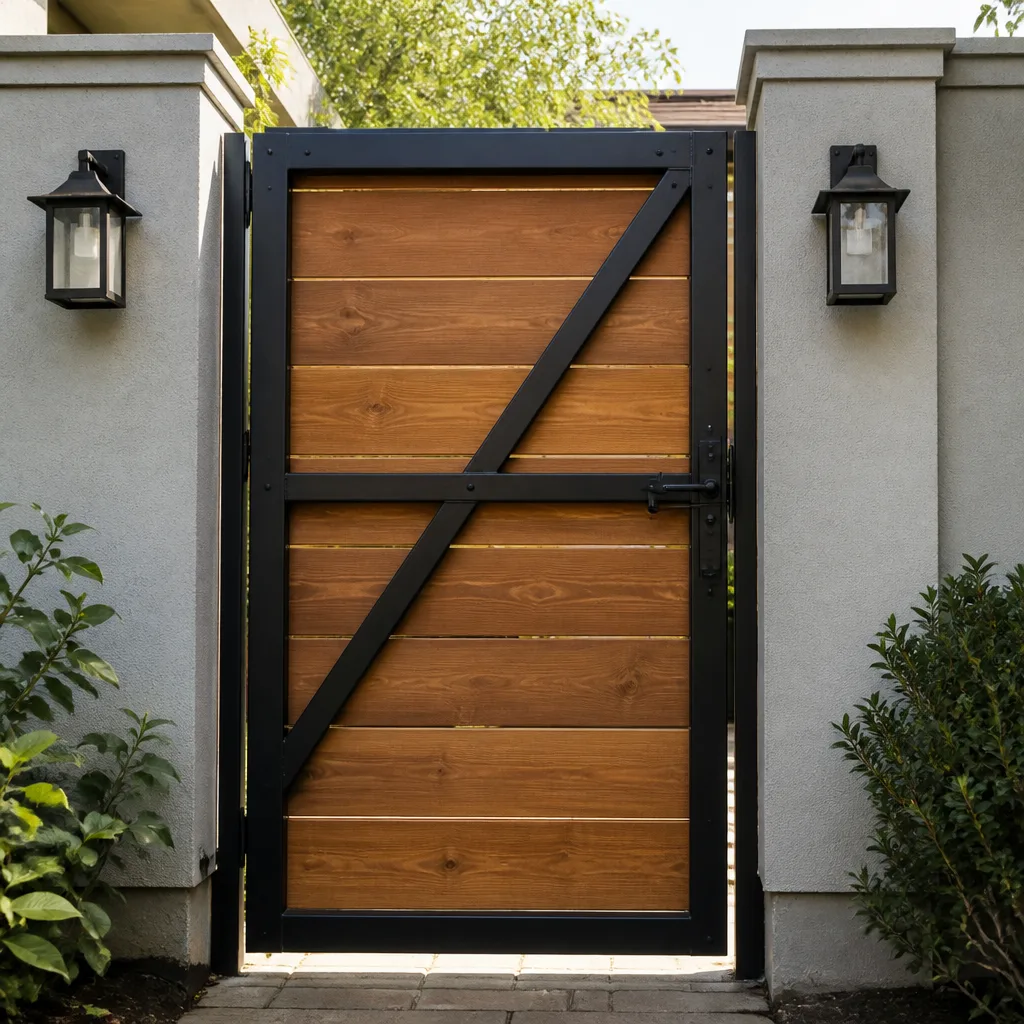 Wood & steel frame
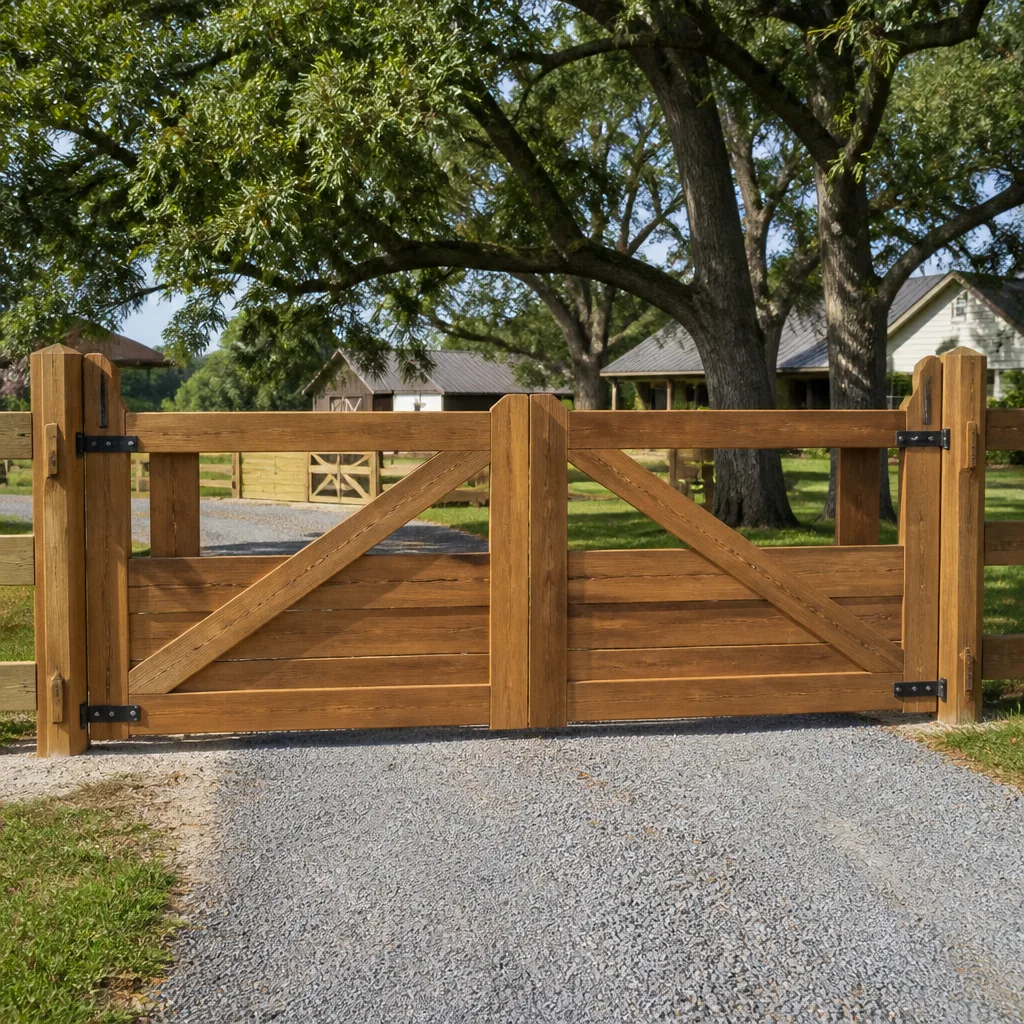 Farm & ranch
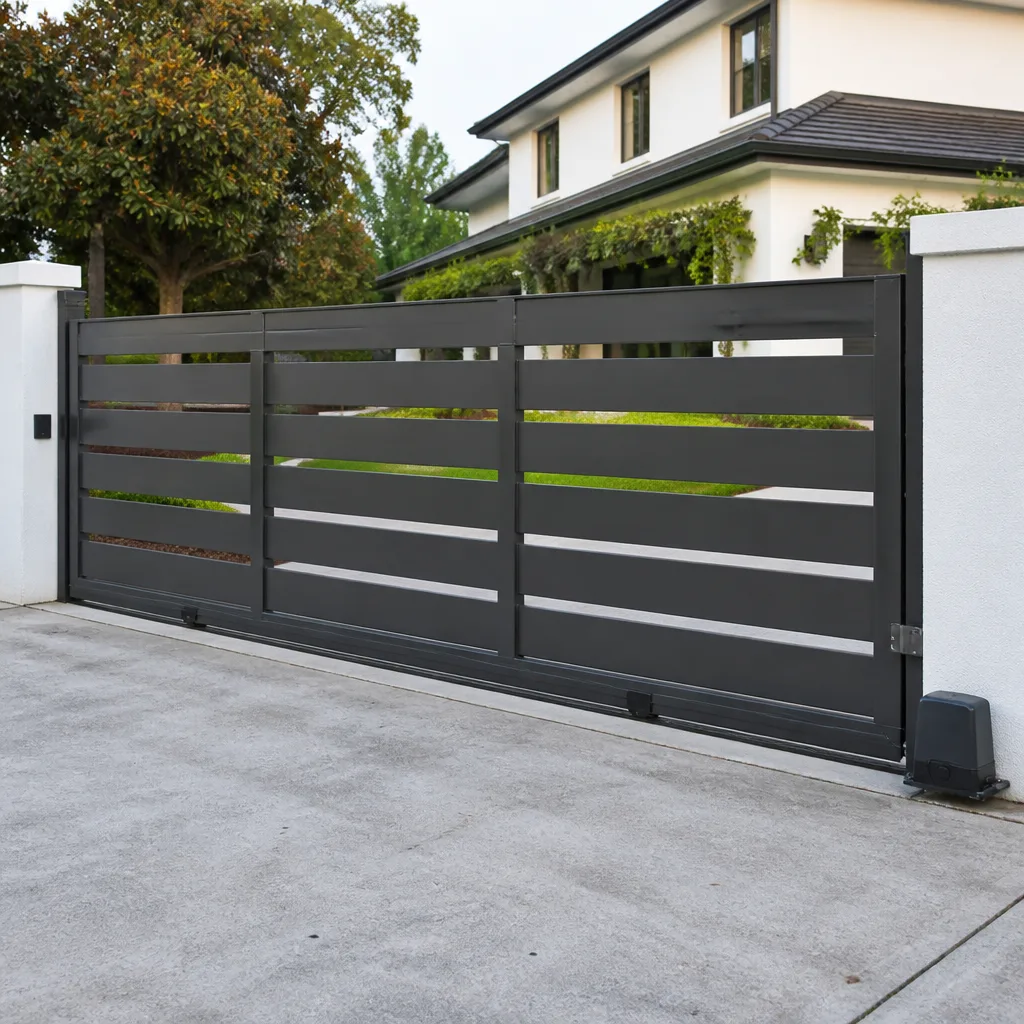 Sliding driveway gates
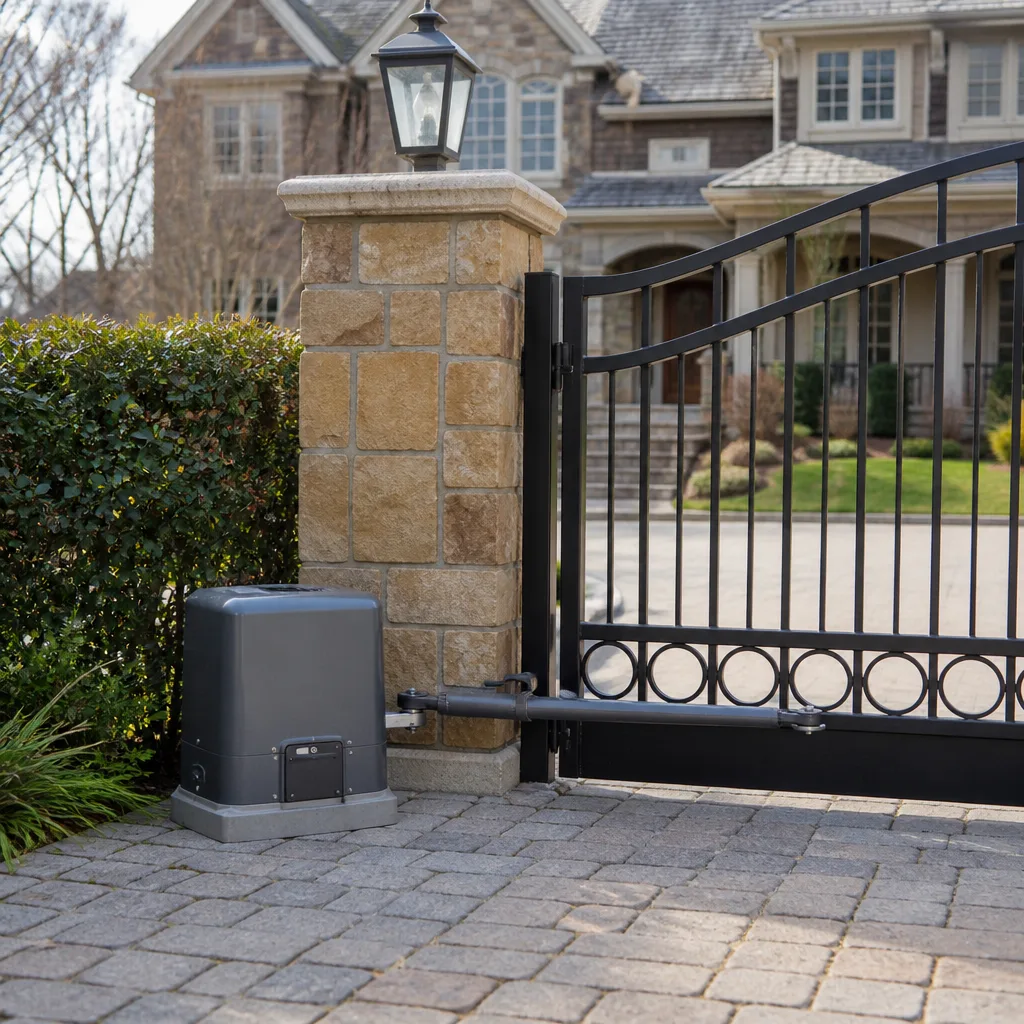 LiftMaster operators
Free on-site gate assessment - hinges, posts, and your LiftMaster or Nice gate operator checked before anything is quoted
The assessment is free and the quote is the invoice.
Get your free estimateSeasonal Gate Repair Care for Valencia: Year-Round Homeowner’s Guide
July is the busiest month for gate repair calls in the Santa Clarita Valley, and it’s not because homeowners are lazy about maintenance. Aluminum gate frames expand enough in triple-digit heat to push latches out of alignment and trip false obstruction signals in operators that were perfectly fine in May. Most seasonal maintenance guides don’t help because they’re written for four-season climates. Valencia doesn’t have that. What we have is a three-event stress calendar: the June heat spike, the October wind season, and the January ground saturation. Each one attacks a different part of your gate system. This guide explains what to do before, during, and after each event, so you’re not the one calling our Gate Repair services from a driveway you can’t get out of on a 105-degree afternoon.
Styles & brands we work with
- Wrought iron
- Wood & steel frame
- Farm & ranch
- Sliding driveway gates
- LiftMaster operators
Quick Answer
Seasonal gate maintenance in Valencia comes down to three things: adjusting mechanical clearances before summer heat arrives, checking rollers and track after every major Santa Ana wind event, and regrading drainage around gate posts before winter rains saturate the ground. Homeowners who do these three things prevent about 70% of the repair calls we see between June and February. The rest is mostly operator settings, which should be adjusted seasonally, not left at factory defaults.
Table of Contents
- Valencia’s Real Maintenance Calendar (It’s Not Four Seasons)
- Summer Prep: Thermal Expansion and Gate Alignment
- Fall Wind Season: Protecting Slide Gate Rollers and Track
- Winter Drainage: The Slow Gate Post Problem
- Spring Reset: The Post-Winter Inspection Sequence
- Seasonal Operator Settings by Brand
- Common Mistakes to Avoid
- When to Call a Professional
- Frequently Asked Questions
- The Bottom Line
Valencia’s Real Maintenance Calendar (It’s Not Four Seasons)
The traditional maintenance model breaks the year into spring, summer, fall, and winter, with a checklist for each. That model was built for places with snow, ice, and deciduous trees dropping leaves on gate tracks. Valencia gets maybe ten inches of rain a year, most of it in two or three months. The ground doesn’t freeze. The air doesn’t get cold enough to thin lubricant into uselessness. What actually causes gate failures here is more specific and more predictable than any four-season chart suggests.
We’ve worked on gates across Valencia, from the older ranch-style properties near the riverbed to newer HOAs in neighborhoods around Copper Hill Drive and McBean Parkway, and the pattern is consistent. Here’s the real calendar:
- February through May: Moderate temperatures, low wind. Gates that are properly maintained run without issue. Most failures in this window are accumulated wear finally catching up, not seasonal stress.
- June through August: sustained heat with daily highs above 95 degrees and regular spikes past 105. Metal expands, vinyl wheels soften, control boards mounted in unshaded operator boxes cook. This is peak failure season for swing gates and any gate with a latch.
- September through November: Santa Ana wind events, often gusting 40 to 60 mph through the passes. Cantilever slide gates take the brunt. Rollers wear unevenly, track sections loosen, and gates that were slightly out of level get knocked further out by repeated buffeting.
- December through January: Rain saturates clay-heavy soil. Gate posts that were installed without proper drainage heave slightly. Swing gate geometry shifts by fractions of an inch, which is enough to make a gate drag, bind, or fail to close completely.
The takeaway isn’t that you need to maintain your gate four times a year. It’s that you need to do three specific things at three specific times, each targeted at the specific stress that season brings. Do those and the rest of the year takes care of itself.
Summer Prep: Thermal Expansion and Gate Alignment
Aluminum expands at roughly twice the rate of steel per degree of temperature change. A 10-foot aluminum gate that fits perfectly at 70 degrees will be nearly a quarter inch longer at 105 degrees. That doesn’t sound like much until you realize that the latch gap on most swing gates is set at half an inch or less. Half of that expansion goes toward the latch side. The result: the latch bolt no longer lines up with the receiver, the gate won’t close fully, and the operator’s limit switch or obstruction sensor throws an error code. This is the single most common summer repair we make in Valencia.
Steel gates expand less, but they still expand. Wrought iron gates, which are actually mild steel, move somewhere between aluminum and stainless. What matters is that every gate material needs a different clearance setting before peak heat arrives.
Adjusting Stops and Latches Before July
- Measure the latch gap in late May or early June, when daytime highs are still in the 70s and 80s. The gate should close with an audible click and no rattling.
- For aluminum gates: increase the latch gap by roughly 1/16 to 1/8 inch beyond what feels right in mild weather. This gives the frame room to expand without binding. Test the gate by pressing on it gently from the closed position. You want a little play, not a rigid stop.
- For steel and wrought iron gates: leave the gap closer to normal, but check that the hinge side isn’t already touching anything. Steel hinges transfer expansion to the free end, so even a small frame change moves the latch point.
- Check the ground clearance. Heat can make the gate sag slightly if the frame is welded and the hinges are worn. A gate that cleared the driveway by two inches in March may scrape in July. If you see fresh scratches on concrete, address it before the gate binds completely.
- Reposition the receiver plate if needed. Most receivers have slotted holes. Loosen, adjust, retighten. This takes five minutes and prevents a stuck gate at the worst possible time.
We’ve seen gates in Valencia neighborhoods like Northbridge and Tesoro del Valle fail on the same day during July heat waves, and in most cases the fix was a ten-minute latch adjustment that should have been done in June. The thermal expansion issue also affects slide gates, though differently: track-mounted rollers wear faster when a hot gate lengthens and rides against the guide rollers instead of through them. That’s a fall check, but it starts in summer.
Fall Wind Season: Protecting Slide Gate Rollers and Track
Santa Ana winds don’t just push against the face of a gate. They push, release, push, release, and each cycle loads the rollers and track differently than normal operation. A cantilever slide gate that weighs several hundred pounds acts like a sail in a 50 mph gust, and the load transfers directly to the roller assemblies. Over the course of one wind season, rollers that were perfectly round in August develop flat spots and the track mounting bolts loosen. By the time the gate makes a grinding sound, damage is already done.
The wind risk in Valencia is highest from late September through November. Here’s what to check after each major wind event, or at minimum once in early October and once in late November:
Post-Wind Inspection for Slide Gates
- Roll the gate by hand halfway through its travel. Disconnect the operator first if it’s an electric gate. Feel for resistance, bumps, or a rhythmic thud. A thud you can feel in the gate frame means a flat-spotted roller.
- Inspect each roller for scoring, flat spots, or wobble. Rollers are meant to roll, not skid. Wind loading causes skidding under pressure, which is what wears flat spots. If you can see surface damage, plan to replace before the gates goes any further.
- Check track mounting bolts with a wrench. Not a visual check. Put a wrench on every bolt you can reach and give it a firm pull. Wind vibration is the number one cause of loosened track sections in Valencia.
- Clean debris from the track channel. Santa Ana winds carry leaves, twigs, and sometimes palm fronds directly into cantilever track openings. Even small debris wedged in the track increases roller wear dramatically.
- Verify the gate is still level. Use a simple level on the top rail of the gate while it’s at mid-travel. Wind load can shift the gate on its rollers even when the track is solid, especially on older installations where the frame has some flex.
Owners of cantilever gates with Ghost Controls or Viking operators should pay extra attention to wind-induced false obstruction events. The operator senses the added wind load as a physical obstruction and reverses. This is not a malfunction, but it does mean the gate never actually closes during a wind event. Adjusting force limits seasonally (covered below) is the fix.
Winter Drainage: The Slow Gate Post Problem
Valencia gets most of its rainfall between December and March, and the soil around here is clay-heavy in many parts of the valley. Clay expands when wet and shrinks when dry, and that expansion creates a surprising amount of vertical force. A gate post set in a concrete footer that doesn’t extend below the moisture-affected soil zone can “heave” upward by a quarter inch or more over the course of a wet winter. That quarter inch at the post translates to a much larger deflection at the free end of the gate.
The damage doesn’t happen in one storm. It accumulates over multiple wet seasons. A gate that swung perfectly in 2019 gradually develops a sag, a drag, or a failure to fully close by 2026, and the owner doesn’t connect it to drainage because the change was so gradual.
Preventing Post Heave in Valencia
- Check the grade at the base of every gate post each November, before the rains start. The ground should slope away from the post on all sides. If you see a depression or standing water collecting near a post after a light rain, water is penetrating down along the concrete footer.
- Regrade low spots with compacted soil or decomposed granite. Don’t use sand, which washes away. Don’t use concrete, which creates a hard edge that channels water elsewhere. A gentle slope of a quarter inch per foot for three or four feet is enough.
- Inspect the post and footer joint for cracks. Water gets into hairline cracks, sits against the steel or concrete, and accelerates both rust and soil expansion. Seal visible cracks with a concrete-compatible sealant before the rainy season.
- Watch for fence sections pulling away from the gate posts during the first heavy rain. This is an early warning sign of heave. The gate post is moving while the fence line posts are not, or vice versa.
One thing we tell Valencia homeowners with older gates: if you’re already seeing ground clearance issues that worsen every winter, no amount of latch adjustment will solve the underlying problem. The post geometry has shifted and it will continue to shift until the drainage is fixed or the footer is redone. The good news is that catching this in November is cheap. Catching it in March, after a winter of progressive binding, usually means replacing hinges or a section of track.
Spring Reset: The Post-Winter Inspection Sequence
April and May are the least demanding months for gates in Valencia. Temperatures are moderate, winds are calm, and the ground has mostly dried out. That makes it the ideal window for the one inspection that sets up the rest of the year. We recommend running this sequence annually, ideally in April, and it takes about 45 minutes for a single swing gate or an hour for a slide gate.
Spring Inspection Steps
- Test full open and full close cycles five times in a row. Watch the gate’s speed, listen for any change in motor pitch, and note whether the gate stops at the same point every time. Inconsistent stop position means limit switch wear or a slipping clutch.
- Inspect the hinges for vertical play. Lift the gate from the free end. Movement you can feel means hinge bearing wear. A swing gate should feel rigid when lifted. If it clunks, the hinges need work.
- Check for new rust on steel gates, especially at weld joints and hinge plates. Valencia’s low humidity means rust develops slowly, but once it starts at a weld, it creeps. Sand and repaint any spot with surface rust before it becomes structural.
- Lubricate rollers (slide gates) and hinge pins (swing gates) with a dry lubricant. Wet lubricants collect dust and grit, which creates an abrasive paste that wears components faster. Dry lubricant penetrates and coats without attracting debris.
- Test the manual release on electric gates. The release mechanism is there for emergencies and power outages, but most homeowners never pull it until they need it and find it seized. Pull it now, confirm the gate moves freely by hand, and re-engage.
- Check all safety sensors. Place an object in the gate’s path and attempt to close it. The gate should reverse or refuse to close. Both photoelectric sensors and contact edges should be tested. Sensors that fail in April will fail in August.
- Confirm the gate closes and latches fully while the ground is dry. This is your baseline for the year. Note the exact latch gap and ground clearance so you can compare in July.
This sequence catches accumulated winter wear before it collides with summer expansion. The gate that passes this inspection in April will very likely run clean through the hottest months with nothing more than the pre-summer latch adjustment described earlier.
Seasonal Operator Settings by Brand
Most gate operators leave the factory with force and sensitivity settings that work acceptably in a test environment and acceptably for the first few months, but not seasonally. The operating environment changes: heat increases motor resistance and softens drive belts, cold increases grease viscosity, wind adds external loading. Homeowners who set their operator once and never touch it again are running on settings that were calibrated for conditions that no longer exist.
Here’s what to check seasonally on three operator brands we service regularly across Valencia:
LiftMaster Gate Operators
- Summer: reduce force sensitivity one notch if the gate is aluminum, since heat expansion increases current draw and can trip false obstruction stops. Test the gate five times after adjustment.
- Fall: increase force setting by one or two notches during wind season if the gate is a cantilever slide. The extra force helps push through gust loading without triggering reversals. Return to baseline after wind season ends.
- Winter: check that the operator’s wiring compartment is dry. Rain and condensation in an unsealed wiring box causes intermittent faults that are hard to diagnose later. A small silica packet inside the compartment helps.
Mighty Mule Operators
- Spring: run a full recalibration of the open and close limits using the operator’s learn mode. This resets the stroke points after any winter ground movement.
- Summer: Mighty Mule units are more sensitive to voltage drop than most. Check that the transformer is not sitting in direct sun, and ideally shade the control box. Heat causes component derating in hot afternoons.
- Fall: Mighty Mule auto-close features can conflict with wind-induced false obstructions. If the gate starts reversing during gusts, either disable auto-close for the season or reduce sensitivity a notch.
FAAC Gate Operators
- Spring: run the hydraulic oil level check if the FAAC unit is a hydraulic model (many are). Low oil after winter causes weak operation, and the reservoir is easy to top off if done before the system runs hot.
- Summer: verify the cooling fan (if equipped) is unobstructed. FAAC operators used on heavier gates in Valencia run hotter than spec when ambient temperatures top 100 degrees, which shortens control board life if the enclosure is poorly ventilated.
- Fall: check the torque-limiting adjustment. FAAC operators on slide gates benefit from slightly higher torque during wind season, but over-tightening strips the coupling. Make small adjustments and test between each.
If all of this sounds like more than you want to handle, that’s not a failure on your part. Operator adjustment is genuinely technical work, and making the wrong change can cause more problems than it solves. This is the kind of work our team does every week across Valencia, and it’s why we handle electric gate repair in Tarzana and the surrounding valleys with the same brand-specific approach. If you’re in Valencia and want a seasonal tune-up on any of these systems, one call covers it.
Common Mistakes to Avoid
- Setting the gate gap in June for winter conditions. If the latch is tight at 70 degrees, it will bind at 100. Set summer clearances slightly loose and let the heat take up the play. Many a Valencia homeowner has called us in July for a gate that was “perfect” in May.
- Lubricating rollers with WD-40 or other wet spray. Wet lubricant on a slide gate track attracts dust, and Valencia has plenty of it. Within weeks it forms a paste that wears rollers faster than running dry. Use a dry lubricant or nothing.
- Ignoring the manual release lever until the power goes out. In a Santa Ana event that knocks out power, a seized release lever means you can’t open your own gate by hand. Test it every spring. It takes ten seconds.
- Assuming a gate that works “fine” doesn’t need seasonal attention. The failures we see most often in July are on gates that worked fine on June 30. Thermal expansion doesn’t warn you. It just reaches a threshold and the gate stops.
- Calling a handyman who doesn’t know the brand. Gate operators from Viking, Ghost Controls, DoorKing, and Elite all have different control logic, settings, and failure modes. A generalist will try a part swap and hope. A brand-fluent technician diagnoses.
- Not fixing drainage because the gate still works. Post heave is cumulative. One winter of poor drainage won’t kill your gate, but five will. The fix gets more expensive the longer you wait.
When to Call a Professional
Some seasonal maintenance is genuinely DIY-appropriate: cleaning track, checking bolts, adjusting latch receivers, applying dry lubricant. For more guides & resources, see our blog. Other issues call for professional attention. If your gate operator trips its breaker more than once, that’s an electrical issue, not a mechanical one, and poking at wiring without training is dangerous. If you find flat-spotted rollers or scored track, replacement requires lifting the gate off its rollers safely, which means the right tools and experience. If your gate post has visibly moved or your gate no longer sits level, the fix involves resetting posts or shimming hinges, and doing it wrong makes the gate worse while creating a safety hazard.
We take a straightforward approach: we diagnose what’s actually wrong and fix it without upselling. If you’re in Valencia and want a seasonal inspection or need a repair before the next heat spike, gate repair in Tarzana and Valencia is our specialty. And if the gate is beyond repair, we’ll tell you that too, and walk you through what a gate installation in Tarzana or Valencia involves before any work begins. Gate Repair Valencia offers free estimates in Valencia – call (844) 655-9821.
Frequently Asked Questions
Run the full spring inspection sequence once a year in April, plus three targeted seasonal checks: latch gap adjustment in early June, post-wind roller inspection in October and November, and drainage inspection before the first heavy December rain. That’s about two hours of total annual maintenance for most homeowners.
Thermal expansion, almost always. Aluminum frames expand enough at 100+ degrees to misalign latches and trip obstruction sensors. The fix is typically a simple gap adjustment in June rather than anything wrong with the motor or control board. See The Complete Gate Repair Guide for Valencia Homeowners for step-by-step details. Call (844) 655-9821 if you need help identifying what’s binding.
You can on most consumer operators like Mighty Mule and Ghost Controls using the manual, but the adjustments are easy to get wrong. If you’re not certain which direction increases versus decreases force, or you can’t find the setting in the manual, call a professional. Incorrect force settings make a gate unsafe.
Slow post heave from saturated clay soil. As the ground swells, gate posts shift slightly, and the gate develops a sag or a drag that wasn’t there in October. Fixing the drainage is the permanent repair; adjusting hinges is the temporary fix. The earlier you catch it, the cheaper it is.
Yes, and the damage is to the rollers and track, not the gate frame itself. Sustained gusting loads cantilever slide gates laterally, wearing flat spots on rollers and loosening track bolts. A gate that still swings fine may be accumulating roller wear that will fail six months later if not addressed after wind season.
Yes. We have working knowledge of DoorKing, FAAC, LiftMaster, Viking, BFT, Linear, Ghost Controls, Elite, and Mighty Mule systems, covering both residential and commercial applications. That includes operators, control boards, access wiring, and the gate hardware itself. We’re a gate repair Valencia company that works on your system, whatever brand or type it is.
The Bottom Line
Valencia gates don’t fail randomly. They fail on a schedule driven by heat, wind, and soil moisture, and homeowners who understand that schedule prevent most failures before they happen. Adjust latches before July. Inspect rollers after October wind events. Fix drainage before December rain. Run the full inspection in April. Do this and your gate will very likely outlast your ownership of the property. The one thing this guide can’t do is tell you exactly what’s wrong with a specific gate that’s already malfunctioning. For that, you need eyes on the ground and a technician who knows the system. Gate repair in Tarzana and Valencia is what we do year-round, from the motor to the control board to the entry keypad. We handle the whole system.
If your gate is acting up or you’d like us to run a seasonal inspection before the next heat spike, call (844) 655-9821 for a free estimate. Not sure who to trust? Read Choosing the Right Gate Repair Brand: A Buyer’s Guide for Valencia first. The quote is given and agreed before any work starts, and we’ll tell you honestly whether repair or replacement makes more sense.
Written by the team at Gate Repair Valencia, serving Valencia since 2013.
See the difference
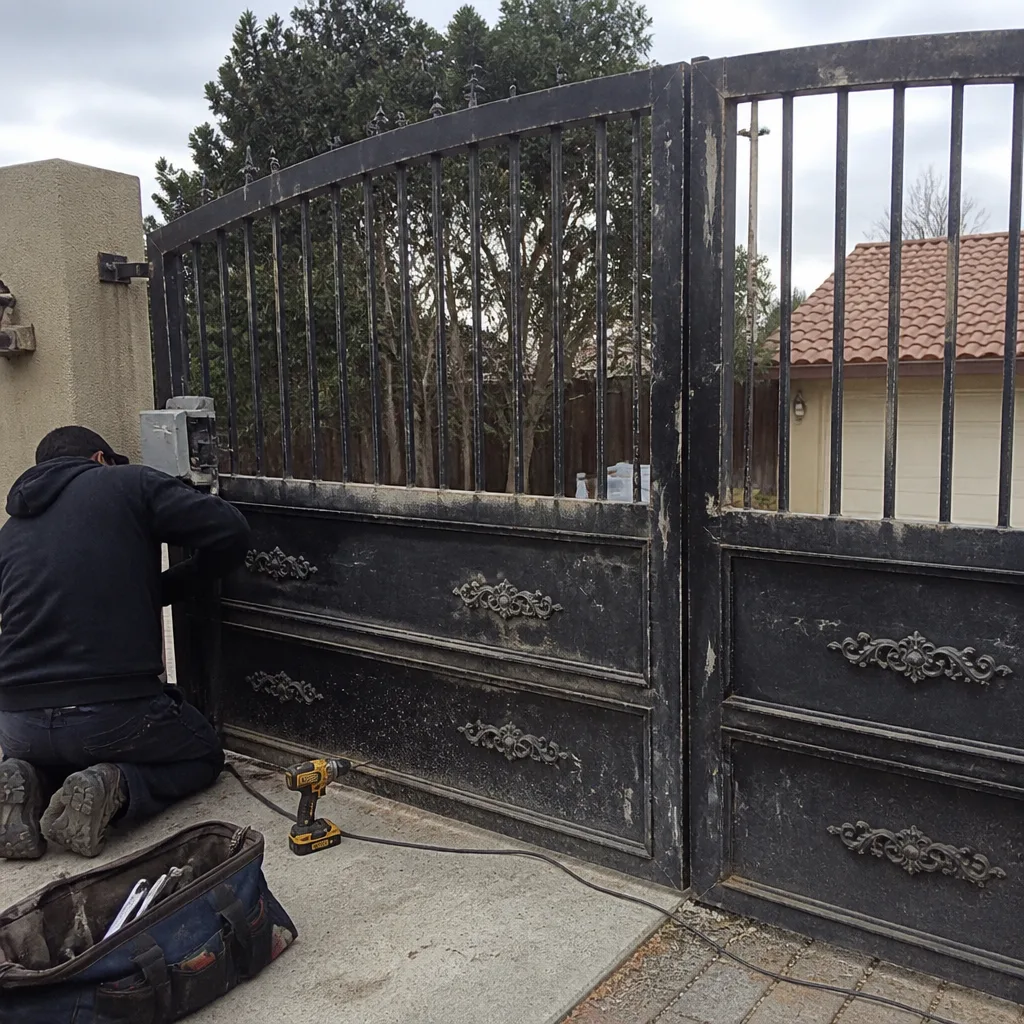 Before
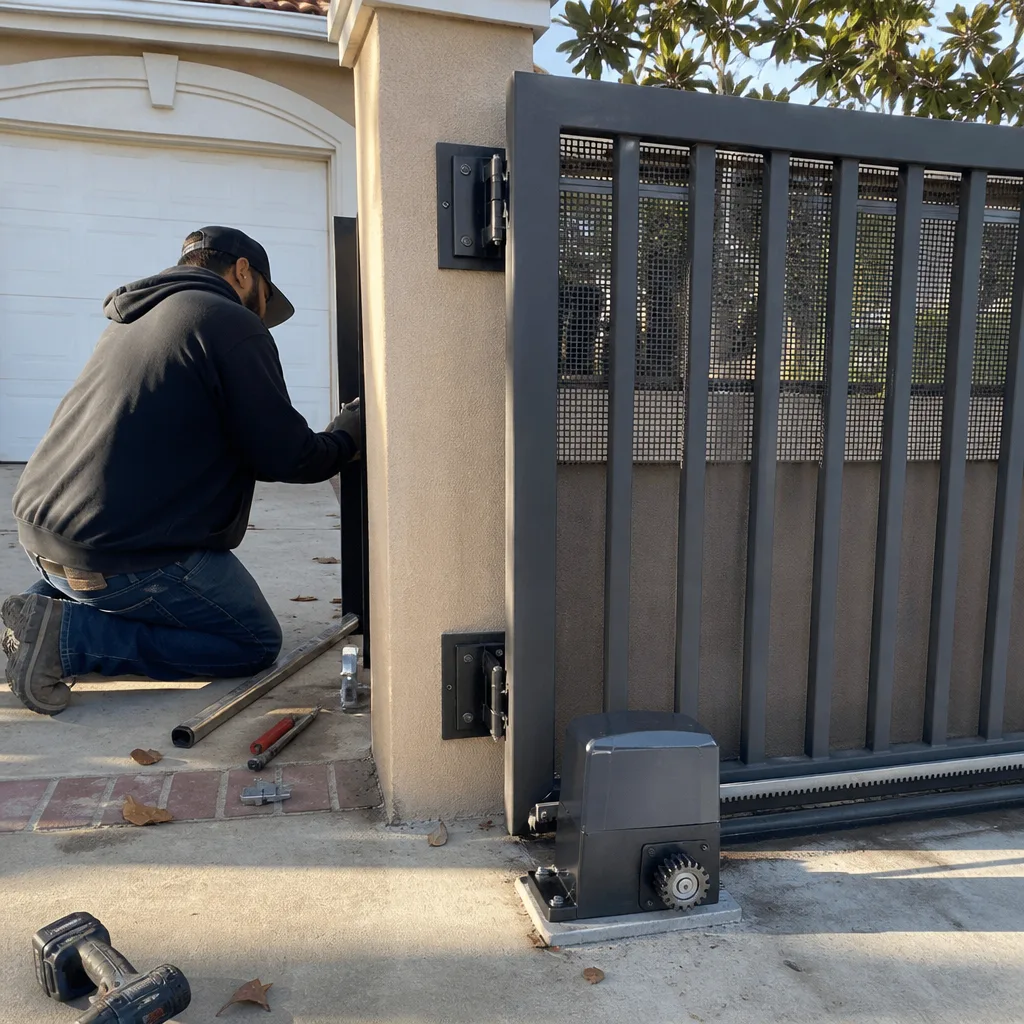 After
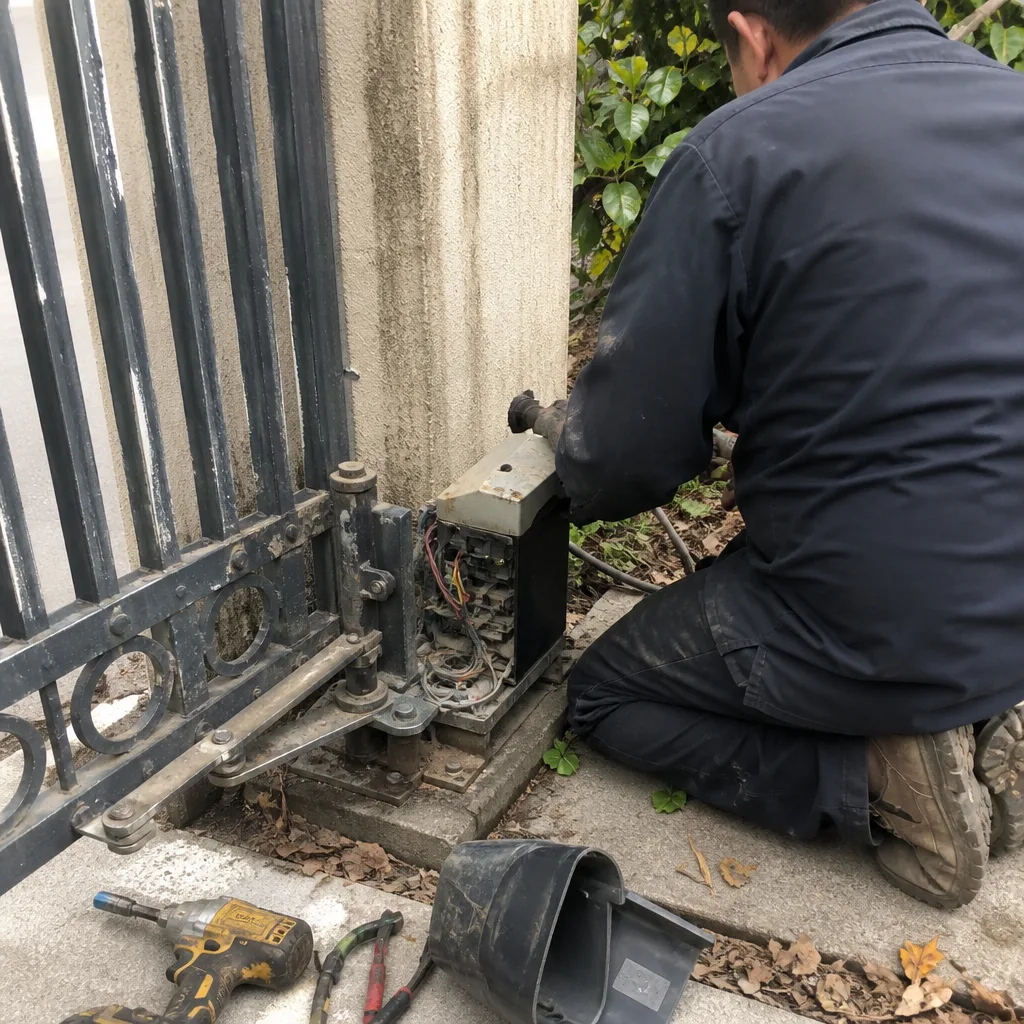 Before
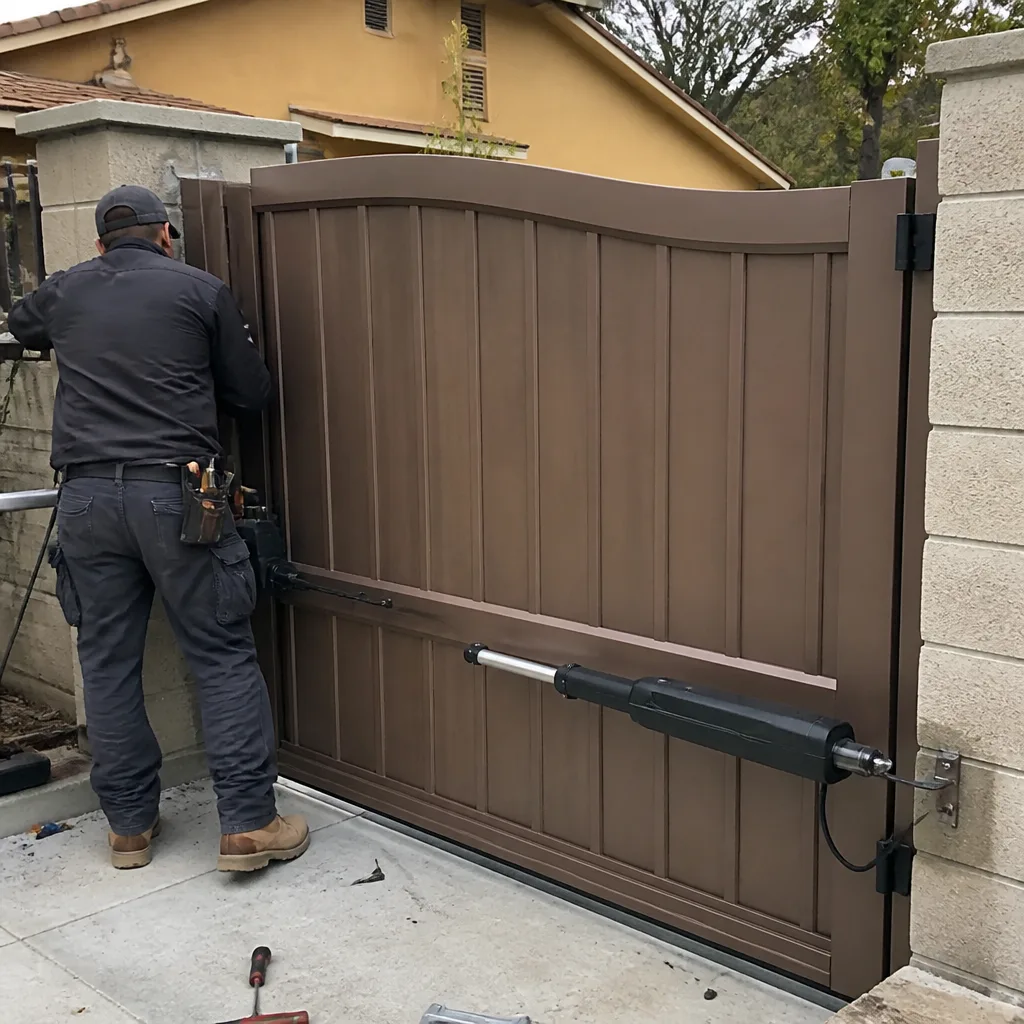 After
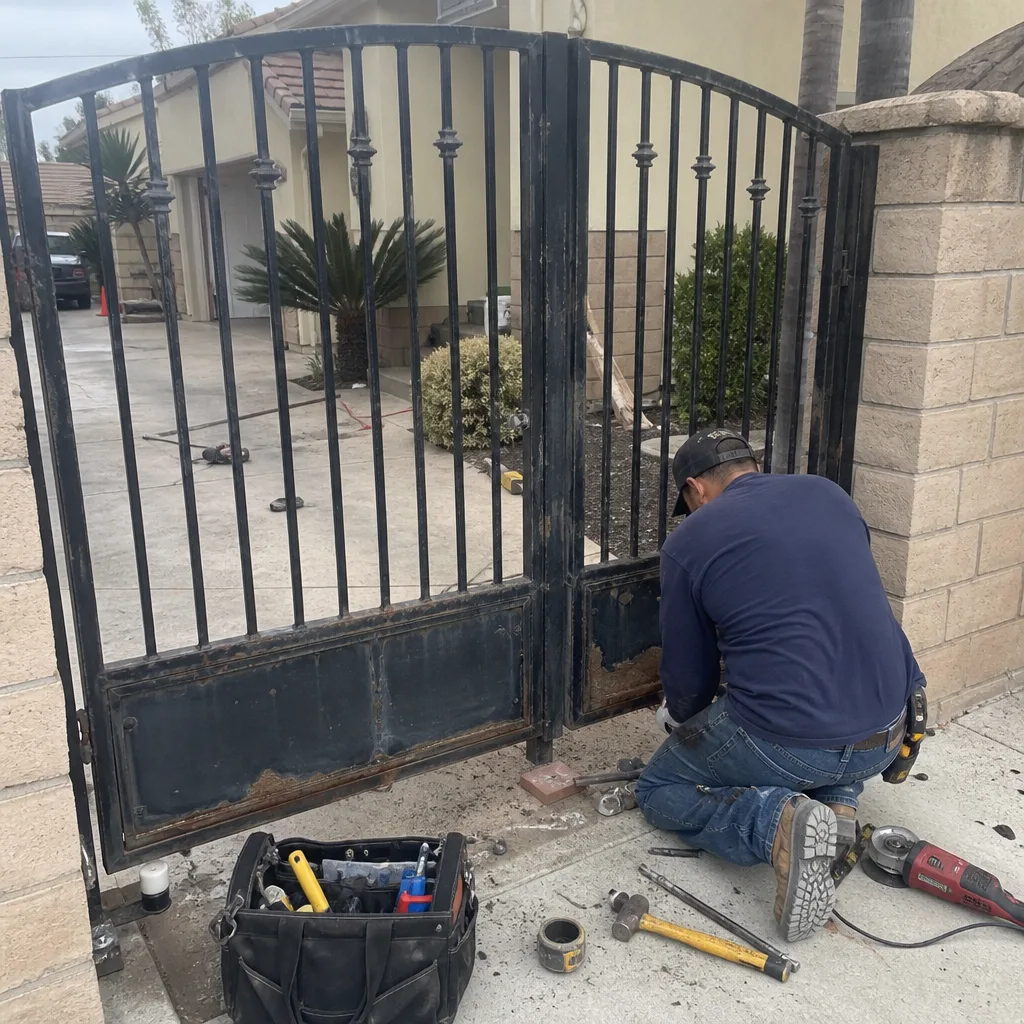 Before
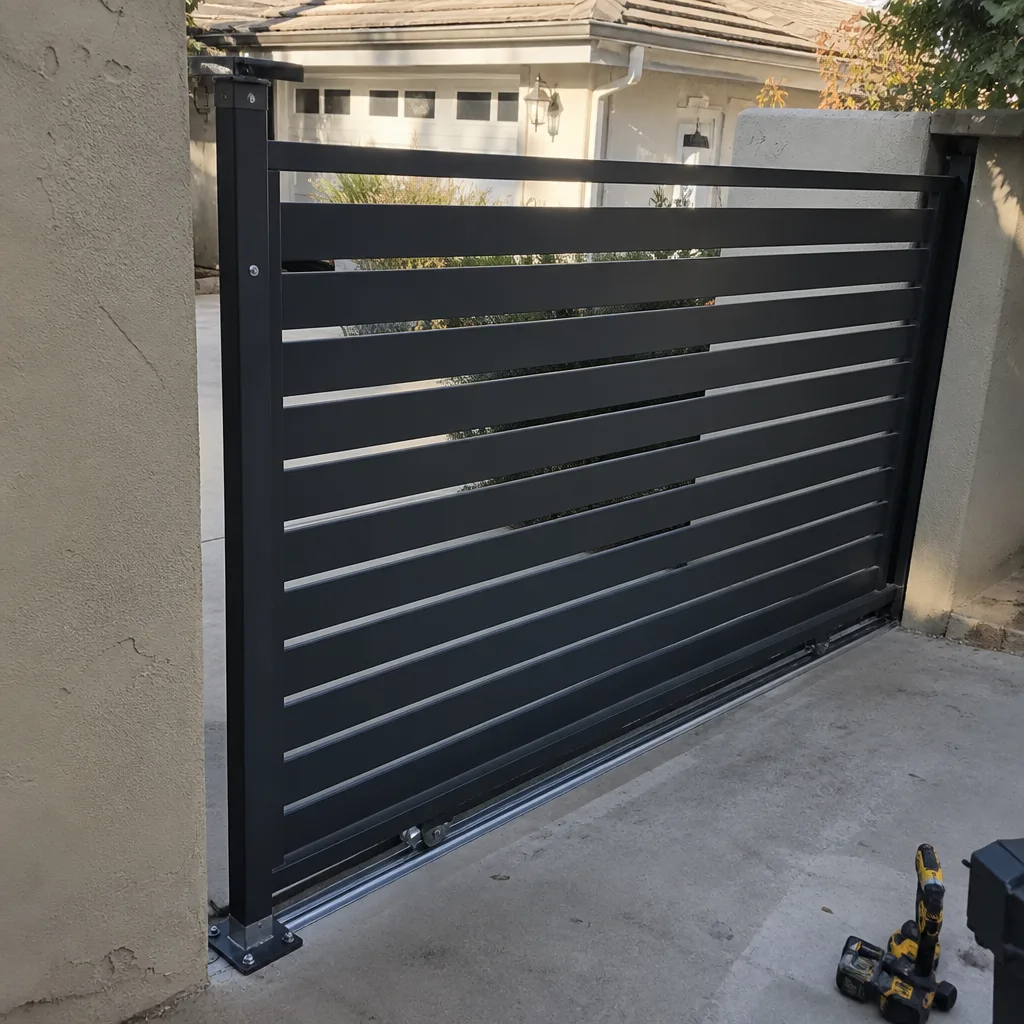 After