
Last updated November 2, 2026
 Wrought iron
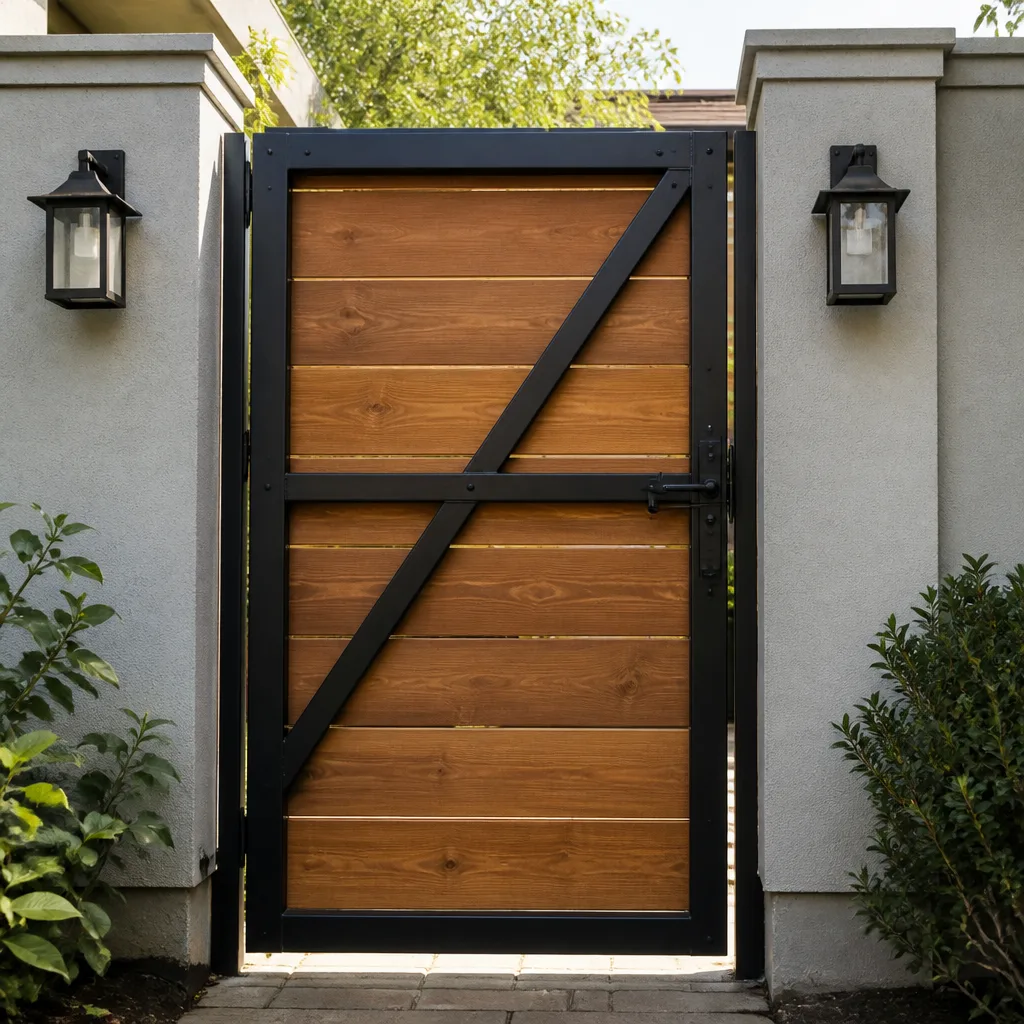 Wood & steel frame
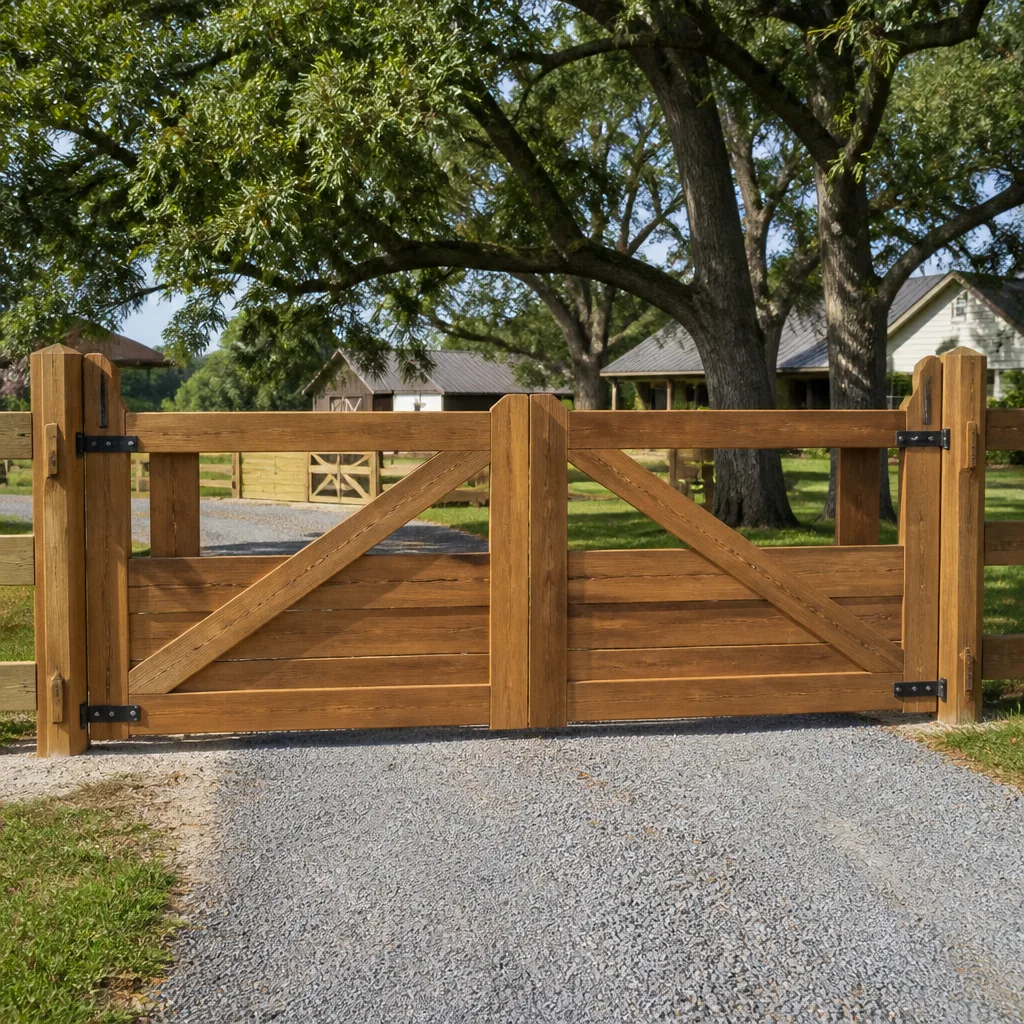 Farm & ranch
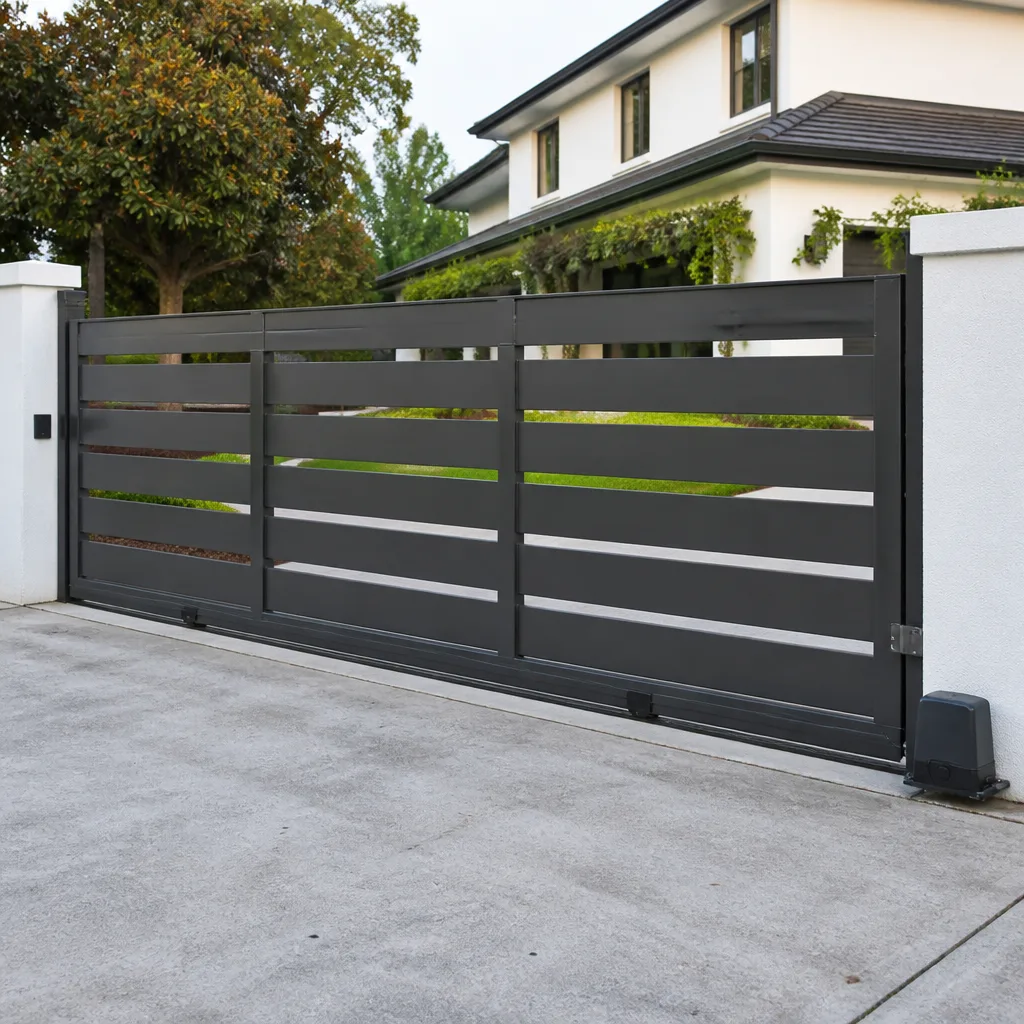 Sliding driveway gates
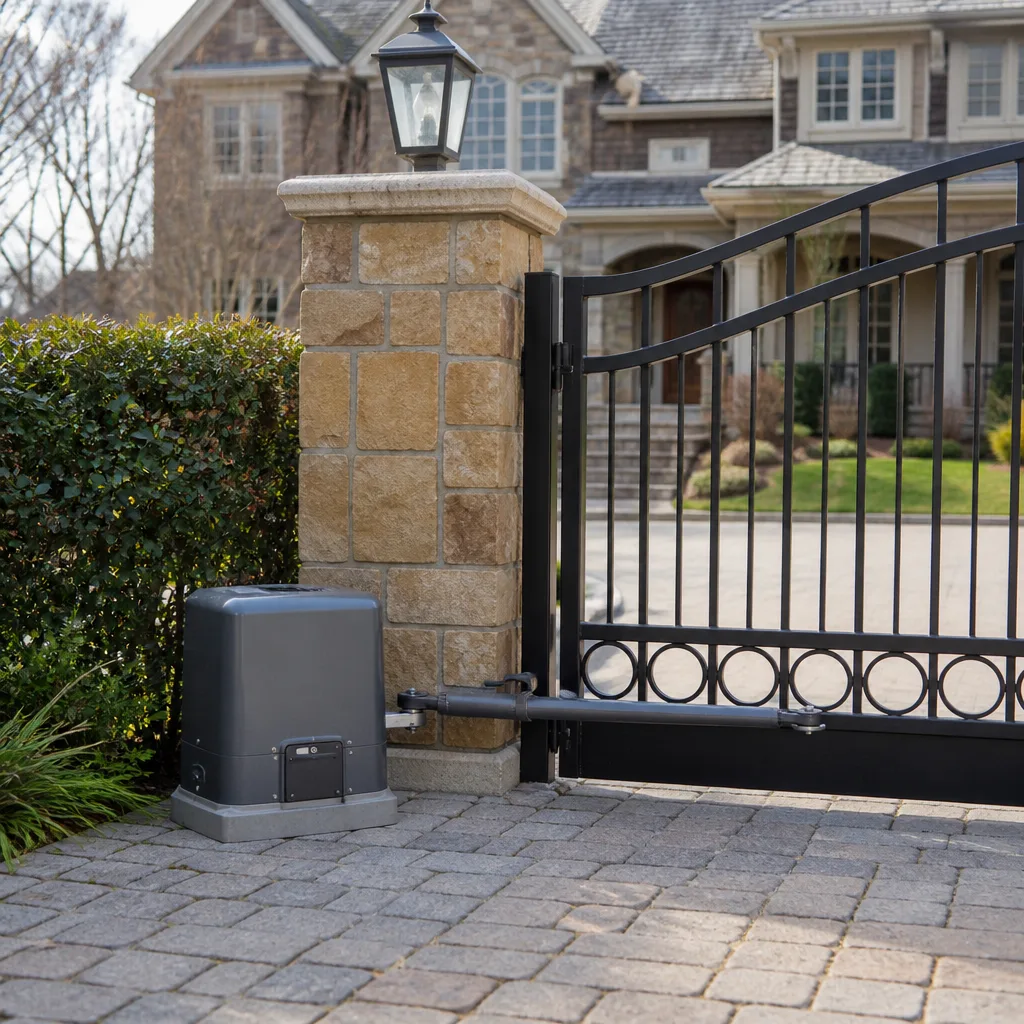 LiftMaster operators
Free on-site gate assessment - hinges, posts, and your LiftMaster or Nice gate operator checked before anything is quoted
The assessment is free and the quote is the invoice.
Get your free estimateDIY vs Professional Gate Repair: The Valencia Homeowner’s Decision Guide
Every week, we get calls from Valencia homeowners who opened their gate operator’s control box, watched two YouTube tutorials, and now have a system that’s more broken than when they started. The tutorials make it look straightforward: swap this board, rewire that sensor, done in an afternoon. What those videos don’t show is what actually lives inside most Valencia gate systems after five or ten years of Santa Clarita Valley heat: corroded terminals, chewed low-voltage wiring from pack rats, and safety loops that someone bypassed three owners ago. This guide is our attempt to give you what the tutorials don’t: a clear-eyed breakdown of what’s genuinely safe to tackle yourself, what will void your warranty or create a fire hazard, and how to tell the difference before you touch a screwdriver.
Styles & brands we work with
- Wrought iron
- Wood & steel frame
- Farm & ranch
- Sliding driveway gates
- LiftMaster operators
Quick Answer
For most Valencia homeowners, DIY gate repair is only genuinely safe and sensible for a narrow set of tasks: battery swaps, remote reprogramming, photo eye realignment, and basic hinge lubrication. Anything involving the operator motor, control board, high-voltage wiring, or safety loop circuits should be handled by a licensed gate technician, both because the electrical risk is real and because opening the control box on many LiftMaster, FAAC, and Elite systems voids the manufacturer warranty the moment an unlicensed person breaks the factory seal. The decision isn’t about how handy you are. It’s about which failure modes are designed for owner service and which ones aren’t.
Table of Contents
- The Repairs That Are Genuinely DIY-Safe on Residential Systems
- The Repairs That Require a Professional (And Why)
- How to Assess Whether Your System’s Wiring Is Safe to Touch
- The Real Cost Comparison: DIY Savings vs. What You Risk
- The Valencia Gate Repair Decision Matrix
- Brand-Specific Considerations: Mighty Mule, LiftMaster, FAAC, and Elite
- Why Valencia’s Climate Changes the Repair Calculus
- Common Mistakes to Avoid
- When to Call a Professional
- Frequently Asked Questions
- The Bottom Line
The Repairs That Are Genuinely DIY-Safe on Residential Systems
Let’s start with what you can actually do without creating a problem. Gate systems are not monolithic; they’re built in layers, and the outermost layer, the parts designed for owner interaction, is where DIY belongs. The key distinction is this: if the repair doesn’t require you to open the operator housing or touch line-voltage wiring, you’re probably in safe territory.
Here’s the full list of repairs we consider genuinely DIY-safe on residential systems in Valencia:
- Battery swaps on solar or backup-battery operators. Mighty Mule and Ghost Controls systems, in particular, use owner-replaceable 12V batteries. If your gate runs on battery power and the motor is sluggish or dead after a power outage, this is a 15-minute fix. The battery tray is designed to be accessible without exposing the control board.
- Remote and keypad reprogramming. Every major brand publishes owner-level programming instructions. LiftMaster remotes, Mighty Mule keypads, FAAC handheld transmitters, all of it is documented in the manual you can download from the manufacturer’s site. This is not a repair; it’s a configuration task, and manufacturers explicitly support owner access.
- Photo eye realignment. Safety photo eyes get knocked out of alignment by wind, kids, landscaping equipment, and the occasional delivery truck. If your gate won’t close and you see a blinking light on the photo eye, this is usually an alignment or obstruction issue. Cleaning the lens and adjusting the bracket so both eyes point directly at each other is a legitimate DIY task.
- Minor hinge adjustment and lubrication. A squeaking or slightly sagging manual gate is a mechanical issue, not an electrical one. Greasing hinge pins with lithium grease and tightening loose bolts is routine homeowner maintenance. If the sag is significant enough that the gate drags on the ground, that’s a different conversation, but light lubrication is fine.
- Clearing debris from the gate track on slide gates. Valencia’s wind blows leaves, tumbleweeds, and the occasional plastic bag into slide gate tracks constantly. If your slide gate is grinding or stopping mid-travel, clearing the track is the first thing to try before calling anyone.
Notice what all these tasks have in common: none of them expose you to line voltage, none of them require you to open the sealed operator housing, and none of them bypass a safety mechanism. If you’re doing something on this list, you’re doing what the manufacturer designed you to do as an owner.
The Repairs That Require a Professional (And Why)
Now the other side of the line. These are the repairs where our Gate Repair services team has repeatedly seen DIY attempts go wrong, sometimes dangerously wrong. The common thread is that they all involve either electrical current, safety-certified components, or manufacturer warranty seals.
Operator motor replacement
When the motor in a swing or slide gate operator dies, you’re not dealing with a plug-and-play swap. Operators are matched to gate weight, length, duty cycle, and local wind load. Install the wrong torque rating, and you’ve got a gate that either won’t move or moves with enough force to injure someone. In Valencia’s Santa Ana wind conditions, an under-spec’d motor on a solid wood or steel gate is a genuine safety hazard. The wiring requirements are also specific: most residential operators run on dedicated 110V or 220V circuits, and the motor must be properly grounded to the operator chassis.
Control board work
This is the big one. The control board is the brain of the system, and opening the operator housing to access it typically voids the manufacturer’s warranty on LiftMaster, FAAC, and Elite systems unless the work is done by a certified technician. These boards also carry live voltage even when the gate is unplugged, because capacitors retain charge. Touching the wrong terminal on a charged board hurts. Touching the wrong terminal on a 240V commercial-grade board can kill you.
Loop detector installation or repair
Loop detectors are the safety devices that tell your gate opener a vehicle is present, so it doesn’t close on a car. They’re embedded in the driveway pavement and wired into the operator. Installing or repairing a loop detector involves cutting into concrete or asphalt, running new wire, and configuring the detector’s frequency and sensitivity settings. This is not a Saturday project. Done wrong, the gate will either fail to detect vehicles and close on them, or fail to detect anything and refuse to open at all.
Any repair involving high-voltage wiring
If your gate operator is hardwired to a 110V or 220V circuit, any troubleshooting that involves the line side of the transformer is professional territory. We’ve seen corroded wire nuts, melted insulation, and improperly grounded operators in Valencia garages that were fire hazards waiting to happen. The National Electrical Code governs this work, and insurance companies don’t look kindly on unpermitted electrical modifications to gate systems when claims get filed.
One more thing worth saying plainly: we work on your system, whatever brand or type it is. When we open a control box that a homeowner or a general handyman has been inside, we can usually tell within 30 seconds. The symptom you can’t diagnose might be the result of a repair someone else attempted six months ago. Electric gate repair is a core specialty for us precisely because these systems fail in ways that aren’t always obvious from the outside.
How to Assess Whether Your System’s Wiring Is Safe to Touch
Before you attempt any repair, even one on the DIY-safe list, you need to look at the physical condition of the system. There are three conditions that make any DIY attempt dangerous, regardless of how simple the task seems:
Condition 1: Visible corrosion on terminals or connections
Valencia’s dry climate doesn’t eliminate corrosion; it just changes how it forms. In coastal areas, corrosion comes from salt air. Here, it comes from condensation cycles: hot days, cold nights, and moisture that collects inside operator housings and control boxes. If you open the housing and see white, green, or blue crust on any terminal, stop. Corroded connections can be brittle, and the act of touching them can break a connection that was barely hanging on. You’ll turn a functional gate into a dead one, and you may also get a shock if the corrosion has compromised the insulation.
Condition 2: Evidence of rodent or insect activity
Pack rats are a genuine issue in Valencia, particularly in the hillside neighborhoods like Tesoro del Valle and the areas around Paseo Club. They chew wiring insulation, build nests inside operator housings, and leave behind debris that can short out control boards. If you see droppings, nesting material, or chewed wire jackets, do not reach into that housing with bare hands. A compromised wire that’s still live can arc against the metal housing. This is a call-a-professional situation.
Condition 3: Previous modifications by someone who wasn’t a gate technician
We’ve opened control boxes in Valencia homes where a previous owner had bypassed the safety loop with a jumper wire, or replaced a fuse with a higher amp rating, or spliced low-voltage wires using electrical tape instead of proper connectors. If you see anything that looks like a shortcut, the system is no longer in factory-spec condition, and the repair you’re about to attempt may not behave the way the manual says it should. At that point, even a simple battery swap becomes risky because you can’t trust the rest of the circuit.
Here’s the decision rule: if you open the housing and see clean wiring, tight connections, and no signs of modification, the DIY-safe list above applies. If you see any of these three conditions, the system needs professional assessment before anything else happens.
The Real Cost Comparison: DIY Savings vs. What You Risk
The DIY pitch is always the same: you’ll save money on parts and labor. And in the narrow case of a battery replacement or a remote reprogramming, that’s true. A replacement 12V battery for a Mighty Mule costs $30-60 online, and installing it yourself takes 15 minutes. A service call for the same task costs $85-150, and that covers the trip, the labor, and the technician’s time. The DIY math works there.
But the calculus changes dramatically once you’re looking at board work, motor replacement, or any repair that requires a licensed electrician. Here’s what DIY actually risks, in dollar terms and beyond:
- Warranty voidance. Most LiftMaster, FAAC, and Elite operators carry 2-5 year warranties on the motor and control board. Open the housing and break the factory seal without a certification on file, and that warranty is gone. A replacement control board for a mid-range FAAC operator runs $400-700. You’ve just saved $150 on labor and spent $700 on a part you could have gotten free.
- Insurance coverage gaps. If a gate malfunctions after a DIY electrical repair and causes property damage or injury, your homeowner’s insurance company has grounds to deny the claim. They’ll ask who did the work. If the answer is “I did it myself,” and the work wasn’t permitted or code-compliant, you’re on your own. In Valencia, where gate operators are connected to both electrical and safety systems, this is not a theoretical risk.
- Code compliance liability. Gate operators with automatic open and close features fall under UL 325 safety standards. These standards require specific safety devices: photo eyes, contact edges, and in some cases, audio alarms. If a DIY repair bypasses or disables a safety device, and someone is injured by the gate, the liability is yours. California law doesn’t care how handy you are.
- The “now you have two problems” factor. The most common phone call we get after a DIY repair attempt is from a homeowner who fixed the original problem and created a new one. A miswired terminal blows a fuse. A misaligned photo eye causes intermittent failures. A wrong torque setting burns out a motor. The repair cost after a failed DIY attempt is always higher than the repair would have been in the first place, because now the technician has to undo the damage before fixing the original issue.
The honest comparison isn’t parts plus labor versus parts. It’s parts plus labor versus parts plus risk. And for anything beyond the DIY-safe list, the risk has a price tag that doesn’t show up on a receipt.
The Valencia Gate Repair Decision Matrix
Instead of a blanket “DIY is fine” or “always call a pro” recommendation, here’s the decision framework we use when Valencia homeowners ask us whether they should tackle a repair themselves. It accounts for four variables: system age, brand, failure type, and your own comfort level with electrical work.
- If the system is less than 3 years old and the failure is a battery, remote, or alignment issue: DIY is appropriate. The wiring is fresh, the components are factory-spec, and the manufacturer documentation is clear. Go ahead.
- If the system is 3-7 years old and the failure is intermittent or software-related: Call a professional for diagnosis. Intermittent failures at this age are almost always a failing control board or a wiring issue that’s developing, and neither is DIY-accessible. The diagnosis itself is worth the service call, because you’ll know exactly what’s wrong before any money is spent on parts.
- If the system is 7+ years old and the failure is mechanical (motor, drive chain, hinge, wheel): Call a professional. At this age, mechanical parts are worn, and replacing one part often reveals that neighboring components are also near failure. A technician can assess the entire drive train and tell you honestly whether repair or replacement makes more sense.
- If the system runs on 220V or commercial-grade power, regardless of age or failure type: Call a professional. No exceptions. Commercial operators run at voltages that can injure or kill, and the liability is amplified on multi-tenant properties where other people use the gate.
- If you’re not comfortable working with electricity, regardless of the specific failure: Call a professional. The DIY-safe list assumes basic competence with a voltmeter and the ability to follow manufacturer documentation. If that’s not you, there’s no shame in delegating. The only wrong decision is attempting a repair you’re not equipped to do safely.
This matrix exists because the right answer depends on your specific situation. A 2-year-old Mighty Mule with a dead battery is a legitimate DIY project. A 9-year-old FAAC with intermittent motor failure is not. The gate, the brand, and the age are all part of the calculation.
Brand-Specific Considerations: Mighty Mule, LiftMaster, FAAC, and Elite
Each major gate brand approaches owner accessibility differently, and knowing which brand you have changes the conversation. Here’s what Valencia homeowners should know about four of the brands we service regularly:
Mighty Mule
Mighty Mule is the most DIY-friendly brand on the market. These systems are sold at big-box retailers and explicitly marketed to homeowners who want to install their own gate openers. The manuals are written for consumer-level comprehension, the battery compartments are designed for owner access, and the programming sequences are straightforward. If you have a Mighty Mule and the failure is battery, remote, or alignment-related, you have our blessing to handle it yourself. Mighty Mule’s limitations show up when the system ages: the control boards are not as robust as commercial-grade equivalents, and they tend to fail suddenly rather than gradually. When that happens, it’s a professional diagnosis, and often a conversation about whether upgrading to a more durable system makes sense.
LiftMaster
LiftMaster occupies the middle ground. The brand makes both residential and commercial operators, and the residential lines often use the same owner-accessible features as LiftMaster garage door openers: MyQ connectivity, remote programming, and battery backup. But LiftMaster’s gate operators are more tightly integrated than Mighty Mule systems, and the control boards carry higher voltage. Remote programming and photo eye alignment are DIY-appropriate. Board work and motor replacement are not, and LiftMaster’s warranty language is very specific about who is authorized to open the housing. In our experience, LiftMaster systems in Valencia tend to hold up well to our heat, but the safety sensor connections are a common failure point after five or six years of temperature cycling.
FAAC
FAAC is a professional-grade brand. These are hydraulic and electromechanical operators built for heavy gates and high duty cycles, and they’re common on larger Valencia properties and HOA entrances. FAAC does not design for owner service. The control boards are sophisticated, the hydraulic systems require specific maintenance intervals and fluid types, and the line voltage is typically 220V. Even the battery compartments on some FAAC models are not intended for owner access. If you have a FAAC system, the DIY conversation is over before it starts for anything beyond cleaning the photo eye lenses. These systems reward professional maintenance and punish amateur interference. From the motor to the control board to the entry keypad, we handle the whole system on FAAC equipment specifically because the integration is tight and the margin for error is narrow.
Elite
Elite operators are less common in Valencia than the other three, but we do see them on custom residential properties. Elite builds solid, straightforward operators with a reputation for mechanical simplicity. The tradeoff is that their documentation is more oriented toward professional installers than homeowners, so even tasks that would be DIY-safe on a Mighty Mule require more careful reading on an Elite system. Remote programming is manageable. Anything involving the limit switches, which are mechanical rather than electronic on many Elite models, is a job for someone who has done it before, because the adjustment points are not obvious and the consequences of misadjustment include a gate that over-travels and damages the hardware.
The brand-agnostic point here is simple: repair or replace, we’ll tell you honestly which one makes sense. We don’t have a manufacturer loyalty bias, because we service too many different systems to be loyal to any one of them. The recommendation is always what the gate actually needs.
Why Valencia’s Climate Changes the Repair Calculus
Valencia’s climate is not like Los Angeles proper or the coastal cities. We get hotter summers, colder winter nights, and stronger wind gusts through the Santa Clarita Valley passes. Those conditions affect gate systems in specific ways that matter for the DIY vs. professional decision.
First, the heat. Summer temperatures regularly exceed 100 degrees in Valencia, and operator housings in direct sun can reach 140-160 degrees internally. That heat accelerates capacitor aging on control boards, warps plastic housings, and degrades wire insulation. Systems that live in full sun, which is most gate systems in Valencia’s tract home neighborhoods, age faster than the same equipment would in a shaded coastal location. A control board that’s been cooking in the sun for six years is more likely to fail during a DIY attempt than a board in a mild climate, because the heat has already made the components brittle.
Second, the wind. Santa Ana wind events and daily afternoon gusts put mechanical stress on swing gates that coastal homeowners never experience. A gate that catches wind acts like a sail, and the operator has to work against that load every time it cycles. This accelerates motor wear, loosens hinge bolts, and causes photo eye misalignment more frequently. The DIY-safe task of realigning photo eyes happens more often in Valencia than in most places, but the underlying wind stress also means mechanical failures happen sooner, and those are professional territory.
Third, the dust. The Santa Clarita Valley is dry, and the soil is fine and powdery. That dust infiltrates operator housings, coats control boards, and creates a conductive film on terminals when combined with the small amount of moisture that condenses during temperature swings. We’ve cleaned dust out of gate operators in Valencia that looked like they’d been buried in a sandstorm. Dust is also why we recommend professional maintenance more strongly here than in wetter climates: a periodic professional cleaning and terminal inspection can prevent the kind of corrosion-driven failures that turn into expensive repairs.
The practical takeaway: Valencia’s conditions make gate systems fail in specific, predictable ways, and those failures are rarely the kind that a YouTube tutorial addresses. When a Valencia gate operator dies, it’s usually a heat-stressed board, a wind-fatigued motor, or corrosion. None of those are DIY fixes.
Common Mistakes to Avoid
- Opening the operator housing without disconnecting power. This is the most common DIY mistake we encounter, and it happens on every brand. The operator housing often contains a transformer that steps down line voltage, but the line side is still live. Pull the breaker and verify with a voltmeter before touching anything inside. If you’re not comfortable doing that, don’t open the housing.
- Replacing a fuse with a higher amp rating. When a fuse blows repeatedly, the fuse is doing its job. It’s telling you something downstream is wrong. Replacing a 5-amp fuse with a 10-amp fuse because “it kept blowing” turns a protected circuit into an unprotected one, and the result is usually a burnt control board or a fire. We’ve seen this in control boxes across Valencia more times than we can count.
- Assuming all gate openers are the same. A Mighty Mule solar operator and a FAAC hydraulic operator share a job description but nothing else. Applying Mighty Mule troubleshooting logic to a FAAC system, or vice versa, leads to wrong diagnoses and wasted time. The brand matters. The model matters. The voltage matters.
- Bypassing a safety sensor instead of fixing it. When a photo eye or safety loop fails, the gate often refuses to close. That’s a designed behavior, not a malfunction. Bypassing the sensor to force the gate closed eliminates the only thing standing between an 800-pound gate and whatever is in its path. Kids, pets, and cars have all been in the wrong place at the wrong time on Valencia driveways. Don’t disable the safety device. Fix it.
- Ignoring the permit question. In Los Angeles County, significant electrical work on gate systems can require a permit, depending on the scope. This is particularly true for new operator installations and any work that involves running new line-voltage wiring. The permit process exists to ensure the work meets code, and unpermitted work can complicate a future home sale. If your repair involves the electrical system rather than just the gate hardware, get professional guidance before you make changes.
- Buying replacement parts online before confirming the diagnosis. Online marketplaces are full of cheap control boards, motors, and sensors that look identical to the OEM part but aren’t. A $79 FAAC-compatible board listed on an auction site is compatible in the sense that it has the same shape. Whether it works, whether it carries the right firmware, whether it lasts more than three months in Valencia’s heat, those are separate questions. We’ve replaced a lot of online-bought boards that failed within a year, and the cost of doing it right the second time always exceeded doing it right the first time.
When to Call a Professional
Call a professional when the failure involves the operator motor, the control board, the high-voltage wiring, or any safety device. Call when the system is over seven years old and the failure is mechanical. Call when you open the housing and see corrosion, rodent damage, or previous modifications. Call when the gate is on a commercial property, an HOA, or any location where people other than your family use it. Call when you’ve already attempted a repair and the gate is worse than when you started. None of these are signs of defeat. They’re signs of recognizing where the line is. Nine brands. One team. No guesswork. If you’re in Valencia and you’re not sure whether your repair is DIY-safe, the Gate Repair Valencia team will talk you through it on the phone. Electric gate acting up? That’s our specialty. We offer free estimates in Valencia. Call (844) 655-9821, and we’ll help you figure out what’s actually wrong before you spend a dollar.
Frequently Asked Questions
Most residential gate repairs in Valencia fall between $150 and $700, depending on the failure. Battery replacements and remote programming run $85-150, photo eye realignment typically costs $100-200, control board replacement runs $400-900 including parts and labor depending on the brand, and motor replacement for a residential swing gate operator typically runs $500-1,500. These ranges reflect what we see across the Valencia market for LiftMaster, Mighty Mule, FAAC, and Elite systems. Call (844) 655-9821 for an exact quote on your specific system. Estimates are free.
For most residential repairs, yes. Battery replacements, remote programming, photo eye alignment, and many control board replacements can be completed same day from our Valencia dispatch. Motor replacements may require parts that aren’t stocked locally, particularly for less common FAAC and Elite models. Call (844) 655-9821 in the morning and we’ll give you a realistic arrival window based on what you describe.
Owner-level maintenance like battery replacement, remote programming, and sensor cleaning is legal and expected. Electrical work that involves line voltage, control board replacement, or safety device installation may require a licensed technician and a permit depending on the scope. Los Angeles County enforces the California Electrical Code, and unpermitted electrical modifications can create liability if the gate malfunctions. When in doubt, call for a professional assessment.
A full operator replacement includes removal of the old operator, installation and mounting of the new unit, connection to existing or new electrical supply, configuration of the control board settings for your specific gate weight and length, integration with existing safety devices or installation of new ones where required, and programming of remotes and keypads. The same team handles emergency repair, scheduled maintenance, and new gate installation, so the operator comes from someone who understands the whole system, not just one component.
Yes. Electric gate repair and installation includes the full electrical scope: running line-voltage circuits, installing safety photo eyes and loop detectors, wiring access control keypads and intercom systems, and ensuring the finished installation meets UL 325 safety standards. We don’t hand off the electrical work to another contractor. It’s part of the job, and it’s done by the same team.
Yes, and that’s most of what we do. We service nine brands spanning residential to commercial-grade systems, and most of our Valencia repair calls are on gates installed by someone else, often years ago. It doesn’t matter who installed it or what brand it is. We diagnose it, we tell you honestly whether repair or replacement makes sense, and the price is quoted and agreed before any work starts. Call (844) 655-9821 for a free estimate.
The Bottom Line
The DIY vs. professional gate repair decision in Valencia comes down to failure mode, not skill level. Battery swaps, remote programming, photo eye alignment, and hinge lubrication are legitimate homeowner tasks on most systems. Everything else, the motor, the control board, the high-voltage wiring, the safety loops, belongs with someone who does this work daily and carries the training to do it safely. The cost of professional repair is real, but it’s predictable. The cost of a failed DIY attempt is unpredictable, and it’s often higher than the original repair would have been. When you’re not sure, call. The consultation costs nothing, and the answer will either save you a service call or prevent one.
Written by the team at Gate Repair Valencia, serving Valencia since 2013. For service in the surrounding area, see Gate Repair in Tarzana and Gate Installation in Tarzana. For all of Los Angeles County, visit our home page or call (844) 655-9821.
See the difference
 Before
 After
 Before
 After
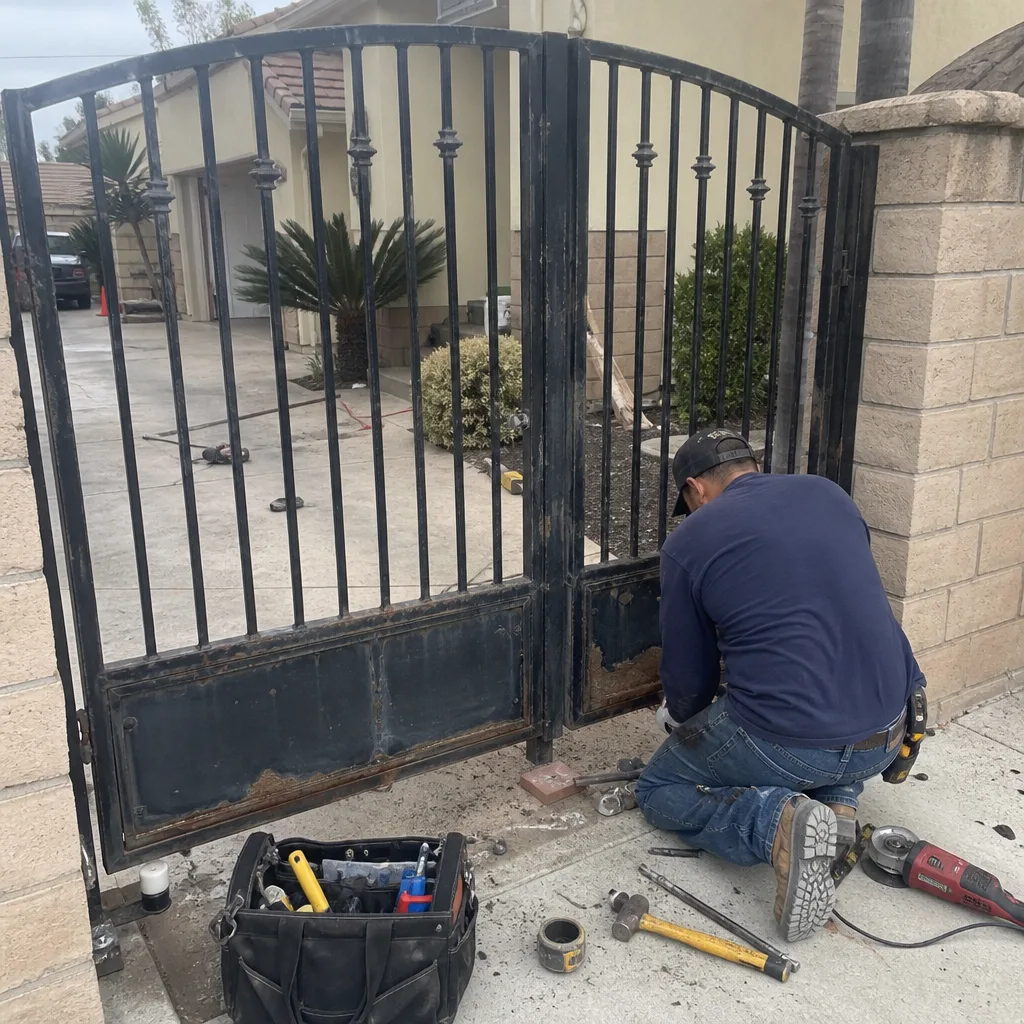 Before
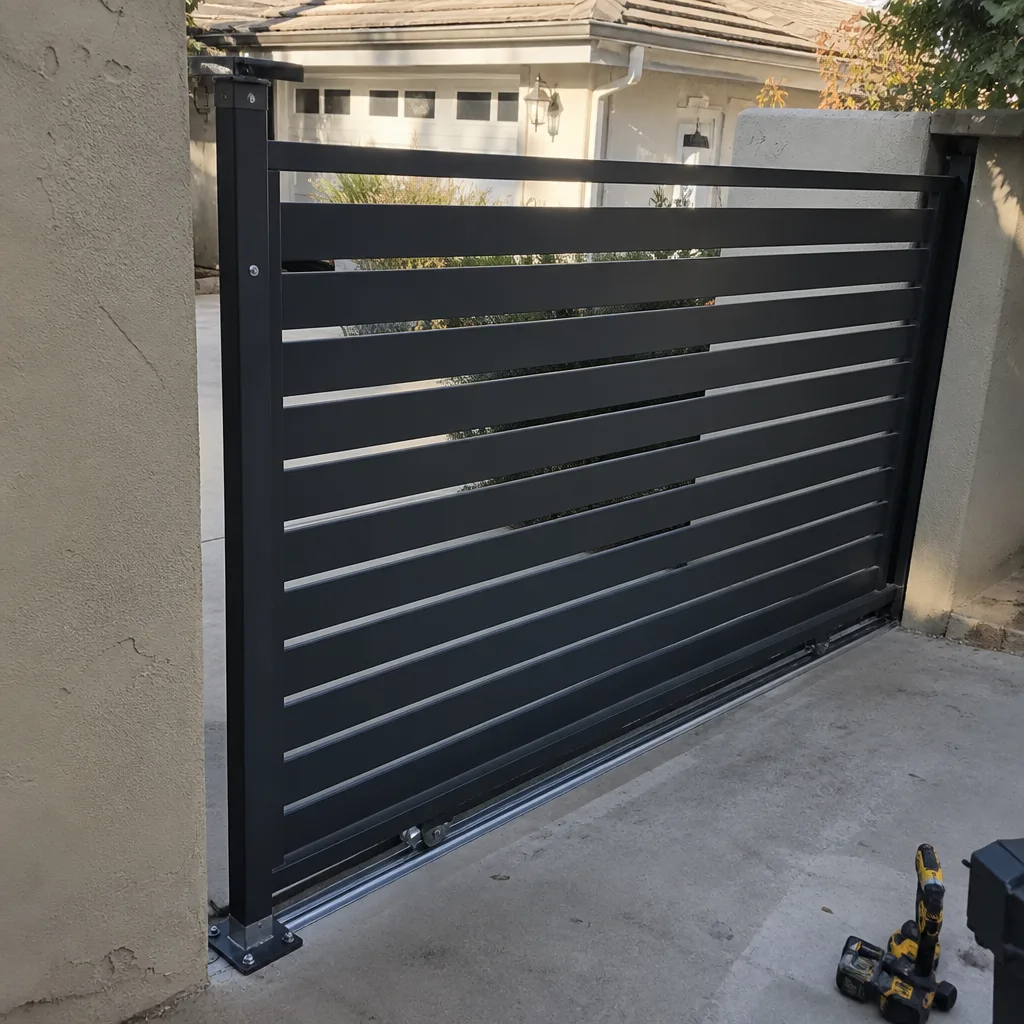 After