
Last updated November 2, 2026
 Wrought iron
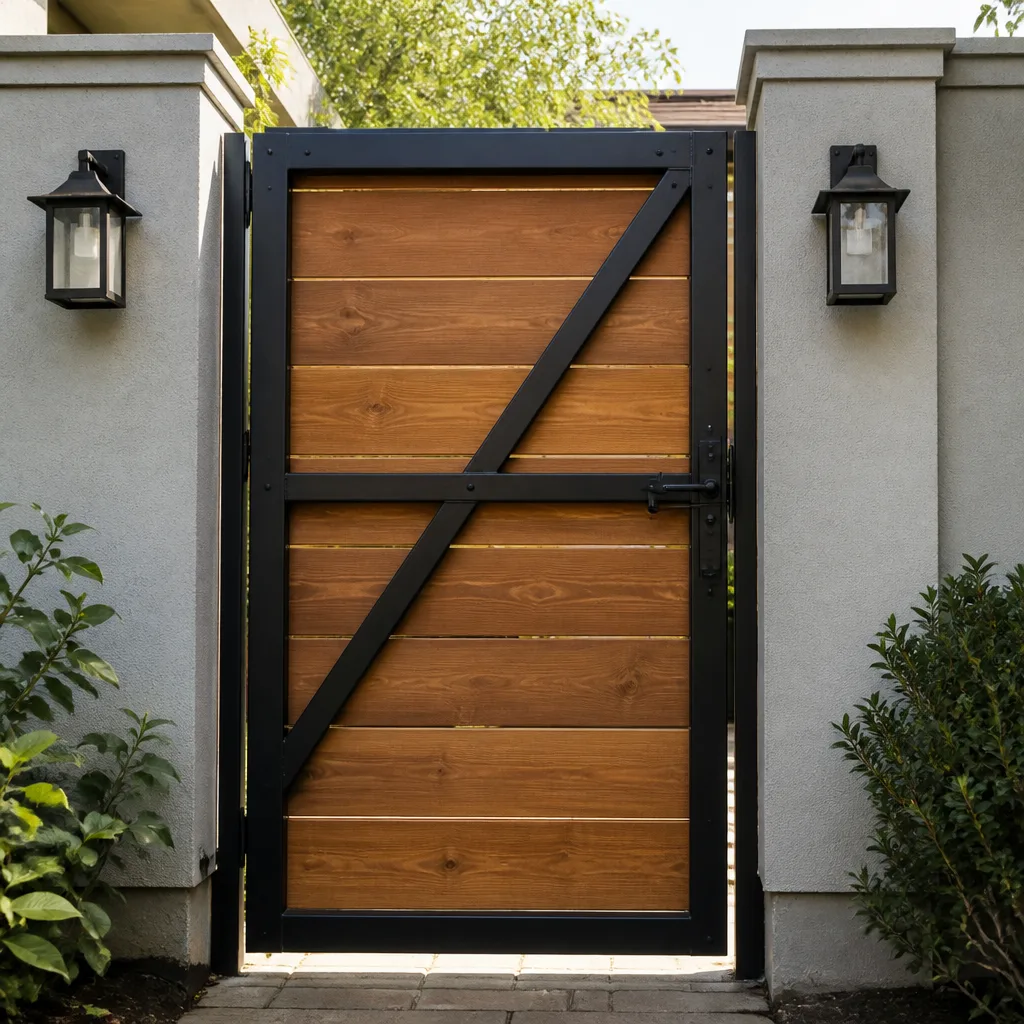 Wood & steel frame
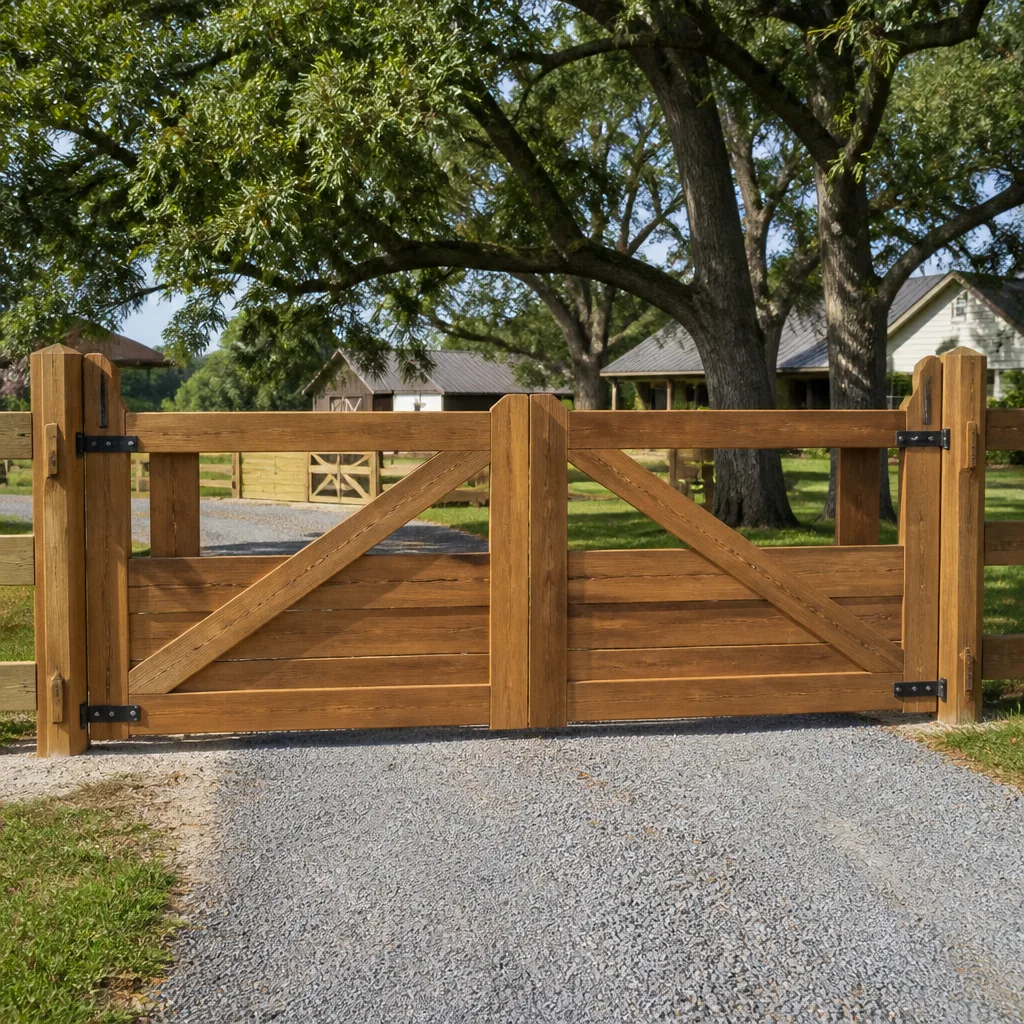 Farm & ranch
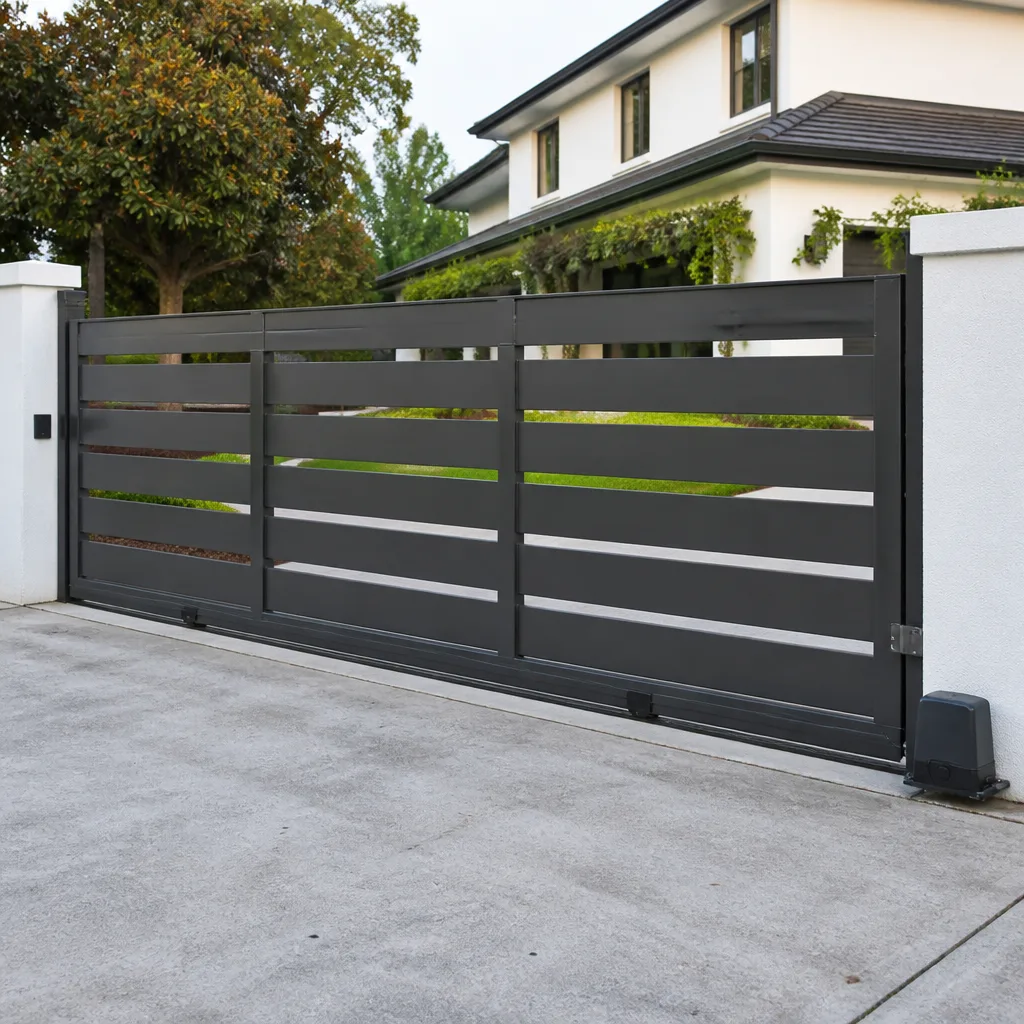 Sliding driveway gates
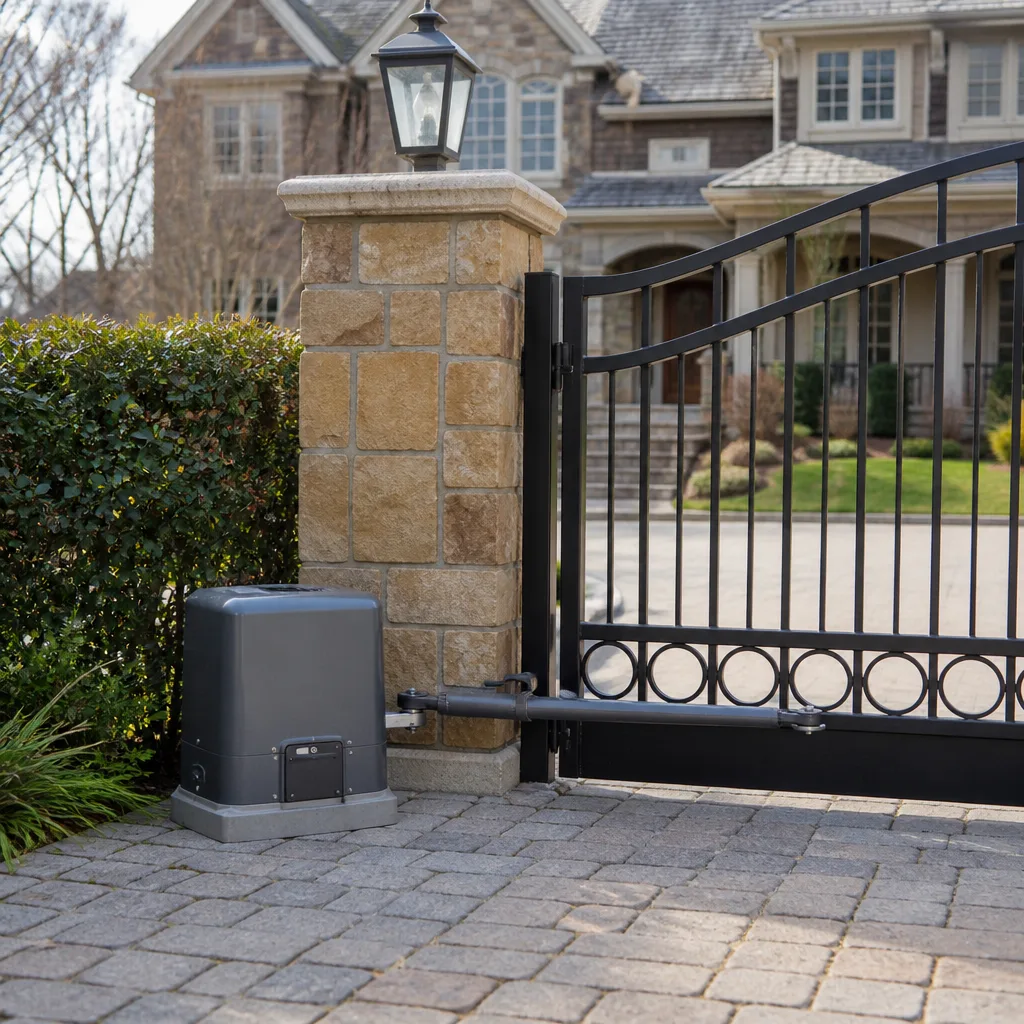 LiftMaster operators
Free on-site gate assessment - hinges, posts, and your LiftMaster or Nice gate operator checked before anything is quoted
The assessment is free and the quote is the invoice.
Get your free estimateGate Repair Emergency Preparedness Guide for Valencia Homes
During the 2019 Saddleridge fire evacuation, multiple Santa Clarita Valley residents found themselves delayed at their own property lines, trapped behind automated gates they couldn’t manually override fast enough. It’s a problem most people don’t think about until they’re standing in the dark with a dead motor and a dispatcher asking why they’re still at home. This guide walks you through preparing your Valencia gate system for the emergencies most people never plan for: power failures, motor burnouts, control board faults, and the security risk of a gate that fails in the open position. You’ll learn how to find and operate your manual release on four different operator types, what to do when your gate won’t close, and how to build a one-page emergency card for your specific system.
Quick Answer
A Gate Repair emergency in Valencia is any failure that leaves your gate stuck in the wrong position when you need it to move: locked closed during an evacuation or failed open when you need perimeter security. The single most important preparation is knowing your system’s manual release procedure before you need it. Every operator type (LiftMaster, Mighty Mule, DoorKing, FAAC, and others) has a mechanical disengagement mechanism that works without power, but each one releases differently, and forcing the wrong component can turn a one-hour repair into a full operator replacement.
Styles & brands we work with
- Wrought iron
- Wood & steel frame
- Farm & ranch
- Sliding driveway gates
- LiftMaster operators
Table of Contents
- How to Find and Operate the Manual Release on Any Gate Operator
- What to Do When Your Gate Fails in the Open Position
- Your One-Page Gate Emergency Card: What to Write Down Today
- Power Outage Protocol: Battery Backup, Testing, and What Actually Happens
- The Valencia-Specific Maintenance Calendar That Prevents Most Emergencies
- How to Identify Your Gate Operator in 60 Seconds
- Common Mistakes to Avoid
- When to Call a Professional
- Frequently Asked Questions
How to Find and Operate the Manual Release on Any Gate Operator
Every automated gate operator sold in the US market includes a mechanical manual release that disengages the motor from the gate leaf, allowing you to push the gate open or closed by hand. It’s a federal safety requirement, not an optional feature. The problem is that each manufacturer puts the release in a different place and engineers it differently. In our experience serving Valencia homes, most homeowners we visit for the first time cannot locate their manual release without searching for several minutes, which is exactly what you don’t want during a fire evacuation or power failure.
How to disengage each operator type without power
- LiftMaster swing and slide operators: Look for a red or yellow release handle mounted directly on the operator chassis, typically near the bottom or on one side. Pull the handle straight out or down (depending on model) until it locks into the released position. The gate should now swing or slide freely. On LiftMaster slide gate models, the release bolt is often a keyed mechanism on the drive unit itself. You’ll need the key, which should be kept in a marked location near your garage entry door, not in a drawer with thirty other unlabeled keys.
- Mighty Mule swing operators: These are among the most common residential operators in Valencia’s newer subdivisions, and their release mechanism is a small metal lever on the top of the operator arm, usually near where the arm connects to the gate. Push the lever over or lift it upward to disengage. The arm will telescope or fold back manually. Mighty Mule systems also have a keyed manual release on the gate bracket itself on some models. If you have the pin-style release, remove the clevis pin, pull the arm off the gate bracket, and the gate swings free.
- DoorKing slide and swing operators: DoorKing builds commercial-grade equipment that’s common on Valencia HOA entrance gates and larger residential properties. On slide gate models, find the manual release door on the side of the operator housing. Open it with the key and pull the release lever to disengage the drive chain. On DoorKing swing models, the release is a lever on the operator arm near the gate connection point. Pull it out and lock it in the open position. DoorKing releases are heavier-duty than residential units, so expect more physical resistance when you pull.
- FAAC swing and slide operators: FAAC is found on many higher-end Valencia properties and commercial installations. FAAC swing operators typically use a locking mechanism on the operator piston or arm that requires a special key, not a general house key. If you have a FAAC system and don’t know where your release key is, find it this week, because trying to force a FAAC operator without the proper release key can bend the piston rod and cost you a full operator replacement. Slide models use a release lever inside the operator cabinet, accessed with the cabinet key.
One warning we give every Valencia customer: after a manual release, the gate is not connected to the motor. If you leave your gate in the released position and go back inside, anyone can push the gate open or closed. Re-engage the operator as soon as the emergency has passed, or secure the gate with a chain and padlock in the meantime.
What to Do When Your Gate Fails in the Open Position
A gate stuck closed is an annoyance. A gate stuck open is a security failure. In Valencia, where many homes back up to open space or have long driveways with reduced visibility from the street, an open gate is an invitation for anyone to drive or walk onto the property. If your gate fails open at 2 a.m., you need a plan to secure the opening before you can schedule a repair.
First, determine why the gate is open. If the power is out entirely, the gate may have stalled mid-cycle or been left open by the operator’s fail-safe mode. If the motor hummed and stopped, you likely have a gear or drive chain failure. If the gate opened on its own and won’t respond to commands, you may have a control board fault or a safety sensor issue that’s putting the system into a default-open state.
For immediate security while waiting for repair, here’s the protocol we recommend for Valencia homeowners:
- Close the gate manually if possible. Use the manual release procedure from the section above to disengage the motor and push the gate closed. If the gate is too heavy to move by hand, don’t force it. A swing gate leaf on a long driveway can weight 400 to 800 pounds, and fighting it will injure your back, not close the gate.
- Chain and padlock the gate to its post. If you can get the gate closed, wrap a steel chain around the gate frame and the gate post, then secure it with a padlock. This prevents both wind from pushing the gate open and anyone from manually pulling it open.
- Disable the auto-open command. If your gate keeps cycling open on its own, power down the operator at the circuit breaker. A control board that’s randomly opening the gate is a safety concern: a gate that opens and closes on its own can catch a car, a child, or a pet. Cut power until a technician arrives.
- Block the opening with a vehicle if the gate won’t close. On properties with a wide driveway, park a car diagonally across the opening to create a temporary barrier. This is a short-term solution only and not a substitute for a repair.
- Check your safety sensors. Many Valencia gates fail open because a photo eye or safety edge is blocked, damaged, or out of alignment. A leaf, a spider web, or a sprinkler spraying water onto a sensor can trigger a fault that leaves the gate open. Wipe the sensors down and clear any debris, then test the gate again.
When you call for repair, describe exactly what the gate was doing: “It opened and now won’t close” is different from “It stalled halfway open and made a grinding noise.” The diagnosis is faster when we know the failure mode. For gate operator failures that leave the gate stuck open, our team recommends treating the situation like a security emergency, not a cosmetic issue. Even if the gate is ornamental and the driveway is short, an open gate signals to anyone passing by that the property’s defenses are down.
Your One-Page Gate Emergency Card: What to Write Down Today
The most useful 15 minutes you can spend on gate preparedness is creating a one-page card that lives in your garage, your kitchen drawer, and your phone’s notes app. In an emergency, you won’t have time to search for model numbers or pull up a PDF manual. This card contains everything a technician or first responder needs to know about your gate system, and everything you need to know to act immediately.
Here’s the template we give to Valencia homeowners during every new installation and repair visit:
- Gate operator brand and model number. Don’t just write “Mighty Mule.” There are dozens of Mighty Mule models, and replacement parts are model-specific. The model number is on a sticker on the operator chassis or control board. Write down the full string, including any letters after the number.
- Manual release type and location. Write one sentence that tells you exactly what to look for: “Red lever on the operator box, pull toward the street.” Include the location of the release key if your system uses one (FAAC and some DoorKing models).
- Circuit breaker number. Find which breaker controls your gate operator and label it “GATE” on your electrical panel. In a power emergency, killing the right breaker fast prevents control board damage from power surges.
- Power backup information. Does your operator have a battery backup? If yes, note the battery type and the date it was last replaced. If no, write “NO BATTERY BACKUP” so you’re not wondering during an outage.
- Gate dimensions and weight. A professional repair technician needs to know the gate leaf length and approximate weight to spec replacement parts. Measuring once and writing it down saves time during the diagnostic call.
- Contact priority list. Write down one local emergency gate technician you’ve already vetted. Include the phone number. Also write down the OEM support line for your operator brand, since some faults are brand-specific and can be diagnosed over the phone.
- Date of last service. If your gate was last serviced in 2022 and it’s now 2025, the technician knows to expect three years of wear. This information changes which parts get inspected first.
Print this card and laminate it. Keep one copy in the garage near the electrical panel and one in your glove box. Valencia’s wildfire season runs June through November, and the single most common delay during an evacuation is homeowners trying to disengage an operator they’ve never manually released before.
Power Outage Protocol: Battery Backup, Testing, and What Actually Happens
Valencia sits in Southern California Edison territory, and while the area doesn’t see the extended outages that plague more rural regions, heat waves and wildfire-related public safety power shutoffs (PSPS) are a recurring reality. During a PSPS event, SCE cuts power proactively to reduce fire risk, sometimes for 24 to 72 hours. Your gate operator responds to this one of three ways, and you need to know which one yours does.
Systems without battery backup: The gate simply stops where it is. If it was closed, you’re stuck closed unless you manually release it. If it was open, you’re stuck open with no way to close it except manually. Most residential operators sold before 2018 in the Valencia area don’t include battery backup, including many Mighty Mule and entry-level Ghost Controls units. For these systems, the manual release is your only power outage tool.
Systems with battery backup: The operator detects the power loss and switches to battery. LiftMaster’s battery backup option and some DoorKing commercial units will continue to operate for a limited number of cycles. Under normal residential use, most battery backups on swing gates last for 10 to 20 full open-close cycles before the battery drains. For a family that uses the gate 4 times a day, that’s roughly 2 to 4 days of normal use. Heavy use during an evacuation or when cleaning crews come through will drain it much faster.
Systems with solar backup: Some Valencia properties on larger lots or with agricultural zoning run on solar power with battery storage. These systems are the most resilient but will still eventually fail during extended cloudy weather or if the battery bank is aging. Ghost Controls and Mighty Mule both sell solar panel kits for their residential swing operators, and these are worth considering if your gate is far from your electrical service.
To test your battery backup without triggering a fault, follow this sequence:
- Confirm the gate is closed.
- Go to your electrical panel and flip the gate breaker to OFF.
- Operate the gate once using your remote or keypad.
- If the gate opens and closes normally, your battery is working.
- Flip the breaker back ON immediately after the test.
A critical note on this test: do not leave the breaker off overnight. Some operators will drain the backup battery completely if left disconnected from mains power for extended periods, and a fully drained battery often won’t recharge, requiring replacement. If your battery backup is more than three years old, test it monthly during wildfire season and consider proactive replacement before the season starts.
The Valencia-Specific Maintenance Calendar That Prevents Most Emergencies
Most gate emergencies on Valencia properties aren’t random failures; they’re predictable outcomes of deferred maintenance. Following our Gate Repair Maintenance Checklist for Valencia Homeowners can prevent most of these issues. The climate here, hot summers, dry Santa Ana winds, and occasional hard rain, accelerates specific types of wear. Here’s the preventative maintenance schedule we recommend for local homeowners, organized by season:
Late spring (April to May): pre-summer inspection
Before the heat arrives, check the following items. The summer months in Valencia push gate motors into prolonged operation cycles, and a motor that’s already running hot will fail faster when ambient temperatures hit 95 degrees.
- Test your manual release: disengage and re-engage the operator once to confirm it moves freely.
- Lubricate the gate hinges, pivot points, and drive chain (if equipped). Use a silicone-based lubricant, not WD-40 for hinges; WD-40 attracts dust and turns into grinding paste in Valencia’s dry conditions.
- Check for rust on the operator housing and gate frame. Surface rust isn’t an emergency, but rust on welded joints or the drive chain is.
- Clear irrigation overspray from the operator box. Sprinklers that soak the control board enclosure will destroy a circuit board faster than anything else we see in Valencia.
- Test the safety sensors by blocking them with a cardboard box while the gate is closing. The gate should reverse immediately.
Late summer (August to September): wildfire season readiness
This is the window when PSPS events are most likely and when evacuation preparedness matters most.
- Re-test your battery backup using the breaker-flip procedure above.
- Confirm your manual release key is in its designated spot and that you can operate the release in under 30 seconds.
- Drive the gate through five full cycles and listen for unusual sounds: grinding, squealing, or thumping indicates a mechanical problem that will likely fail under load.
- Check the gate’s physical stops. A gate that slams into its open or close stops hard is transferring impact force into the operator gears, which will eventually strip them.
Winter (December to January): rain and wind prep
Valencia’s winter rains typically don’t last long, but when they come hard, they reveal drainage problems around the operator foundation. Water pooling around the operator platform will eventually seep into the housing and corrode the control board.
- Inspect the drainage around the operator pedestal. If water pools after rain, regrade or add drainage gravel.
- Check for fence post or gate post movement. Saturated soil can shift a gate post enough to misalign the operator, which causes binding and motor strain.
- Test the gate’s auto-close feature (if equipped). Auto-close timers that become unreliable are a sign of control board degradation, not a programming issue.
This calendar represents roughly two hours of work per year for the average Valencia homeowner, and it prevents the majority of emergency calls we respond to. For Gate Repair Permits, Codes & Inspections in CA: What You Need to Know, check our compliance guide before starting major work. For homeowners who don’t want to do this themselves, a professional maintenance visit once a year covers all of these items in a single appointment.
How to Identify Your Gate Operator in 60 Seconds
Every gate repair conversation starts the same way: with the customer trying to describe what brand and model they have, and usually getting it wrong. That’s normal. Gate operators look similar to the untrained eye, and the brand name on the remote control doesn’t always match the operator on the ground.
Here’s the fastest way to identify what you actually have, which matters because the emergency repair process is brand-specific:
- Look for the operator housing, not the gate. The operator is the box or arm that physically moves the gate. On swing gates, it’s usually a metal arm attached to the gate near the bottom or middle. On slide gates, it’s a box on a pad next to the track.
- Read the manufacturer label. Every operator has a metal or plastic data plate with the brand name and model number. On LiftMaster, Elite, and DoorKing commercial units, the label is on the outside of the housing. On Mighty Mule and Ghost Controls residential arms, it may be on the underside or the side facing away from the driveway.
- Check the control board. If you can open the operator cabinet safely (power off first), the control board will have a brand printed on it. FAAC boards have distinctive blue components. DoorKing boards are typically green. BFT boards are often white. At Gate Repair Valencia home, we use the control board, not the housing, to confirm the exact system when parts availability is in question.
- Match the remote. If you have the original remote, the FCC ID or the brand name printed on it will narrow the search. Ghost Controls remotes are distinctive white ovals. Mighty Mule remotes are typically gray or black with a single button. DoorKing remotes for HOA systems are usually black with multiple buttons.
- Take a photo. Before you call any gate company, take a clear photo of the operator housing, the data plate, and the control board. A good technician can often identify the system and the likely failure mode from photos alone, saving a diagnostic trip.
The most common misidentification we see in Valencia is a Mighty Mule remote being used on a different brand’s operator because a previous homeowner replaced the remote but not the operator. We also see commercial DoorKing systems on HOA properties being called “the clacky one” by board members who don’t realize there are three different DoorKing models with different release mechanisms. Get the model number right, and the emergency response is immediately faster.
Common Mistakes to Avoid
- Using the manual release to “test” the gate without re-engaging it afterward. We see this constantly. A homeowner disengages the operator to push the gate manually, then walks away without re-engaging. The next time the remote is pressed, the motor spins but the gate doesn’t move, and the homeowner assumes the operator is dead. Re-engage the release every single time.
- Forcing a gate that won’t move manually. If you’ve disengaged the operator and the gate still won’t budge, there’s another problem: a bent track, a seized hinge, or a fallen gate leaf. Forcing it can bend the gate frame or break the operator mount. Call a professional instead.
- Leaving the circuit breaker on during a thunderstorm or power surge. Control boards are sensitive to voltage spikes, and a nearby lightning strike or a power surge from a transformer failure can fry a board even when the operator is turned off. In Valencia, where transformer issues are not uncommon during heat waves, we recommend turning the gate breaker off during severe weather if you have no surge protector installed on the circuit.
- Ignoring a gate that’s slow or noisy for months. A swing gate that takes 20 seconds to open when it used to take 12 is telling you something: the motor is straining, the hinges are binding, or the gearbox is failing. That problem won’t resolve itself, and it will eventually fail at the worst possible moment.
- Attempting DIY control board repairs. We’ve had Valencia customers watch YouTube videos and try to solder a new relay onto a control board. Control boards carry live voltage even when the operator is off, and a wrong connection can destroy the entire board and create a fire hazard. This is not a DIY component.
- Using the wrong lubricant on the drive chain. Heavy grease attracts dust and grit, which turns into a grinding compound in Santa Clarita’s dry conditions. Use a silicone-based or graphite-based lubricant, applied sparingly, and wipe off excess immediately.
- Not documenting the gate system when you buy the home. Most Valencia homeowners inherit their gate system from the previous owner and never learn the brand, model, or maintenance history. When the gate fails, they’re starting from zero. Spend 30 minutes documenting the system now.
When to Call a Professional
Some gate problems can be managed with a manual release and a little patience. Others require a trained technician with the right parts and diagnostic equipment. Call a professional when the gate won’t move at all, when the motor runs but the gate doesn’t respond, when you hear grinding or metal-on-metal sounds from the operator, when the gate reverses on its own, when the control board shows error codes you don’t recognize, or when the gate has been hit by a vehicle or fallen off its track. Don’t attempt to repair a gate that’s connected to a live electrical circuit, and never work on a gate that’s sagging or leaning under its own weight. Gate Repair in Tarzana covers the same diagnostics and repair work for adjacent areas, and Gate Repair Valencia offers free estimates in Valencia. Call (844) 655-9821 and we’ll help you determine whether a service visit is necessary or whether it’s something you can safely handle yourself.
Frequently Asked Questions
Locate your operator’s manual release mechanism, disengage it using the procedure specific to your brand (LiftMaster, Mighty Mule, DoorKing, or FAAC), then push the gate open by hand. The average manual release takes 30 to 60 seconds once you know where it is. For a detailed walkthrough by operator type, call (844) 655-9821 and we’ll talk you through it.
Emergency gate repair depends on the failure: a blown fuse or bad safety sensor might run under $200, while a replacement control board for a DoorKing commercial system can exceed $1,500 with parts and labor. The quote is always agreed upon before any work starts. Electric Gate Repair in Tarzana covers the same diagnostic and repair process for nearby customers, and our Valencia estimates are free.
For a gate that’s failed in the open position and left your property unsecured, we prioritize these as emergency calls. The repair timeline depends on the failure mode and whether parts are in stock locally. Most safety-sensor and mechanical-release failures can be addressed the same day; a failed control board may require a 1 to 3 day part order. Call (844) 655-9821 and describe what happened, and we’ll give you an honest assessment of the repair window.
If your operator has a battery backup installed and the battery is healthy, most residential swing gates will run for 10 to 20 full open-close cycles before draining. That translates to 2 to 4 days under normal household use. Test your backup before wildfire season using the breaker-flip procedure described above. If you don’t know whether your system has battery backup, check the operator housing for a battery indicator light or the word “backup” on the model label.
No. A disengaged gate has no motor resistance and can be pushed open by anyone. If you’ve released your gate manually, either re-engage the operator as soon as possible or secure the gate with a chain and padlock until a technician arrives. Leaving a gate in the released position overnight in Valencia is an open invitation to your driveway.
Kill the circuit breaker immediately. A gate cycling on its own usually indicates a control board fault or a shorted accessory, and every cycle is a safety risk to vehicles, children, and pets. Then call a professional. This is not a problem that fixes itself, and it’s not something you should attempt to troubleshoot with the power on. If you’re in the Valencia area, call (844) 655-9821 and we’ll walk you through the next steps.
We service nine major gate brands: LiftMaster, FAAC, BFT, Linear, Viking, Ghost Controls, DoorKing, Elite, and Mighty Mule. That covers the vast majority of residential and commercial gate systems in Valencia, from entry-level Mighty Mule setups to commercial DoorKing and FAAC access systems. If you’re not sure what brand you have, take a photo of the operator housing and call us, and we’ll identify it from the picture. For customers in adjacent areas, Gate Installation in Tarzana covers the full installation process from consultation to completion.
The Bottom Line
The difference between a gate emergency that costs you 30 minutes and one that costs you a full day often comes down to preparation: knowing your manual release procedure, knowing your system’s brand and model, and having a written plan for failures in the open position. Valencia’s wildfire season, power shutoff events, and the general reality of mechanical systems means that every automated gate will eventually fail. The question is whether you’ll be ready when it does. Spend 15 minutes building your emergency card, test your manual release once, and note whether your system has battery backup. That’s the minimum preparation. For everything else, including a free estimate on repairs, maintenance, or a full system replacement, call Gate Repair Valencia at (844) 655-9821.
Written by the team at Gate Repair Valencia, serving Valencia since 2013. Explore more guides & resources on our blog.
See the difference
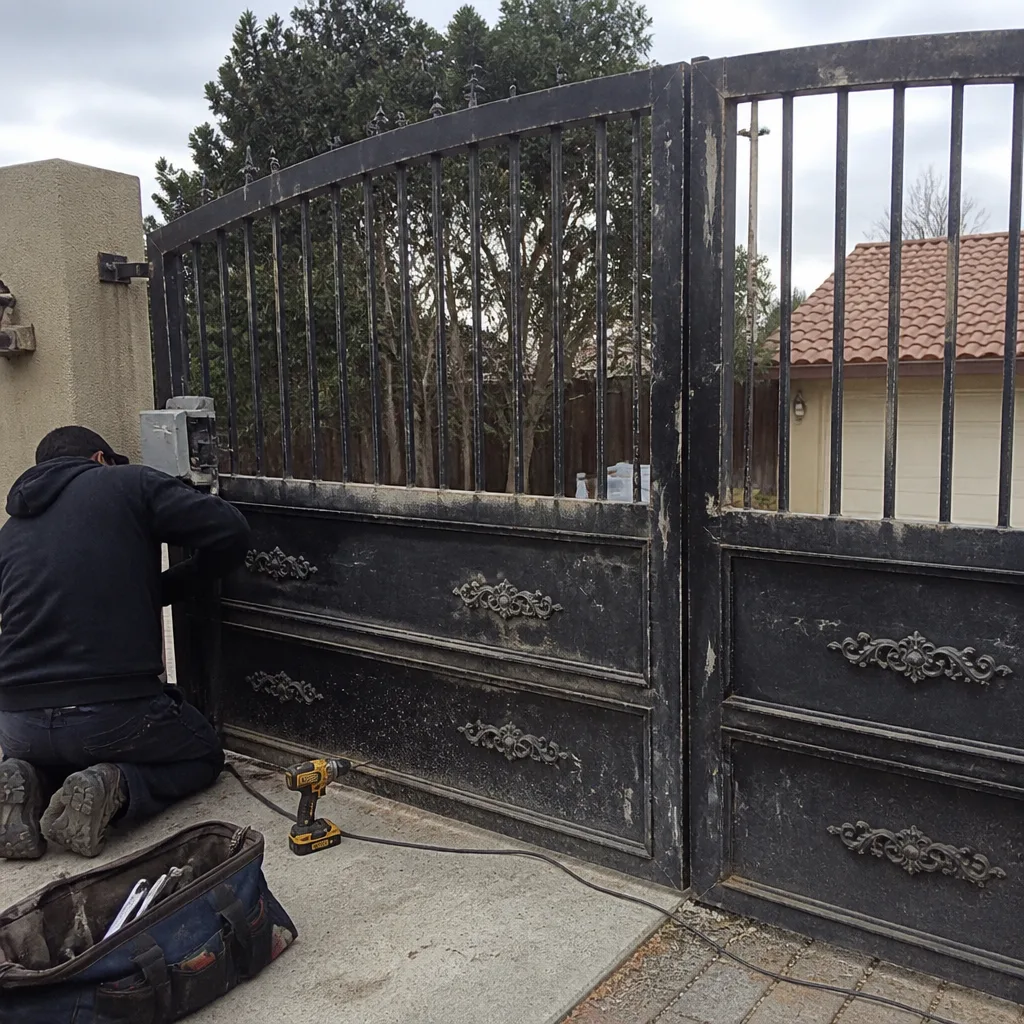 Before
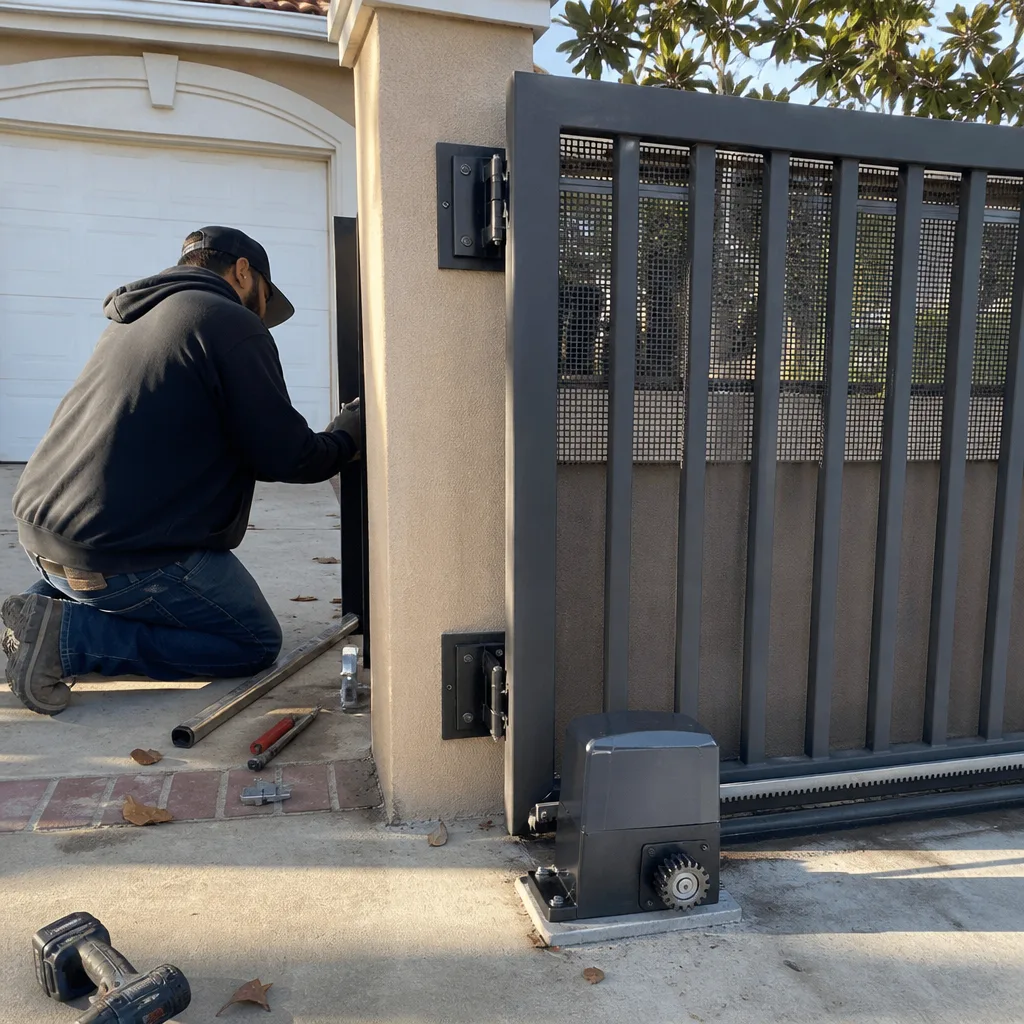 After
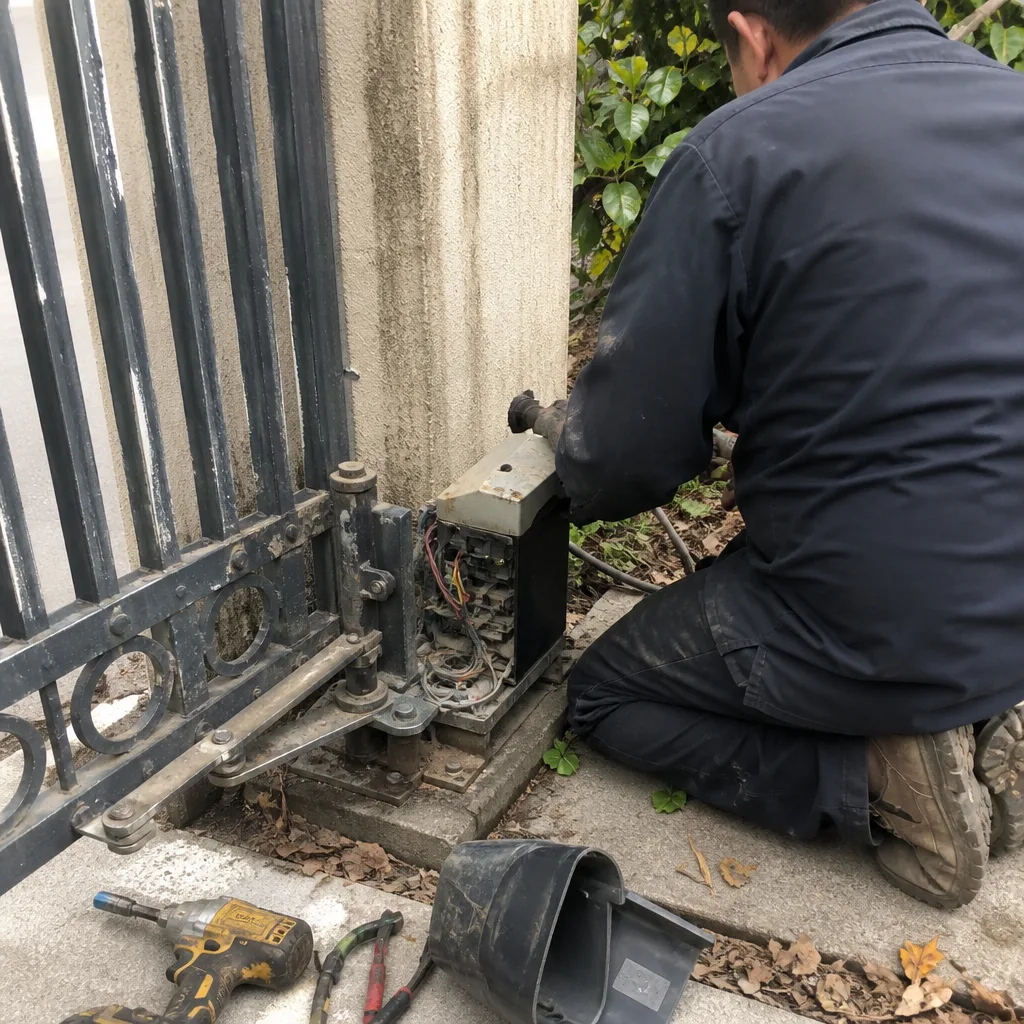 Before
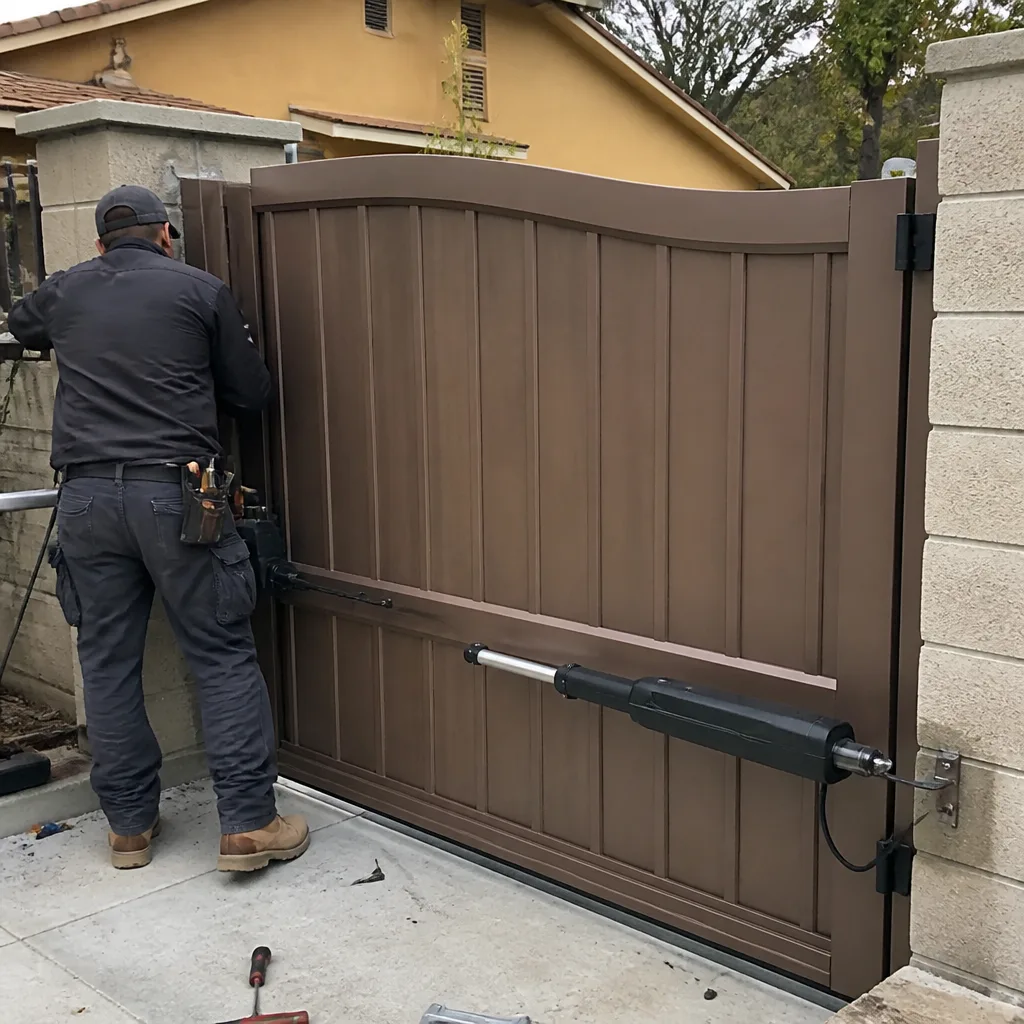 After
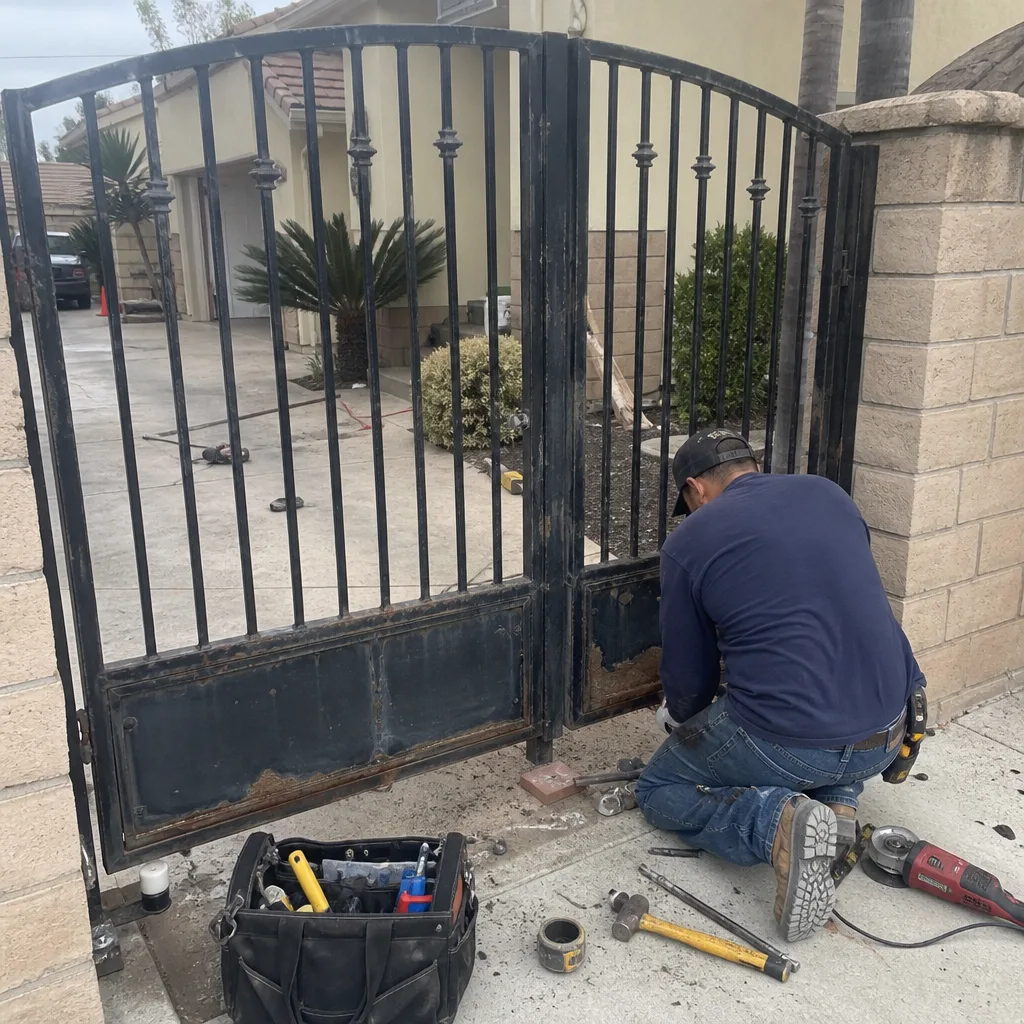 Before
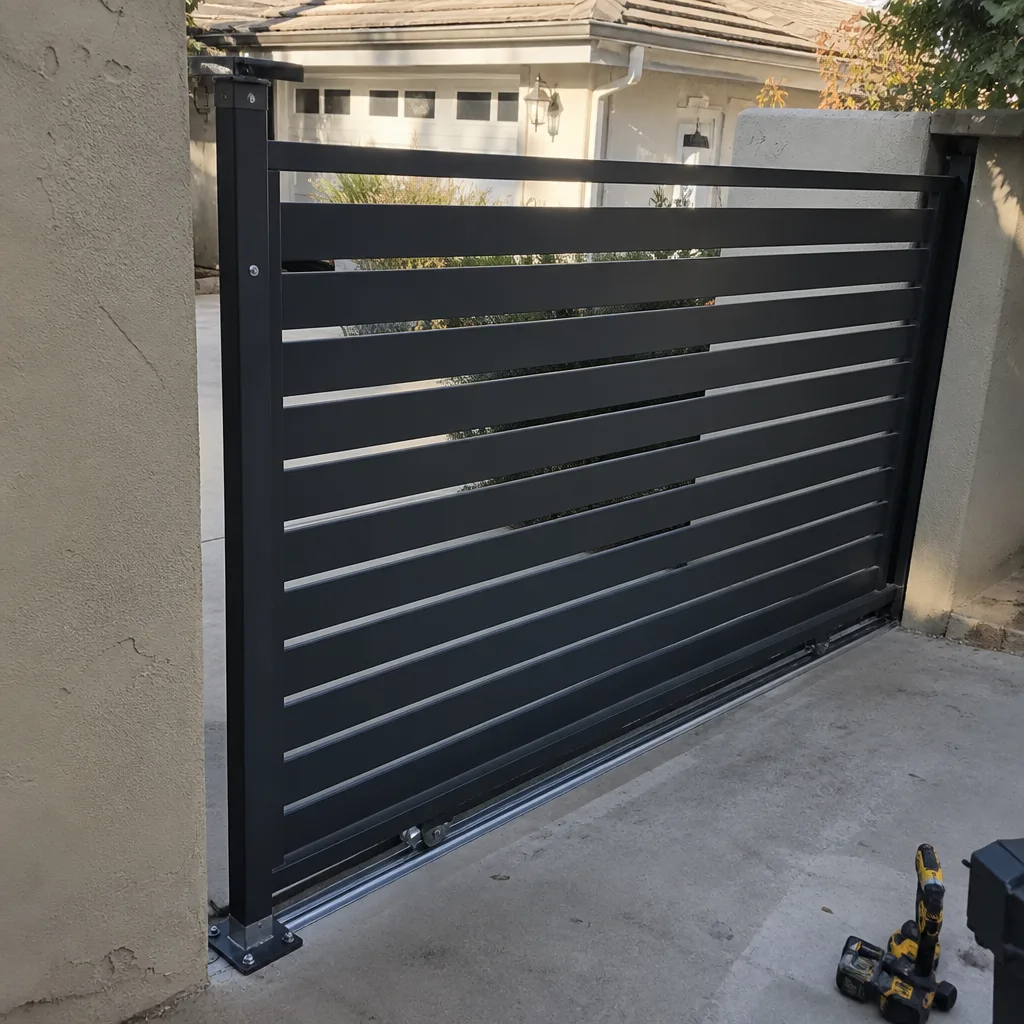 After