
Last updated November 2, 2026
 Wrought iron
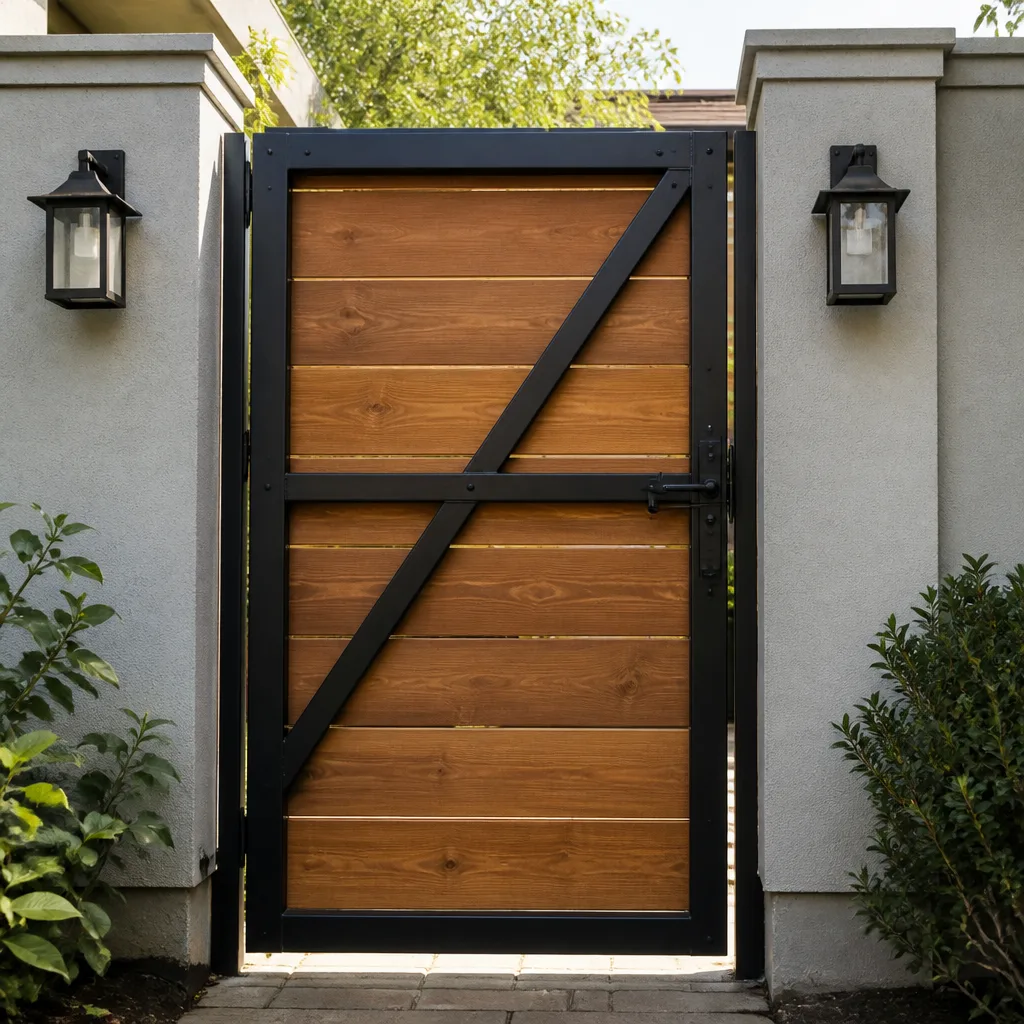 Wood & steel frame
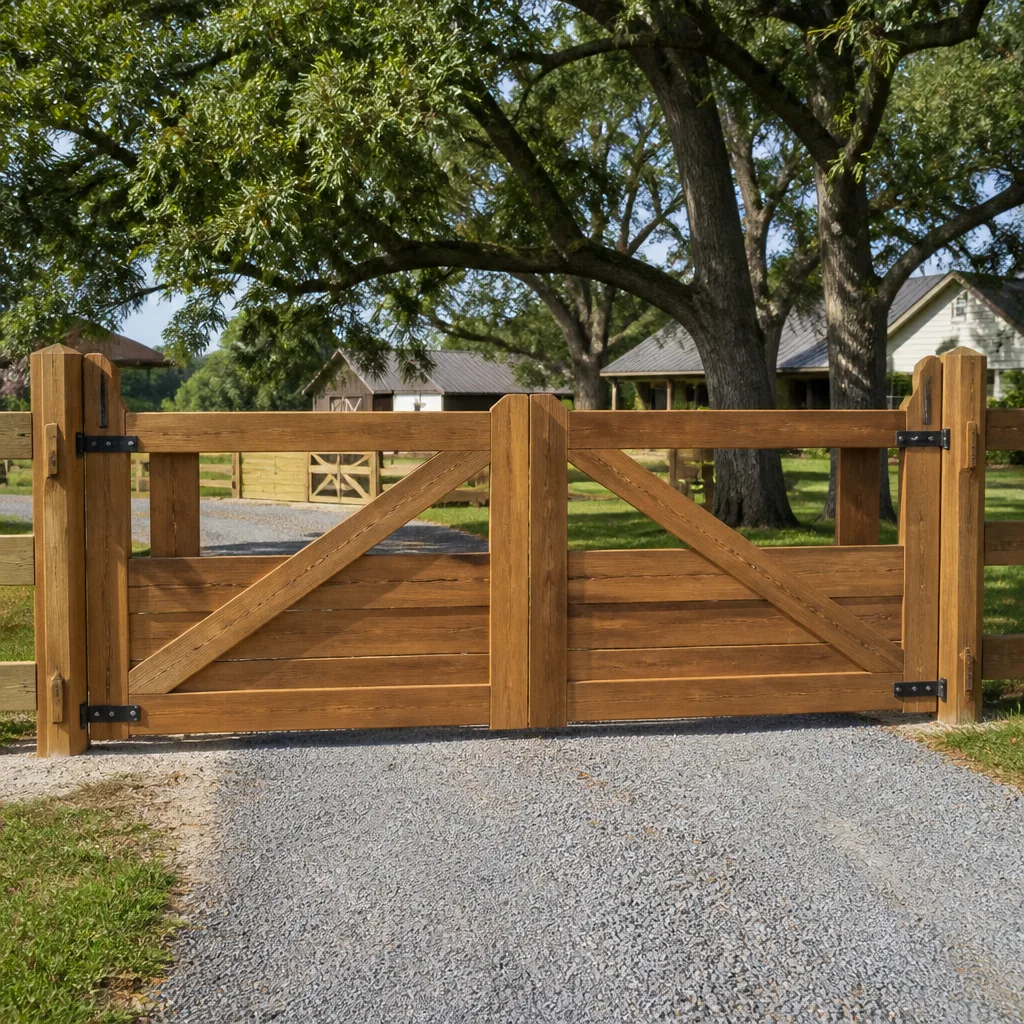 Farm & ranch
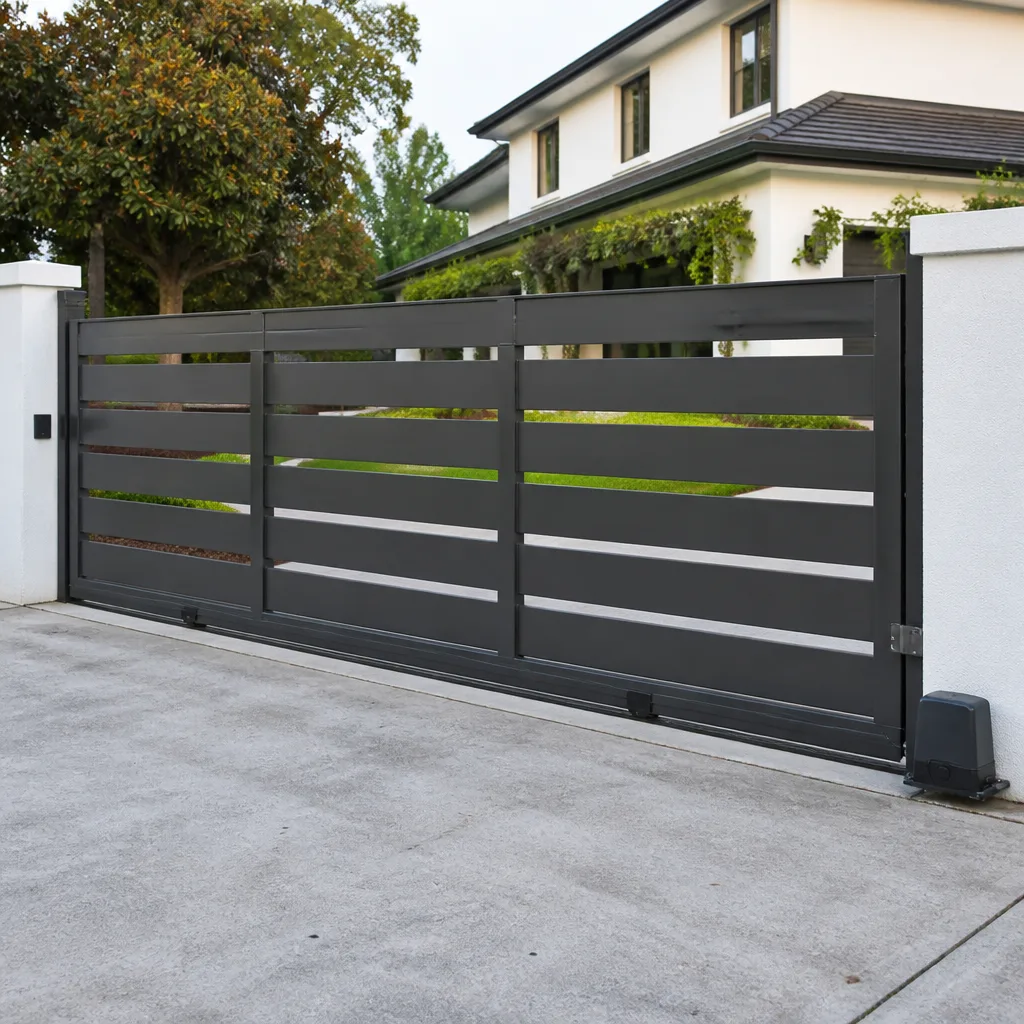 Sliding driveway gates
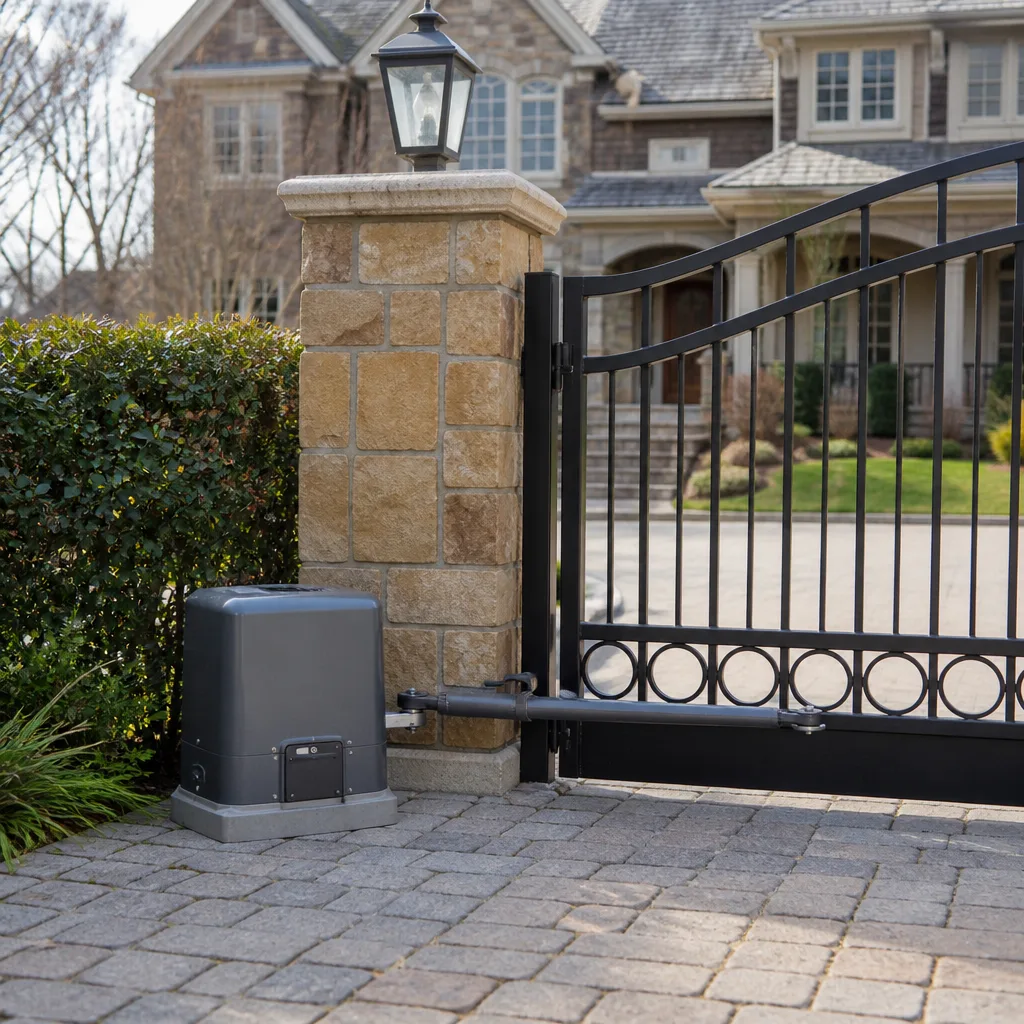 LiftMaster operators
Free on-site gate assessment - hinges, posts, and your LiftMaster or Nice gate operator checked before anything is quoted
The assessment is free and the quote is the invoice.
Get your free estimateGate Repair Troubleshooting: Common Problems and How to Fix Them
Replacing a gate motor when the real problem is a $12 safety loop sensor is one of the most common expensive mistakes in our Gate Repair services, and it happens because most troubleshooting advice starts at the wrong end of the system. In Valencia, where summer heat pushes gate electronics harder than most climates in the country, that mistake gets made more often than it should. This guide teaches you the signal-path diagnostic method: a sequence that starts at the power source and moves downstream through the control board, sensors, operator, and mechanical hardware. By the end, you’ll know how to read error codes, distinguish electrical failures from mechanical ones, and decide whether a repair is a weekend job or a technician call.
Styles & brands we work with
- Wrought iron
- Wood & steel frame
- Farm & ranch
- Sliding driveway gates
- LiftMaster operators
Quick Answer
Gate repair troubleshooting works best when you follow the signal path in order: power source, transformer, control board, sensors, operator, and mechanical hardware. Most gate failures are electrical, not mechanical, and the three most common culprits are a dead battery or power supply, a misaligned photo eye or faulty safety loop, and a control board that has lost its programming. Before replacing a motor, always check the sensors and the board, because those parts fail more often and cost a fraction of the price.
Table of Contents
- The Signal-Path Diagnostic Method: Why Order Matters
- How to Read Gate Operator Error Codes on LiftMaster and DoorKing Boards
- The Three Sensor Failures That Mimic Motor Failure
- Mechanical vs. Electrical Faults: Sounds, Movement, and Error Codes
- When a Successful Reset Is a Warning Sign, Not a Fix
- Power Problems: Batteries, Transformers, and What Dies First in Valencia Heat
- Common Mistakes to Avoid
- When to Call a Professional
- Frequently Asked Questions
- The Bottom Line
The Signal-Path Diagnostic Method: Why Order Matters
Most people start gate troubleshooting at the gate itself: they look at the motor, the wheels, the chain, the hinge. That’s backwards. The motor only does what the control board tells it to do, and the control board only knows what the sensors and input devices tell it. If you start at the motor, you’re working at the end of a long chain of components that each depend on the one before it. Start at the wall outlet or battery, and trace forward. Here’s the order we use on every service call, and it’s the same order we’re about to walk you through:
- Power source: Is there voltage at the outlet, breaker, or battery terminals?
- Transformer: Is the transformer stepping AC voltage down to the low-voltage DC that the board needs?
- Control board: Is the board receiving power, and is it sending the right commands based on its inputs?
- Sensors: Are the photo eyes, safety loops, and limit switches reporting correctly?
- Operator: Is the motor or actuator actually responding to commands from the board?
- Mechanical hardware: Are the hinges, wheels, tracks, chains, and gate frame itself moving freely?
That sequence is not arbitrary. Each step depends on the one before it. A motor with no power looks exactly like a dead motor, but the fix is a $40 transformer, not a $600 operator. A board that won’t respond to a remote looks like a failed board, but the problem may be a stuck safety loop telling the board to hold the gate open. In our experience across Valencia’s residential and commercial properties, roughly three out of four gate failures we see are electrical or sensor-related, not mechanical. Following the signal path eliminates guesswork. For a full picture of what’s involved on the repair side, see the Gate Repair Valencia home page.
How to Read Gate Operator Error Codes on LiftMaster and DoorKing Boards
If your gate operator has an LED display or a diagnostic LED that blinks a pattern, you already have a technician’s starting point. LiftMaster and DoorKing boards both report fault conditions via blinking LEDs or numeric codes, and learning to read them saves a service call’s worth of diagnosis time.
LiftMaster Error Codes
LiftMaster residential and light-commercial operators use a diagnostic LED on the control board. Count the blinks between pauses. Here are the most common ones we see on LiftMaster gates in Valencia:
- 1 blink: No problem, normal operation.
- 2 blinks: Interrupt loop or safety loop triggered. The board thinks a vehicle or obstruction is present. Check the loop detector wiring and the loop itself for a break or short.
- 3 blinks: Safety device obstruction, usually a misaligned photo eye or a blocked beam.
- 4 blinks: Limit switch fault. The gate traveled too far or a limit switch failed.
- 5 blinks: Motor overload or stalled motor. The gate met too much resistance or the capacitor failed.
DoorKing Error Codes
DoorKing boards, common on commercial and HOA gates throughout Valencia, display numeric codes on an LCD or report through the DoorKing remote programming software. The most frequent ones:
- Error 01: Entrapment sensor activated. Check the photo eyes and safety edges.
- Error 02: Gate travel too long or limit switch not reached. Check for an obstruction in the track or a bad limit switch.
- Error 03: Motor overload. The gate is binding, or the motor is drawing too much current.
- Error 04: Loop detector fault. The loop wire in the ground is broken or shorted.
Write down the code before you reset anything. The code disappears when you clear it, and it’s the fastest way to tell a technician what happened. If you’re seeing a code you don’t recognize, our team has worked on these boards long enough to identify the fault from the pattern alone, whether it’s a LiftMaster in a Valencia backyard or a DoorKing on a commercial access point in Tarzana. We specialize in electric gate repair in Tarzana and across the surrounding areas, and board diagnosis is the bulk of those calls.
The Three Sensor Failures That Mimic Motor Failure
This is the section that saves people money. Three sensor problems produce symptoms that look exactly like a dead or dying motor. If you replace the motor without checking these first, you spend $500 to $1,500 and the gate still doesn’t work.
1. The Shadow Loop
A shadow loop is a second induction loop buried in the pavement near the gate, positioned so that a vehicle crossing it won’t trigger the safety loop. Its job is to prevent the gate from closing on a car that’s partially through. When a shadow loop fails, it often fails open, which means the board never sees a signal and the gate behaves normally. But when it fails closed or shorts, the board thinks a car is always present. The result: the gate won’t close, or it closes partway and reverses. A homeowner sees a gate that “won’t finish closing” and assumes the motor is weak. It’s not. It’s a $250 loop replacement, and it’s one of the most common calls we run in Valencia’s gated communities.
2. The Safety Loop
The safety loop sits under the gate’s path and prevents the gate from closing on a vehicle in the swing or slide path. When it fails, the board either ignores it, which creates a safety hazard, or it locks the gate open. A safety loop that’s been cut by pavement shifting, or one whose detector module has failed, produces a gate that opens but won’t close. That presents as a motor or board problem, but it’s neither. The test is simple: bypass the loop detector temporarily (if you’re comfortable with low-voltage wiring) and see if the gate closes. If it does, the loop or its detector is the fault.
3. Photo Eye Misalignment
Photo eyes are the small sensors mounted on either side of the gate opening, usually near ground level. One transmits an infrared beam, the other receives it. When the beam is broken, the board refuses to close the gate. But photo eyes drift out of alignment over time, especially in Valencia’s clay soil, which shifts with the wet-dry cycles of the seasons. A misaligned photo eye behaves identically to a broken one: the gate opens, then reverses or refuses to close. Before you do anything else, check that both photo eyes are clean, level, and facing each other. This is a ten-minute fix with a screwdriver, and it solves a surprising number of “motor failure” calls before we ever touch the operator. For residents in the Tarzana area dealing with these same issues, our gate repair in Tarzana page covers the local specifics.
Mechanical vs. Electrical Faults: Sounds, Movement, and Error Codes
Once you’ve ruled out power and sensors, the next question is whether the remaining problem is mechanical or electrical. The gate itself usually tells you, if you know what to listen for and watch.
Mechanical Fault Patterns
- Grinding or scraping sounds while the gate moves: Worn rollers, a bent track, or a hinge that’s seized. The motor is working; the metal is fighting back.
- Gate moves slowly but steadily: Typically a lubrication issue, a failing capacitor that isn’t delivering full starting torque, or a wheel bearing that’s starting to bind.
- Gate stops mid-travel at the same spot every time: A physical obstruction in the track, a bent section of rail, or a wheel that’s worn flat and catches on a seam.
- Gate sags or scrapes the ground at the free end: Hinge wear or a frame issue, not an operator problem.
- Slide gate shudders or jerks: Debris in the V-track or a chain that’s too loose or too tight.
Electrical Fault Patterns
- Clicking sound but no movement: The board is sending a command, but the motor isn’t turning. Classic signs: failed capacitor, burned contactor, or a seized motor.
- Gate moves in one direction only: A limit switch has failed, or the board has lost its travel programming.
- No response to remote or keypad, but test buttons on the board work: The receiver or the access control wiring is the issue, not the motor.
- Gate opens on its own or cycles unpredictably: A shorted input, water in the keypad, or a failing loop detector sending phantom signals.
- Burning smell from the operator housing: Stop using the gate immediately and kill the breaker. That’s a failed capacitor, a shorted winding, or a board that’s overheating.
In Valencia’s summer months, electrical faults spike. Heat kills capacitors faster than any other component, and control boards in direct sun can exceed their rated operating temperature by 20 degrees. If your gate misbehaves on a hot afternoon but works in the morning, suspect the board or capacitor before the motor.
When a Successful Reset Is a Warning Sign, Not a Fix
A reset that works feels like a win. You power-cycle the operator, the gate moves again, and you’re done. But here’s the pattern we see often enough to mention it specifically: a gate that needs a reset to recover from a fault almost always faults again, and each reset works for a shorter interval than the last. That’s not normal operation. It’s a component degrading.
Control boards fail progressively, not suddenly, in most cases. The first sign is often an error code that clears with a reset. The second sign is the same code returning days or weeks later. The third sign is a board that locks out or a gate that stops responding entirely. We’ve seen this timeline play out in Valencia HOA gates and residential operators alike, as detailed in our Gate Repair Warning Signs: A Valencia Homeowner’s Reference Guide. A board that starts needing weekly resets typically fails completely within 30 days.
What does this mean for you? If you reset your gate and it works, don’t close the book. Note the date, note the code if there was one, and watch for a repeat. If the same fault returns within a month, the reset wasn’t a fix, it was a postponement. At that point, replacing the failing board is usually cheaper than waiting for it to die, because a board that fails mid-cycle can take out a limit switch or a capacitor with it. The same applies to loop detectors that clear on reset but trip again. Electrical gremlins don’t heal themselves.
Power Problems: Batteries, Transformers, and What Dies First in Valencia Heat
Before you touch anything else, confirm the gate has power. It sounds obvious, but a surprising number of gate failures trace to a tripped GFCI outlet, a blown fuse in the disconnect box, or a battery in a solar-powered swing gate that isn’t holding a charge anymore.
For AC-Powered Gates
- Check the outlet or dedicated circuit the operator plugs into. GFCI outlets trip with moisture, and Valencia’s irrigation systems and morning fog create exactly the kind of damp conditions that cause nuisance tripping.
- Check the breaker in the main panel. Gate operators should be on a dedicated circuit, but older installations in Valencia sometimes share a circuit with landscape lighting or a pool pump.
- Check the transformer. It converts 120V AC to the 24V DC or 24V AC that most boards need. A transformer that’s warm to the touch when the gate isn’t running, or one that’s silent when the board has power, is suspect. Multimeters tell the story: no low-voltage output means a dead transformer.
- Check the fuse on the control board itself. Most boards have a small blade fuse or glass fuse protecting the low-voltage side. A blown fuse here usually means something downstream shorted, so replace the fuse once. If it blows again, there’s a wiring fault to find before you do anything else.
For Battery and Solar Gates
Battery-powered operators, common on rural Valencia properties and many Ghost Controls and Mighty Mule installations, fail in predictable ways. The battery is the usual suspect. Lead-acid batteries last three to five years in Valencia’s climate; lithium batteries last longer but cost more and need a compatible charging circuit. A solar panel that’s shaded by a new tree or covered in dust won’t charge the battery fully, and the gate works until the battery voltage sags below the board’s threshold. Check the battery voltage with a meter under load, not just at rest. If it drops below 12.4V on a 12V system as soon as the motor engages, the battery is done.
One more Valencia-specific note: Santa Ana wind events bring dust that coats solar panels and clogs gate tracks. After a windy stretch, check the panel and the track before assuming the operator failed.
Common Mistakes to Avoid
- Replacing the motor before checking sensors: As we covered above, shadow loops, safety loops, and photo eyes mimic motor failure. A motor swap won’t fix a sensor problem, and now you’ve spent $1,000 on a symptom, not a cause.
- Ignoring error codes: The board reports its own problems. If you reset the code without writing it down, you’ve erased the only free diagnostic data the gate gives you.
- Lubricating the wrong parts: Grease on a photo eye lens, brake rotor, or electrical connection creates new problems. Lubricate only hinges, rollers, and drive chains, and use the right product for each.
- Adjusting limit switches without understanding travel: Limit switches control where the gate stops. Cranking them without knowing which one controls open and which controls close can drive the gate past its stops and damage the operator or the gate frame.
- Assuming the gate and the operator are covered by one warranty: The gate frame, the operator, and the access system each have their own warranty terms. Some operator warranties are void if the gate is installed out of spec or if a non-certified technician modifies the board.
- Ignoring a gate that’s slightly slower than it used to be: Slow movement is an early warning. It’s cheaper to fix a failing capacitor or a binding hinge when the gate still moves than to replace a burned-out motor after it seizes.
- Skipping maintenance on commercial gates: HOAs and apartment complexes in Valencia put hundreds of cycles a day on a gate. A maintenance schedule is not optional at that volume. We recommend semi-annual service for commercial operators, and we cover gate installation in Tarzana for properties that have outlived their current hardware.
When to Call a Professional
Some repairs are worth doing yourself: cleaning photo eyes, checking breakers, tightening a chain, clearing track debris. Others aren’t. If the gate is a slide gate with a chain under tension, leave the chain adjustment to someone who knows how much slack is correct, because a chain that jumps a sprocket can turn a slide gate into a 400-pound missile. If you smell burning, if the gate has fault codes that return after a reset, if the board shows signs of scorching or swollen capacitors, or if the gate closes on objects despite new photo eyes, stop troubleshooting and call a professional. Gates are heavy, and the springs, cables, and drive systems on commercial operators carry enough stored energy to cause serious injury when mishandled. Gate Repair Valencia offers free estimates in Valencia, call (844) 655-9821 and we’ll be straight with you about whether the gate needs a part or a replacement.
Frequently Asked Questions
A gate that opens but won’t close fully usually has a sensor problem, not a motor problem. The photo eyes may be misaligned, a safety loop may be stuck in a triggered state, or a shadow loop may have failed closed. Check the photo eyes first, since alignment and cleaning take ten minutes. If those are fine, check for an error code on the board and call us at (844) 655-9821 if the code points to a loop fault.
Gate repair costs in Valencia range from about $150 for minor adjustments and sensor realignment to $800 to $2,500 for control board replacements and motor swaps on commercial operators. The final number depends on the brand, the part, and whether the gate is residential or commercial. We quote every job before the work starts, so you’ll always know the price up front; for more guidance, see our How to Hire a Gate Repair Contractor in Valencia: A Step-by-Step Guide.
Yes. We service nine gate brands including LiftMaster, DoorKing, FAAC, BFT, Linear, Viking, Ghost Controls, Elite, and Mighty Mule, regardless of who installed the gate originally. Because we’re brand-agnostic, the recommendation you get is based on what the gate actually needs, not on what one manufacturer’s rep would prefer to sell.
DoorKing and LiftMaster dominate commercial installations in Valencia for good reason: both build control boards rated for high-temperature operation, and both have local parts availability. For residential solar and battery gates, Ghost Controls and Mighty Mule hold up well, but the battery and solar panel matter more than the brand name. A quality panel sized correctly for the operator and a battery replaced on schedule will outlast any branding difference.
Intermittent gate failures usually point to heat-related capacitor failure, a control board that’s starting to fail, or a loose connection that opens and closes with temperature changes. In Valencia, a gate that works at 8 a.m. and dies at 2 p.m. in July is almost always a board or capacitor issue. If the intermittent failure is new and has started after a reset event, treat it as a board warning and get it diagnosed before it fails permanently.
Yes, we handle operators for HOAs, apartment communities, and commercial properties throughout Valencia and the surrounding areas. That includes DoorKing and FAAC telephone entry systems, loop and sensor work, safety compliance, and scheduled maintenance. Our team works on the entire access system, from the motor to the control board to the entry keypad, which means one call covers the whole repair.
The Bottom Line
Gate troubleshooting succeeds when you follow the signal path and resist the urge to start at the motor. Check power first, then the transformer, then the board, then the sensors, and only then the operator and the mechanical hardware. Most failures are electrical or sensor-related, and the three sensor problems that mimic motor failure, shadow loop, safety loop, and photo eye misalignment, are all cheaper to fix than a motor replacement. Read the error codes before you reset anything. If a reset works but the same fault returns, the reset didn’t fix it, it postponed it. And when the problem is beyond a breaker check or a photo eye adjustment, call a professional. We diagnose gate systems end to end, and we’ll tell you honestly whether the gate needs a part or a replacement. Call (844) 655-9821 for a free estimate.
Written by the team at Gate Repair Valencia, serving Valencia since 2013. Explore more guides & resources.
See the difference
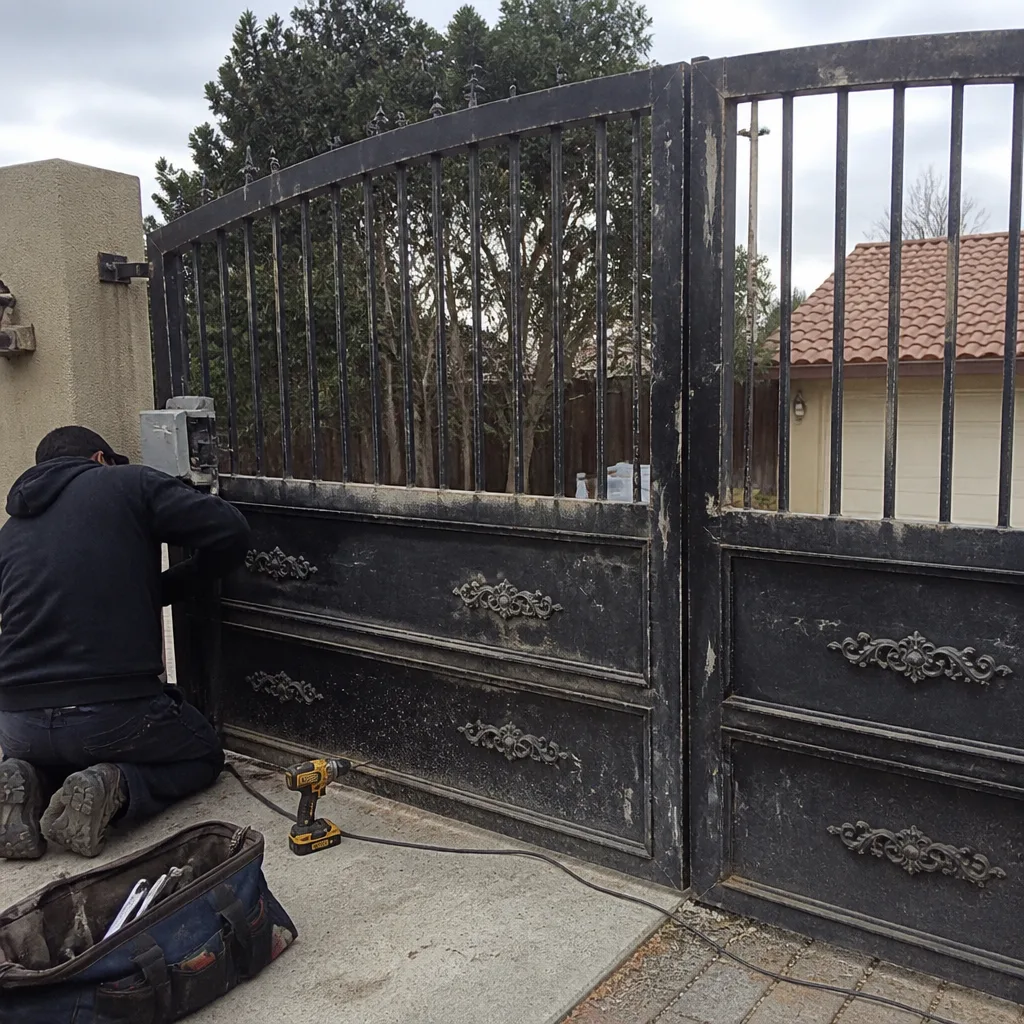 Before
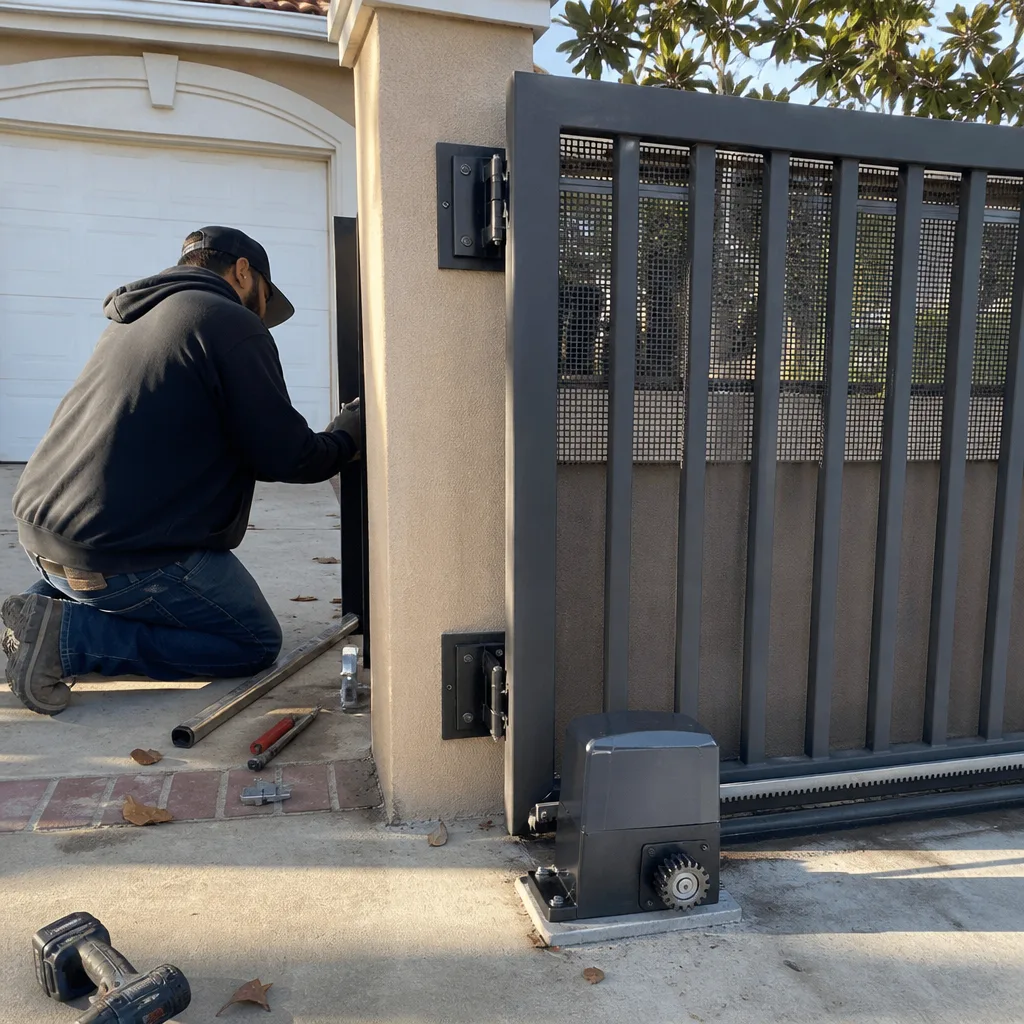 After
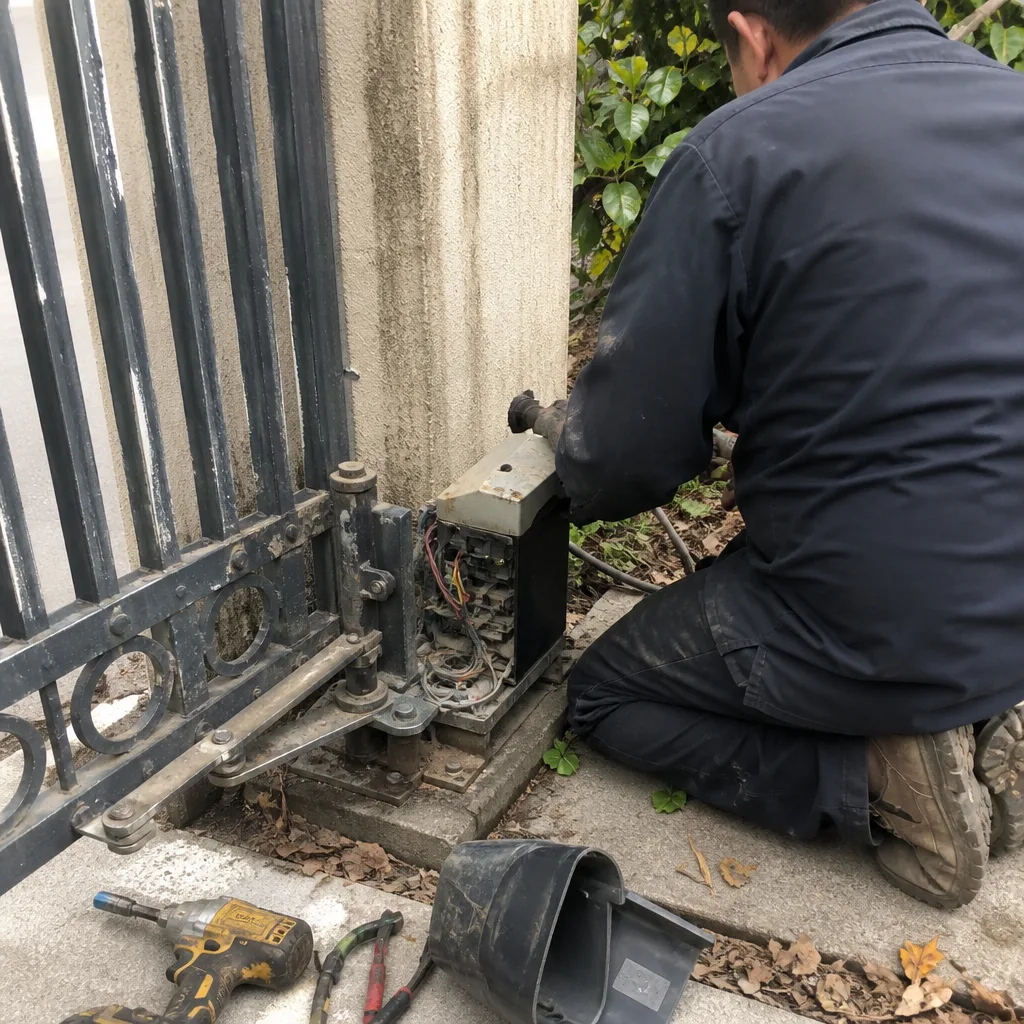 Before
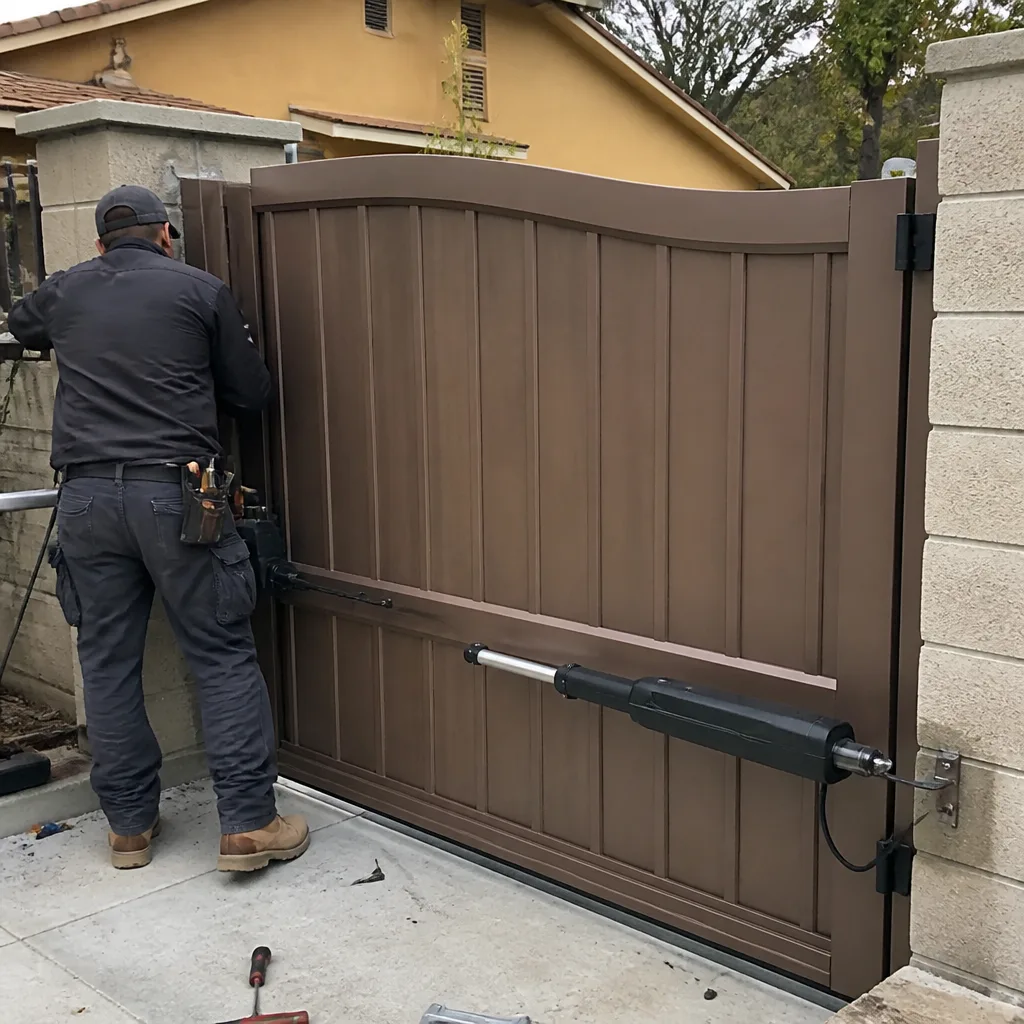 After
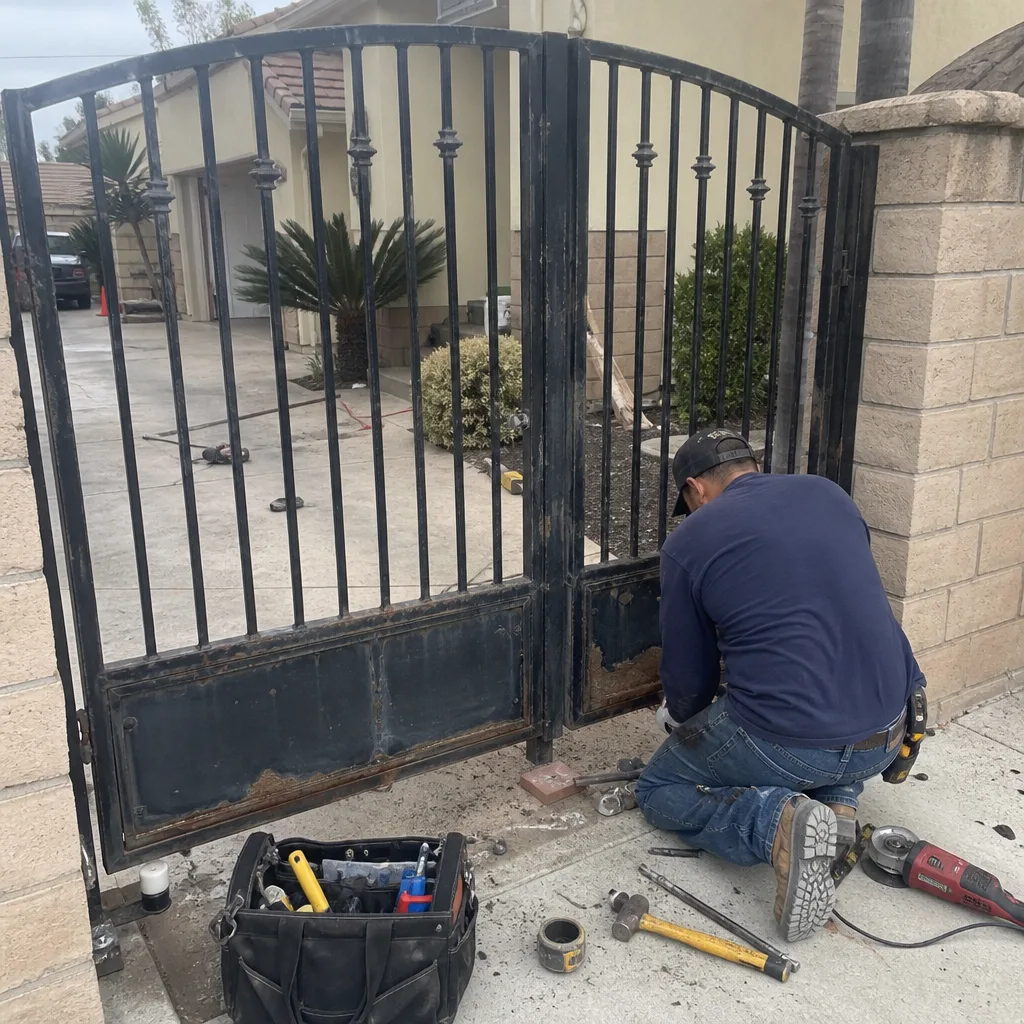 Before
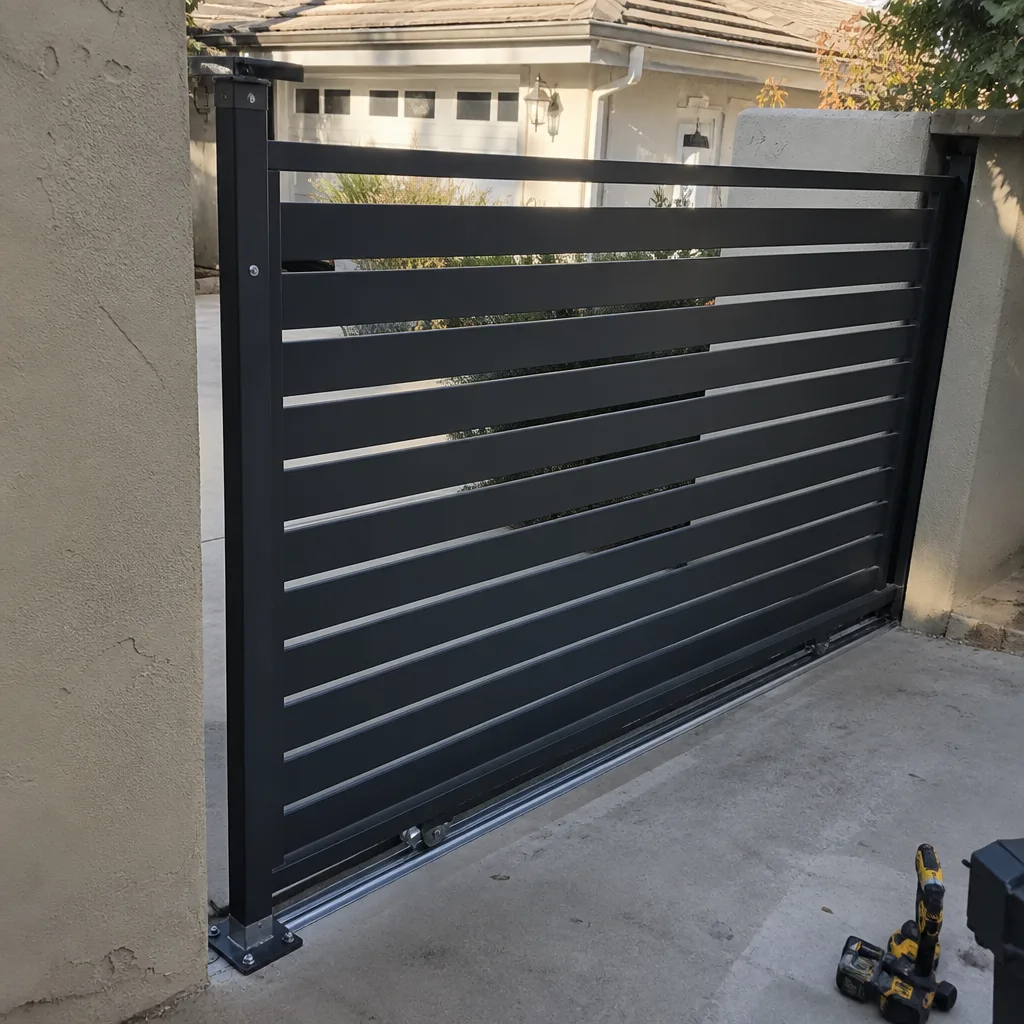 After