
Last updated November 3, 2026
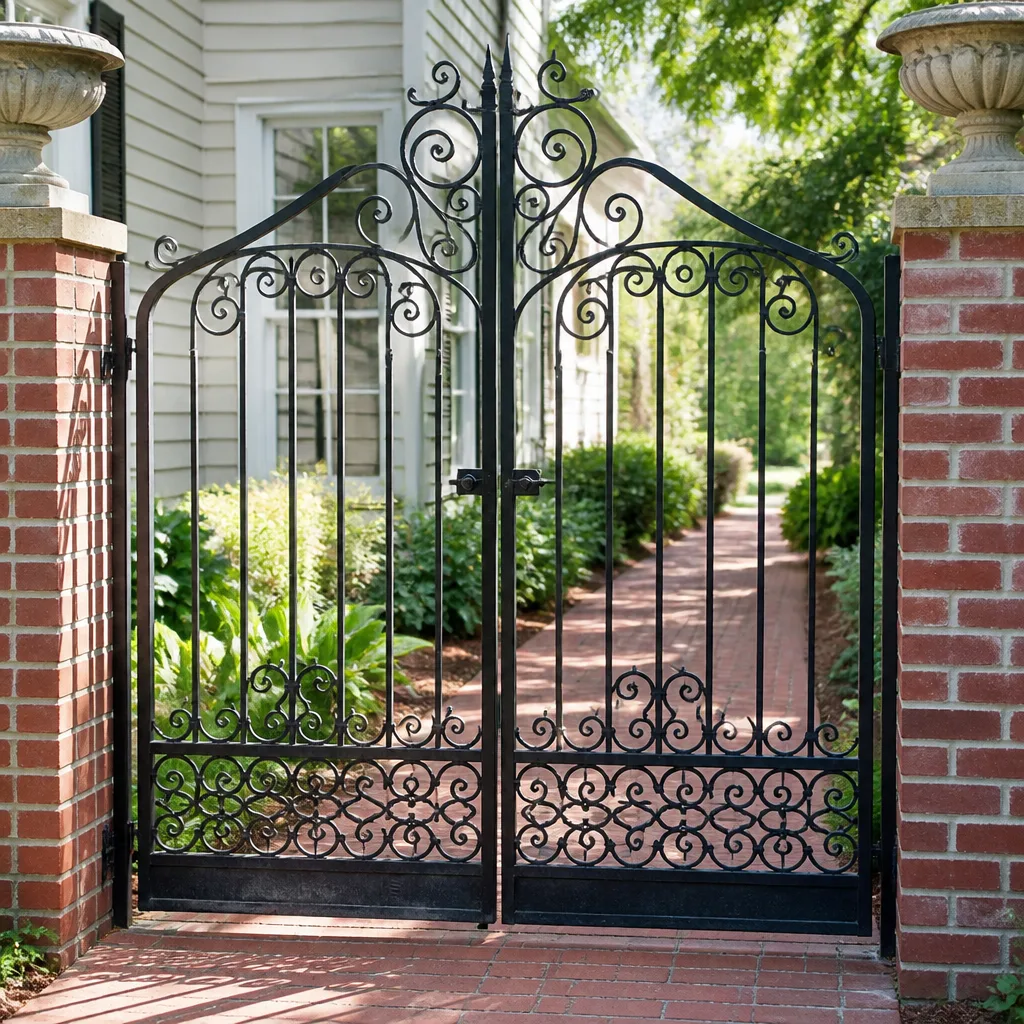 Wrought iron
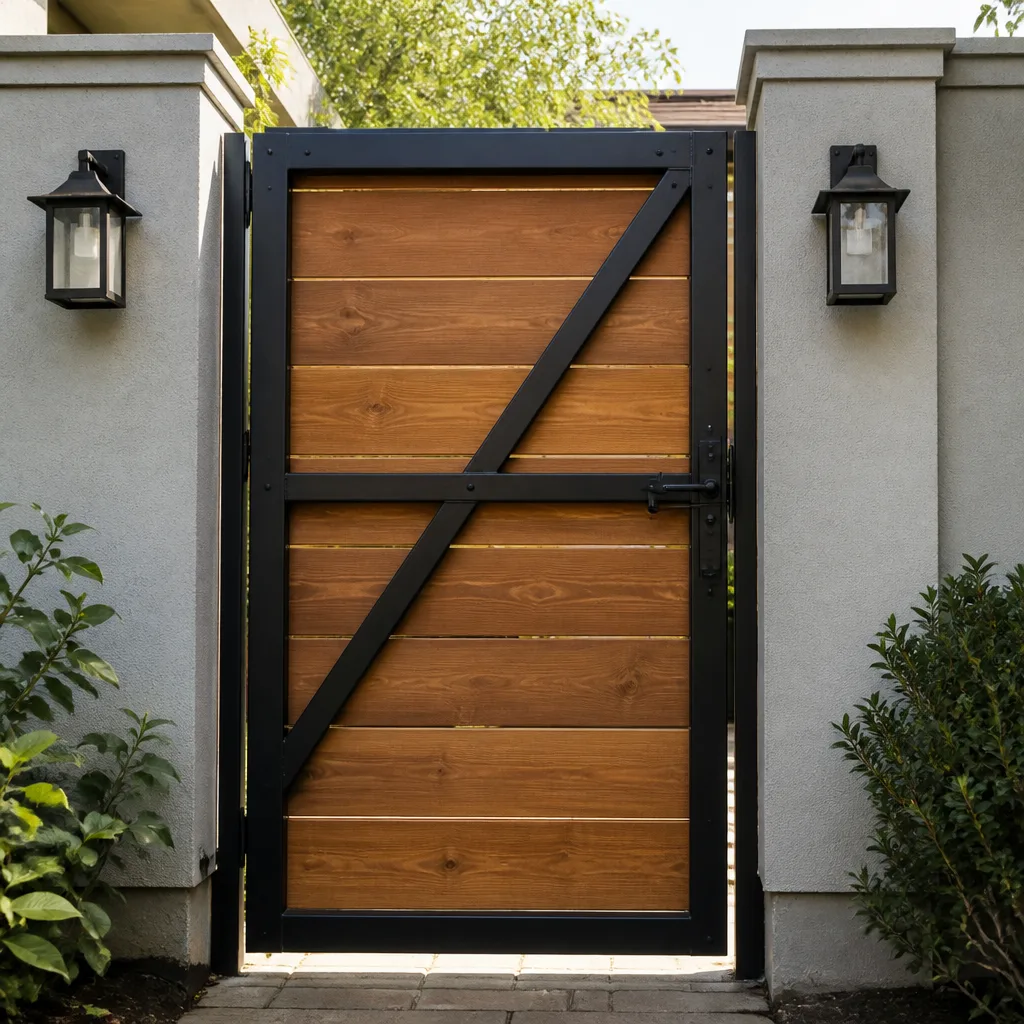 Wood & steel frame
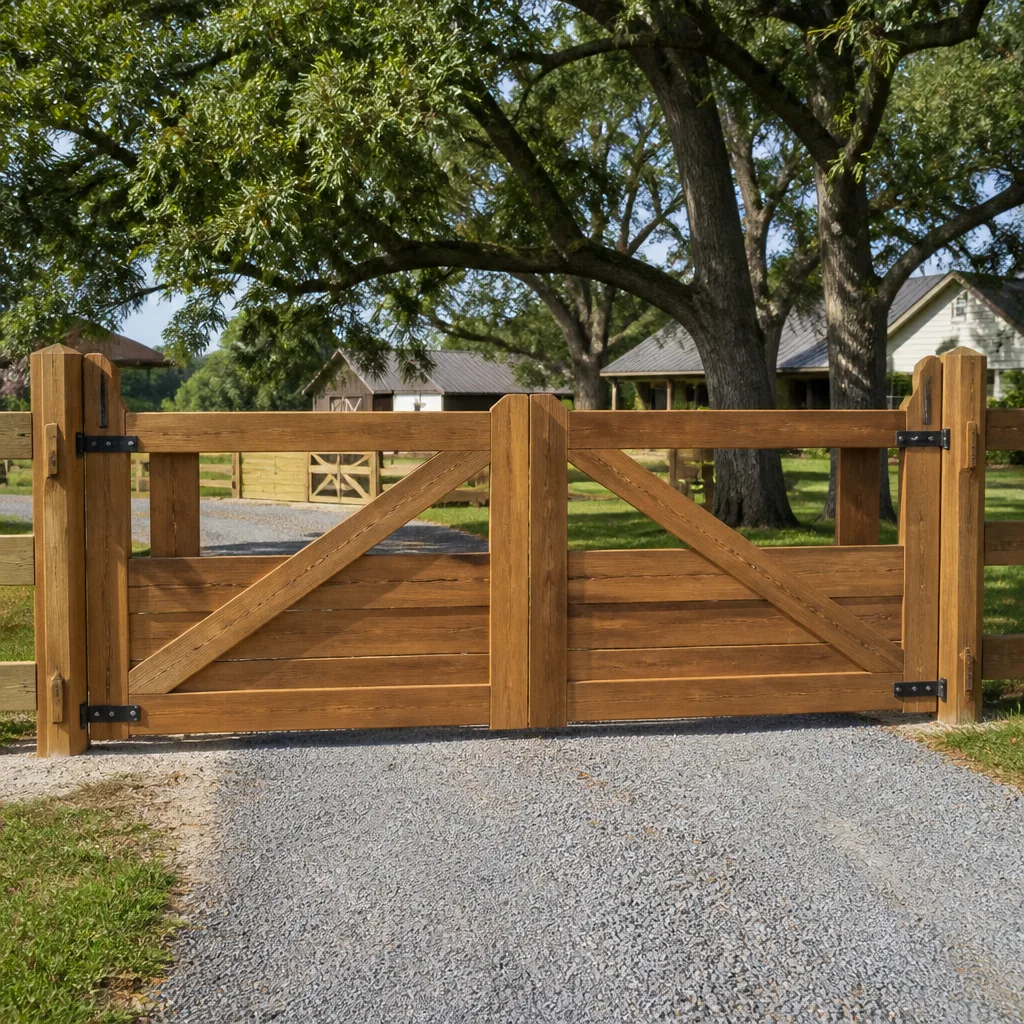 Farm & ranch
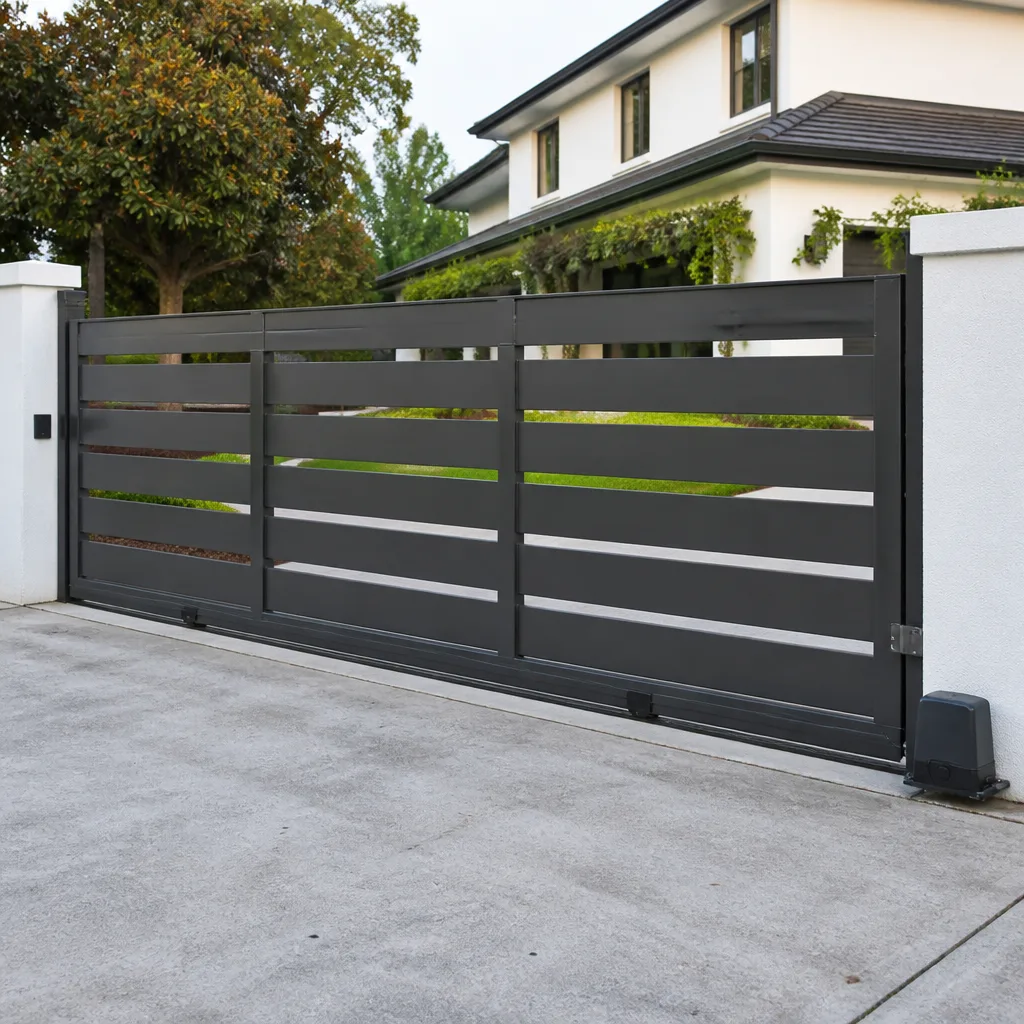 Sliding driveway gates
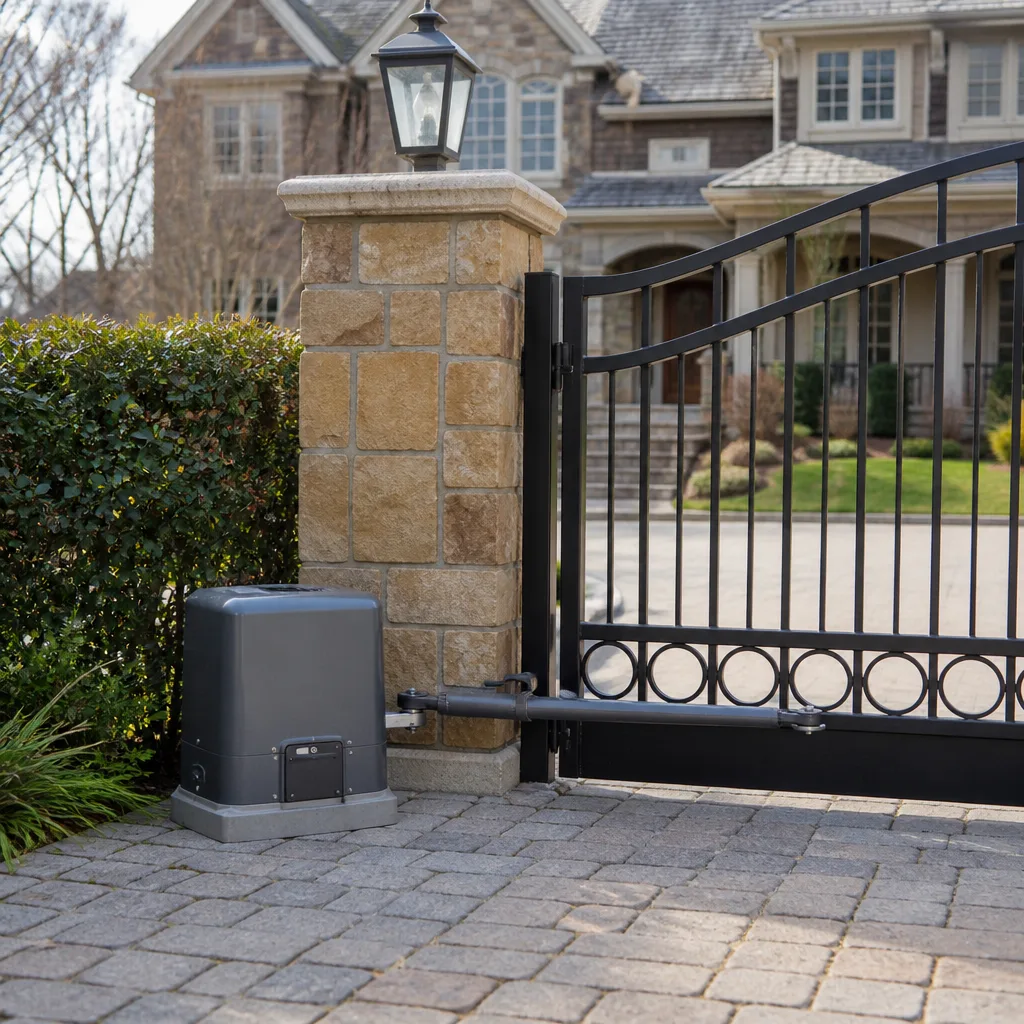 LiftMaster operators
Free on-site gate assessment - hinges, posts, and your LiftMaster or Nice gate operator checked before anything is quoted
The assessment is free and the quote is the invoice.
Get your free estimateChoosing the Right Gate Repair Brand: A Buyer’s Guide for Valencia
Here’s a statistic that surprises most Valencia homeowners: we replace more gate operators that were installed less than three years ago than any other age bracket. Not because the motors were defective, but because they were the wrong operator for the job from day one. A homeowner reads 400 Amazon reviews, picks a 4.7-star opener, installs it, and eighteen months later the motor burns out because it was rated for eight cycles a day and their household runs it twenty. This guide exists to prevent that. You’ll learn how to match an operator to your actual use patterns, which brands hold up in Valencia’s heat and dust, and why the brand you pick today determines your repair costs for the next decade. We’re writing this from Valencia, where we’ve serviced gates in every neighborhood from Northbridge to Valencia Summit, and we’ve seen which systems last and which ones don’t.
Styles & brands we work with
- Wrought iron
- Wood & steel frame
- Farm & ranch
- Sliding driveway gates
- LiftMaster operators
Quick Answer
The right gate brand for your Valencia property depends on three things: your daily cycle count, your site’s power access, and whether local technicians stock parts for that brand. For most single-family Valencia homes, LiftMaster and Mighty Mule offer the best balance of durability and parts availability. For gated communities, HOA entrances, or any gate cycling more than 30 times a day, DoorKing and FAAC are worth the step up in price because they’re built for continuous duty and every gate technician in the area can service them.
Table of Contents
- Duty Cycle: The Spec Everyone Ignores (Until It Costs Them)
- Residential Brands Compared: What Works in Valencia’s Climate
- Commercial-Grade Options: When DoorKing and FAAC Make Sense
- The Factor That Determines Your Repair Downtime: Parts and Technician Density
- Matching Gate Material to Operator Specs (And Why Mismatches Fail)
- Power and Site Conditions: What Valencia Properties Need
- Common Mistakes to Avoid
- When to Call a Professional
- Frequently Asked Questions
- The Bottom Line
Duty Cycle: The Spec Everyone Ignores (Until It Costs Them)
Every gate operator has a duty cycle rating, and it’s the single most important number on the spec sheet. Duty cycle tells you how many open-close cycles the motor can handle per hour or per day before it overheats and shuts down, or worse, burns out permanently. A typical big-box residential operator is rated for 10 to 12 cycles per day. A commercial operator is rated for continuous duty, meaning 50, 80, or even 100-plus cycles per day without breaking a sweat.
Here’s the problem: most households blow past 12 cycles a day without realizing it. Walk yourself through a normal weekday. Two cars leave for work in the morning (two cycles). One comes back midday for lunch (two more). Kids come home from school at different times (three to four cycles). Evening errands, sports practice pickup, a delivery, someone forgets something and doubles back. By 9 p.m. you’ve run 15 to 18 cycles. On weekends, with guests and teenagers and yard crews, it can hit 25. Now run that math over two years and you’ve asked a motor rated for 8,760 annual cycles to perform 13,000 to 16,000. That’s not a manufacturing defect when it fails. It’s a spec mismatch.
How to calculate your actual daily cycle count:
- Count every vehicle that passes through the gate in a day, entering or exiting. Each pass is one cycle.
- Add two cycles per weekday for family members coming and going to work or school.
- Add three to five cycles per weekend day for guests, deliveries, and errands.
- Multiply your weekday total by five, your weekend total by two, and add them together.
- Divide by seven to get your true daily average.
If that number is 12 or under, a residential operator will serve you well. If it’s 15 to 25, you need a light-commercial or upgraded residential unit, and you need to tell the installer that number specifically. If it’s over 30, you’re in commercial territory, period. In Valencia we see a lot of homes where two working parents, multiple teenage drivers, and a home-based business push daily cycles into the high teens without anyone ever noticing until the motor burns out.
Residential Brands Compared: What Works in Valencia’s Climate
Valencia’s climate is hard on gate equipment in specific, predictable ways. Summer temperatures regularly exceed 100°F, which stresses control boards and shortens capacitor life. The Santa Ana winds blow fine dust and grit into gearboxes, chains, and limit switches. UV exposure bakes plastic housings brittle within a few years. So when we evaluate a residential brand for a Valencia installation, we’re looking at heat tolerance, sealed electronics, and how well the mechanicals shrug off dust. Here’s how the major residential players stack up.
Mighty Mule
Mighty Mule is the entry point for most DIY gate installations, and for a weekend project on a low-cycle gate, it’s genuinely fine. The MM series operators are solar-friendly, reasonably priced, and available at most hardware stores. But for Valencia specifically, we see two recurring issues. First, the control board is not sealed against fine dust, and Santa Ana season sends a lot of Mighty Mule boards to an early grave. Second, the plastic gear assembly wears faster in sustained heat than the metal gears you’ll find on LiftMaster or commercial units. If your Mighty Mule operator runs a gate that cycles less than eight times a day and is under a protective cover, it can serve for years. Push it harder than that and you’ll be replacing the arm or the board within two years.
LiftMaster
LiftMaster is the workhorse of residential gate operators in Valencia, and for good reason. Their LA400 and LA500 series operators use metal gearing, sealed control boards on most models, and they handle daily cycles in the 15 to 20 range without complaint. Parts are easy to source, and nearly every gate technician in Southern California knows these units inside and out. The weakness is the battery backup system, which some models lack entirely. For a Valencia homeowner on flat terrain with a standard steel or aluminum gate under 16 feet, a LiftMaster is close to a default recommendation. It’s what we install most often on single-family properties that need something dependable without the commercial price tag.
Ghost Controls
Ghost Controls has built a following among rural and semi-rural homeowners, and we do see their units in Valencia’s larger-lot neighborhoods like Sand Canyon and the hills above the paseos. Their automatic gate openers are quiet, battery-friendly, and pair well with solar if your gate is far from a power source. The tradeoff is parts availability. Ghost Controls is a newer brand with a smaller dealer network, and when a board fails or a limit switch goes out, you may wait longer for parts than you would with LiftMaster or Linear. That factors directly into your downtime. For a low-traffic secondary gate or a property where quiet operation matters more than parts speed, they’re worth considering. For a primary gate at a busy household, we usually steer toward brands with denser parts channels.
Commercial-Grade Options: When DoorKing and FAAC Make Sense
At a certain point, residential-rated equipment stops making sense no matter how carefully you match the duty cycle. That point is usually around 30 cycles per day, but it’s also about who’s using the gate and what happens when it fails. A gate that secures an HOA community entrance, a multi-tenant building, or a commercial yard carries a different set of consequences than a driveway gate. When that gate goes down, it’s not an inconvenience. It’s a security breach, an access problem for dozens or hundreds of people, and a liability issue.
DoorKing
DoorKing is the brand we see most often on HOA and commercial properties across Valencia. Their operators are built for continuous duty, with heavy cast-aluminum housings, robust limit systems, and control boards designed to integrate with telephone entry systems, keypads, and card readers. DoorKing operators routinely run 80 to 100 cycles a day for a decade or more with basic maintenance. The upfront cost is significantly higher than residential equipment, often two to three times, but the per-cycle cost over the life of the unit is lower. If your gate serves more than a handful of homes, or if it needs to coordinate with an access control system, DoorKing is the standard for a reason. We work on DoorKing equipment constantly in Valencia’s apartment complexes and gated communities, and the units that receive scheduled maintenance simply don’t fail catastrophically very often.
FAAC
FAAC is the other heavyweight in the commercial space, and it’s favored for heavy slide gates, large swing gates, and applications where the gate itself is unusually massive. FAAC hydraulic operators move gates weighing thousands of pounds smoothly and reliably, and their cycle ratings match DoorKing’s. Where FAAC stands out is in the smoothness of operation on very heavy gates. A hydraulic FAAC on a 20-foot steel slide gate at a commercial facility in Valencia will open and close with noticeably less mechanical stress than a chain-driven equivalent, and that smoothness translates to longer mechanical life. The tradeoff is that FAAC units are more expensive and require a technician who genuinely knows hydraulic systems. A general handyman who “figures it out on the job” is not the right person to touch a FAAC.
The Factor That Determines Your Repair Downtime: Parts and Technician Density
Here’s the thing no Amazon review will ever tell you: the brand you buy today determines how long you wait when something breaks three years from now. Every gate operator will eventually need a new control board, a new limit switch, a new gear assembly, a new capacitor. The question is whether the part sits on a local supplier’s shelf or has to be ordered from a distributor in another state while your gate sits open or closed for a week.
In the Valencia area, parts availability breaks down roughly like this:
- LiftMaster and Linear: Excellent. These are the most common residential operators in Southern California, and supply houses from Santa Clarita to the San Fernando Valley stock their parts routinely. Same-day or next-day repair is usually possible.
- DoorKing: Excellent for commercial. DoorKing has a strong regional distribution presence, and most commercial gate companies in the area keep common DoorKing parts on their trucks.
- Viking: Good. Viking access control equipment is common enough that boards and accessories are usually available, though the operator mechanics may take an extra day or two compared to LiftMaster.
- FAAC and BFT: Moderate. These are premium European brands with a smaller distribution footprint. Parts often ship from regional warehouses, adding two to four days to a repair timeline.
- Ghost Controls and Mighty Mule: Variable. Consumer-focused brands rely more heavily on online parts channels. We’ve seen Ghost Controls boards take five to seven days to arrive.
The same logic applies to technician density. Every gate repair company in the Santa Clarita Valley knows how to work on LiftMaster and DoorKing. Fewer are genuinely certified on FAAC hydraulics or BFT control boards. The brand you choose should account for who will actually be fixing it. We service nine major brands, from residential Mighty Mule setups to commercial DoorKing and FAAC systems, so our perspective on this is built from seeing hundreds of repair calls. The brands with the densest parts and technician networks consistently get back online fastest.
Matching Gate Material to Operator Specs (And Why Mismatches Fail)
A gate operator is essentially a motor that moves weight. The heavier the gate, the harder the motor works, and the sooner it fails if it wasn’t sized for the load. This sounds obvious, but we see the mismatch constantly in Valencia: a homeowner builds a beautiful custom wrought iron gate, then pairs it with an operator sized for a light aluminum gate, because the operator was cheaper and the spec sheet said it could handle “gates up to 16 feet.” The spec sheet may have said that, but it also assumed the gate weighed 600 pounds, not 1,400.
Typical gate weights by material:
- Aluminum: 8 to 12 pounds per square foot. Light, rust-resistant, and the easiest material on operator motors. Best match for residential operators.
- Steel: 15 to 20 pounds per square foot. Strong and secure, but heavy. A 16-foot steel gate can weigh 1,200 to 1,600 pounds, which pushes past most residential operator ratings.
- Wrought iron: 18 to 25 pounds per square foot depending on ornamentation. Beautiful but brutally heavy. Even modest wrought iron gates often require upgraded operators.
- Wood: 10 to 14 pounds per square foot when dry, and significantly more when wet. Wood gates also swell and sag with moisture, which changes the geometry the operator has to work against.
Here’s the mismatch pattern we see most often in Valencia: a custom wrought iron driveway gate, 16 feet wide, with a Mighty Mule or basic residential Linear operator bolted to it. The operator works fine for the first year. Then the gear assembly starts to wear because it’s moving twice the weight it was rated for. The motor starts to overheat. The limit switches drift because the gate’s weight flexes the mounting post slightly. Within two years, the operator is dead and the homeowner is shopping for a replacement, usually a hydraulic FAAC or a commercial-grade LiftMaster that should have been installed in the first place. Matching the operator to the gate’s actual weight, not just its length, is the difference between a five-year system and a fifteen-year system.
The takeaway is simple but it gets skipped constantly: weigh your gate, literally or by calculation, before you buy an operator. If you don’t know the exact material and dimensions, call someone who works with gates daily and can look at it. A five-minute weight estimate from an experienced technician will save you a motor replacement in eighteen months. If you’re installing a new gate in the Tarzana or Valencia area, get the operator spec’d at the same time as the gate itself, not as an afterthought.
Power and Site Conditions: What Valencia Properties Need
Every gate operator needs electricity, and where that electricity comes from shapes your brand and model choices more than most buyers expect. Valencia properties fall into three general categories when it comes to power access, and each category points toward different equipment.
Scenario one: line voltage within 50 feet of the gate. This is the common setup for most Valencia tract homes and newer construction. You have 110-volt AC power within a reasonable conduit run. In this scenario, any major brand works, and we generally recommend a 110V operator with a battery backup module. The battery backup matters more than most people realize, especially in Valencia’s fire season, when power shutoffs are a real possibility. A gate without battery backup becomes either a manual operation or a locked-shut security problem when the power drops. LiftMaster, Linear, and DoorKing all offer solid battery backup options that keep your gate cycling on stored power for hours to days.
Scenario two: no power at the gate, and running conduit is expensive. This is common in the larger lots east of the 5, in areas like Sand Canyon and the older ranch properties. Running a new electrical line to a gate 300 feet from the house can cost thousands of dollars in trenching alone. In these situations, solar-powered operators become the practical choice. Mighty Mule, Ghost Controls, and some LiftMaster models support direct solar integration. The caveat is that solar systems need adequate panel exposure and battery capacity, and they’re more sensitive to cloudy stretches and heavy cycle days. On a low-cycle secondary gate, solar is genuinely viable in Valencia’s sunny climate. On a primary gate cycling 20 times a day, solar without substantial battery capacity will leave you stuck more often than you’d like.
Scenario three: multi-unit or commercial access with existing low-voltage infrastructure. This is standard for apartment complexes, HOA entrances, and commercial yards in Valencia. These sites usually already have conduit, telephone entry pedestals, and sometimes a dedicated equipment room. This is where DoorKing and FAAC integrate cleanly, because their systems are designed for exactly this kind of infrastructure. The control boards handle keypads, card readers, phone entry, and vehicle detection loops natively, and the operators draw line voltage continuously without issue. If you’re managing a commercial gate system in the Tarzana or Valencia corridor, the conversation starts with DoorKing or FAAC, not with anything from the residential aisle.
Common Mistakes to Avoid
- Buying based on Amazon ratings alone. Reviews tell you how the operator worked for someone in Ohio with four cycles a day. They tell you nothing about Valencia heat, Santa Ana dust, or your actual cycle count.
- Ignoring duty cycle entirely. This is the number one cause of premature motor failure we see. A 12-cycle operator on a 20-cycle household will die within two years, every time.
- Mismatching operator to gate weight. A heavy wrought iron gate on a light-duty operator is a slow-motion destruction sequence. The motor works too hard, the gears strip, and you’re replacing the whole unit before the warranty would have expired anyway.
- Choosing a brand with no local parts support. Saving money on the operator today and losing a week of gate function every time a part fails three years from now is a losing trade. Parts density matters.
- Skipping battery backup in fire-risk areas. Valencia’s power shutoff season is real. A gate without backup power during an evacuation or a blackout is a problem you chose to have.
- Assuming any handyman can diagnose an electric gate. Electric gate systems involve motors, control boards, safety sensors, and access wiring. A generalist who fixes fences and sprinklers is learning on your equipment, and the lesson is usually expensive.
- Buying the operator without considering the full system. The motor is one component. The control board, safety edges, photo eyes, and keypad all need to work together, and they all need to be serviced eventually. Buying the cheapest motor and then discovering the control board fails in heat is a false economy.
When to Call a Professional
Gate operators are electrical and mechanical systems under load, often moving hundreds of pounds. When something goes wrong, guessing at the cause usually makes it worse. Call a professional when your gate moves but won’t open fully, when the motor runs but the gate doesn’t move, when the operator makes grinding noise that wasn’t there before, when the safety sensors stop reversing the gate, or when the control board shows error codes you don’t recognize. High-voltage wiring and heavy spring assemblies are genuinely dangerous to work on without training. Gate Repair Valencia offers free estimates in Valencia, and we’ll tell you honestly whether a repair makes sense or whether replacement is the smarter long-term call. Call (844) 655-9821.
Frequently Asked Questions
For most single-family Valencia homes with a standard aluminum or steel gate cycling under 20 times a day, LiftMaster is the strongest all-around choice because of its durability, sealed electronics, and excellent parts availability in Southern California. Mighty Mule or Ghost Controls work fine for low-cycle secondary gates where budget or solar power are the priority. The best brand is the one matched to your actual cycle count and gate weight, not the one with the highest star rating; see our Complete Guide to Gate Repair in Valencia for deeper detail.
A basic residential operator installation in Valencia typically runs $1,200 to $2,500 including equipment and labor, with light-commercial units ranging higher depending on gate size and access features. A full gate installation with automation costs more and depends on the gate material and site preparation. Call (844) 655-9821 for a specific quote on your property; estimates are free and the price is agreed before any work starts.
A correctly matched residential operator in Valencia typically lasts 8 to 12 years with basic maintenance, while commercial DoorKing or FAAC units often run 15 years or more on high-cycle applications. An incorrectly matched operator can fail in under two years due to heat stress and duty-cycle overload. The gap between those numbers is almost always about the initial sizing decision, not the manufacturer.
Technically yes, and many Valencia homeowners do install Mighty Mule or Ghost Controls systems as weekend projects. However, DIY installation on a gate that cycles frequently, weighs over 600 pounds, or needs to integrate with an access control system usually shortens the operator’s life. The concrete pad, gate alignment, and electrical work have to be right or the operator strains from day one. We get called out regularly to replace operators that were installed by well-meaning homeowners and never quite worked from the start.
The densest technician coverage in Valencia is for LiftMaster, Linear, and DoorKing equipment, which means faster repair and lower parts costs. FAAC, BFT, and Viking systems have solid but smaller specialist networks, and consumer brands like Ghost Controls and Mighty Mule rely more on online parts ordering. Before you buy any operator, check whether a local gate company stocks its parts or has to special-order them. Our team services nine brands across the residential and commercial spectrum, from Ghost Controls and Mighty Mule to DoorKing and FAAC, so we see the parts-availability difference every week.
We recommend inspecting and lubricating the gate hardware twice a year, checking limit switch alignment, cleaning solar panels if you have them, and replacing the battery backup every three to four years. In Valencia specifically, the Santa Ana dust season means an extra cleaning of gear assemblies and photo eyes in the fall. Most operators that fail early were never serviced at all, and the failures are almost always mechanical wear that a maintenance visit would have caught. Our team handles both electric gate repair and scheduled maintenance across the Valencia and Santa Clarita Valley.
The Bottom Line
The gate brand that’s right for your Valencia property is the one that matches your actual usage, not the one with the most reviews or the lowest price. Calculate your true daily cycle count before you shop. Match the operator to the actual weight of your gate, not just its width. Check whether local technicians stock parts for the brand you’re considering, because that determines your repair downtime for the life of the system. For most Valencia homes, LiftMaster is the default choice, with DoorKing or FAAC as the step-up for commercial and high-traffic applications. Get these three things right and your gate operator will serve you for a decade or more. Get them wrong and you’ll be shopping again in two years. The team at Gate Repair Valencia works on nine major brands, from Mighty Mule to FAAC, and we’re happy to give you an honest assessment of what your specific property actually needs. Call (844) 655-9821 for a free estimate, and we’ll tell you repair versus replace straight.
Written by the team at Gate Repair Valencia, serving Valencia since 2013. Browse our more guides & resources.
See the difference
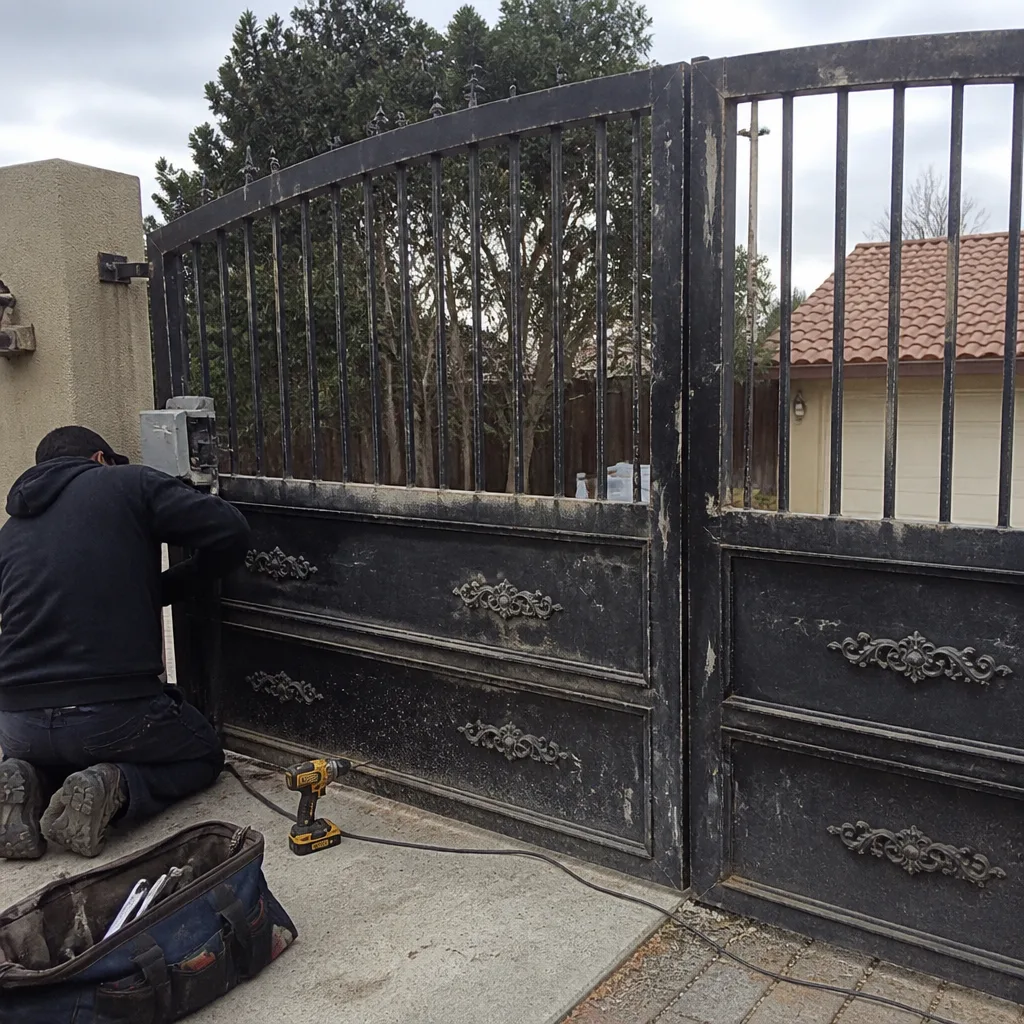 Before
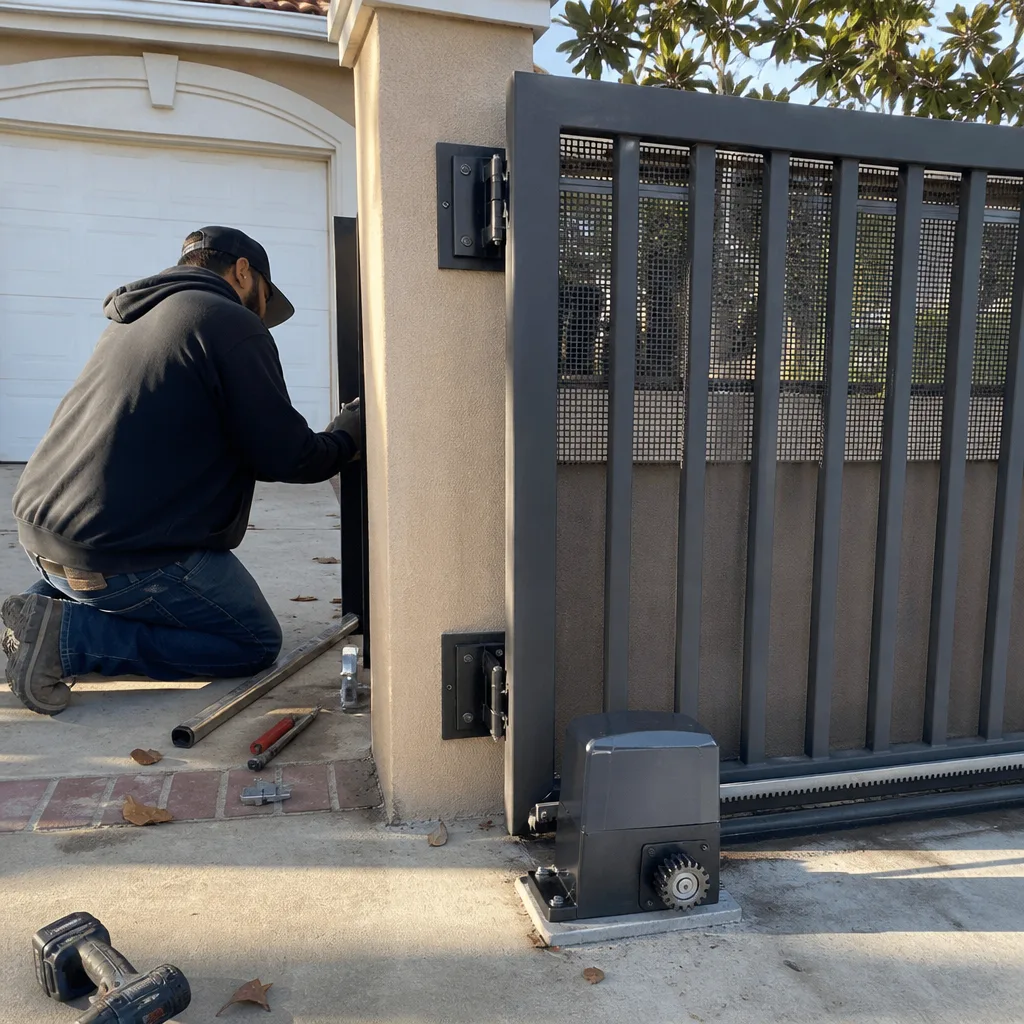 After
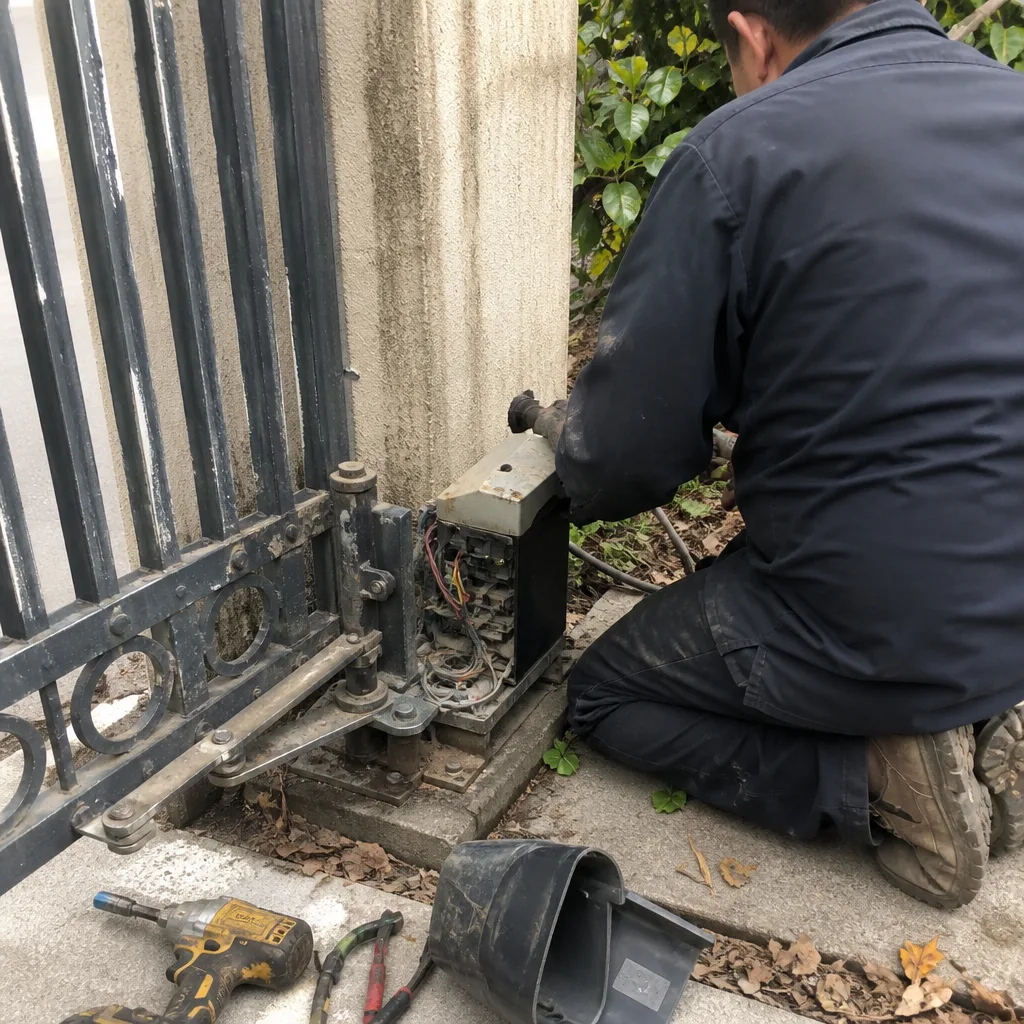 Before
 After
 Before
 After