
Last updated November 2, 2026
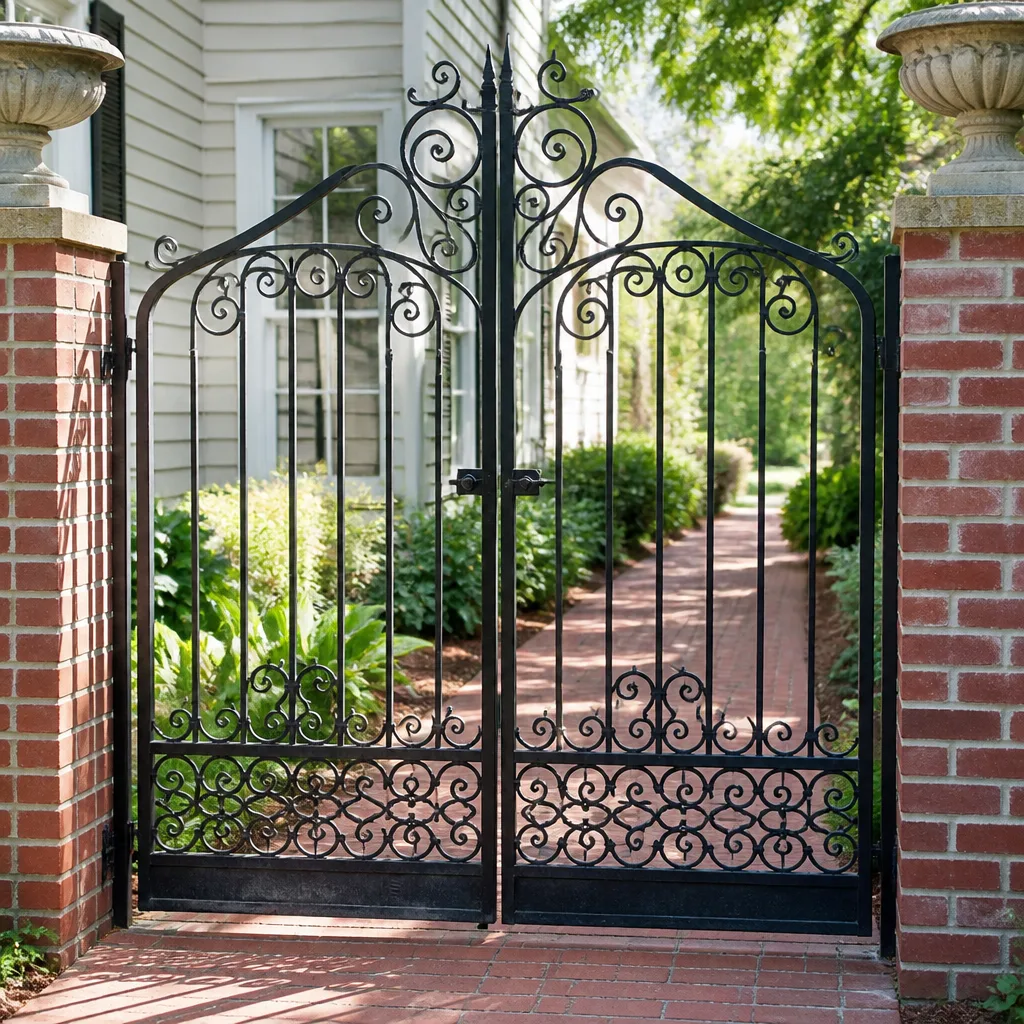 Wrought iron
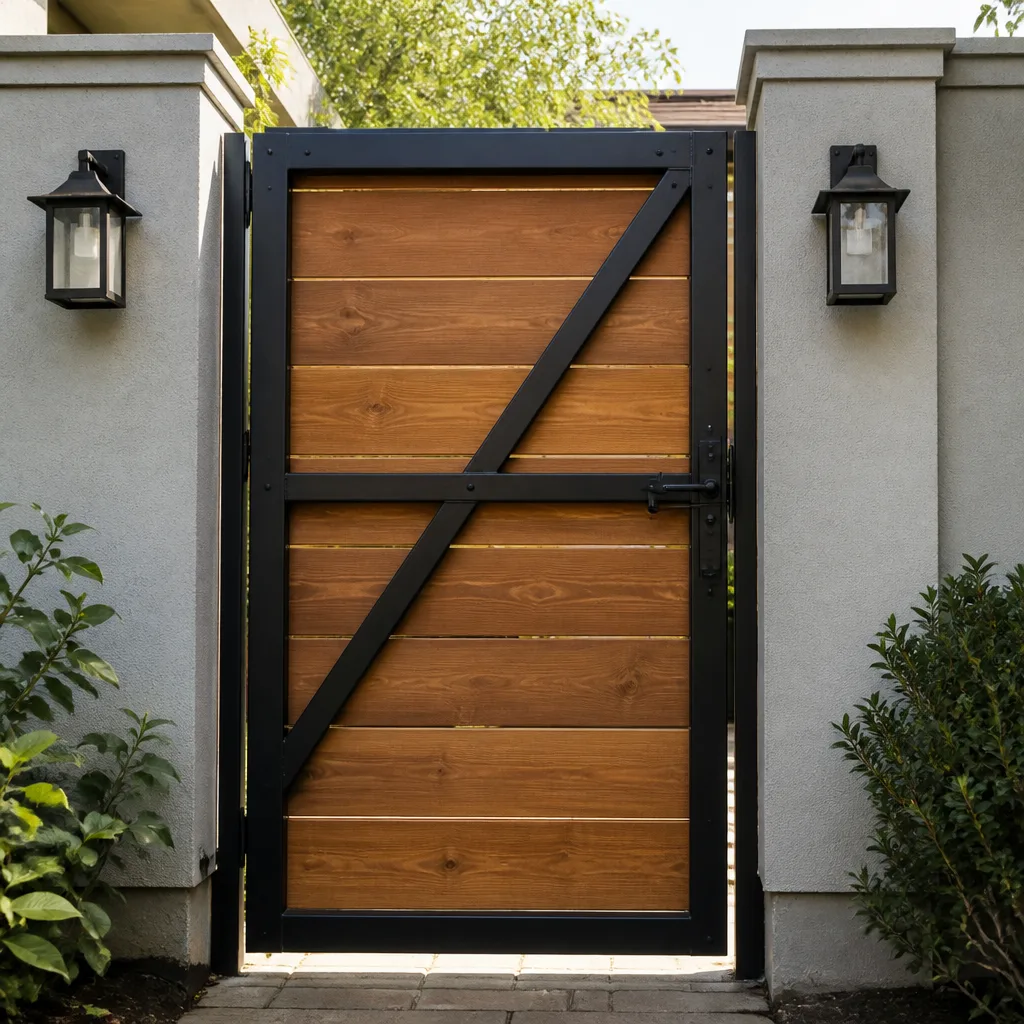 Wood & steel frame
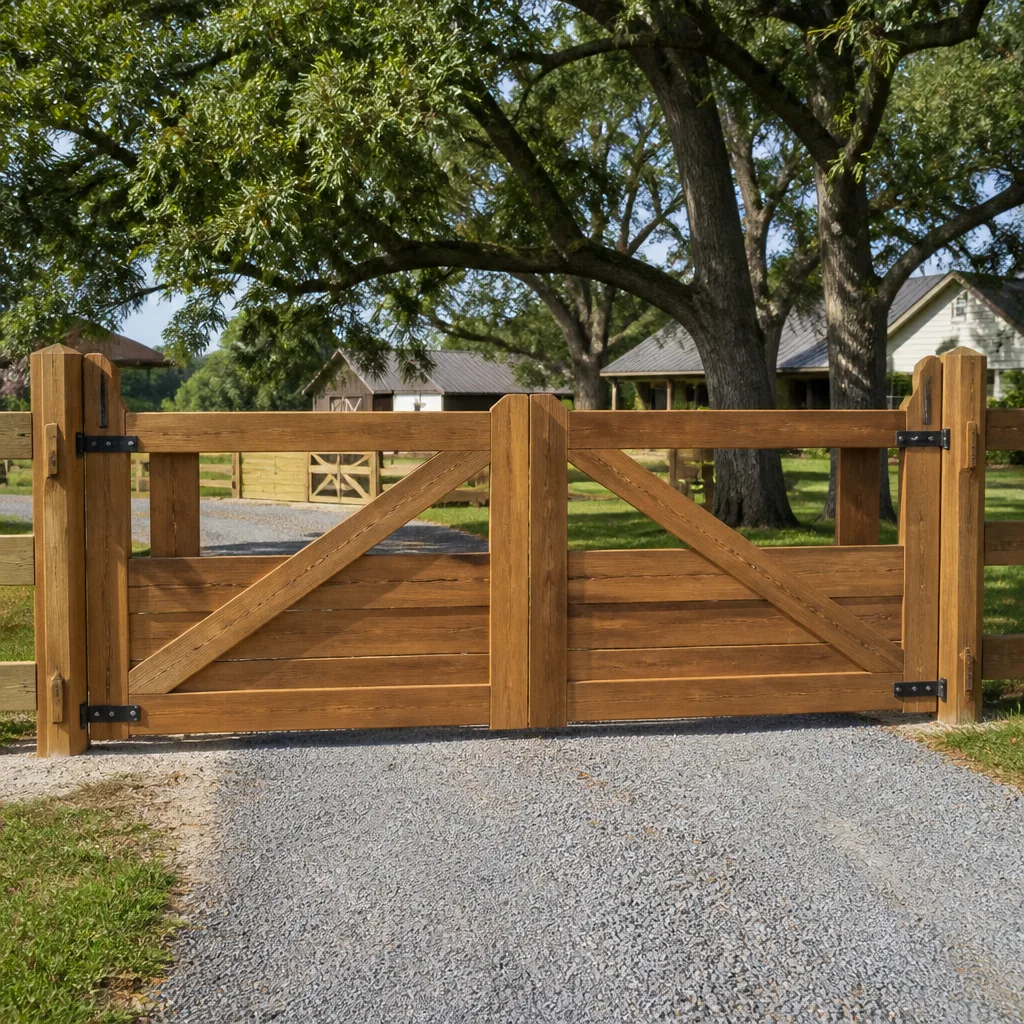 Farm & ranch
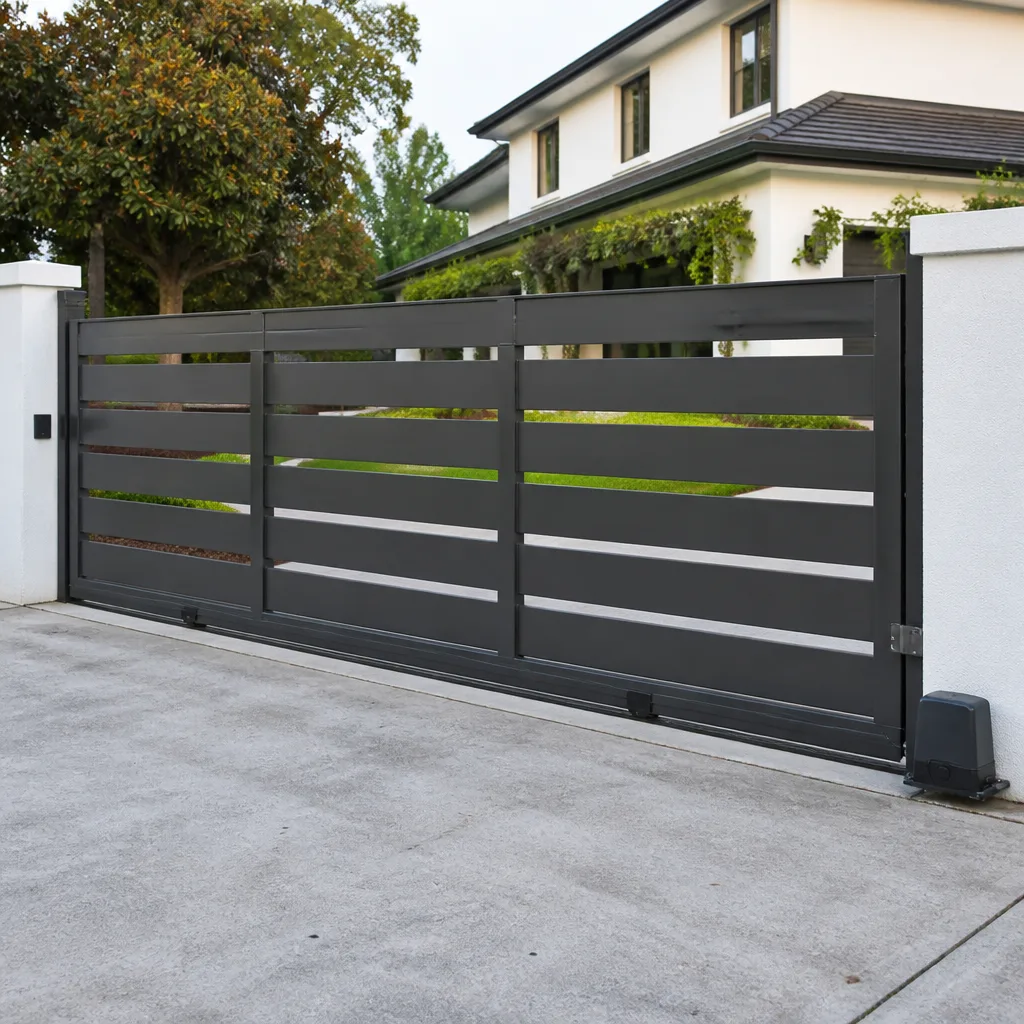 Sliding driveway gates
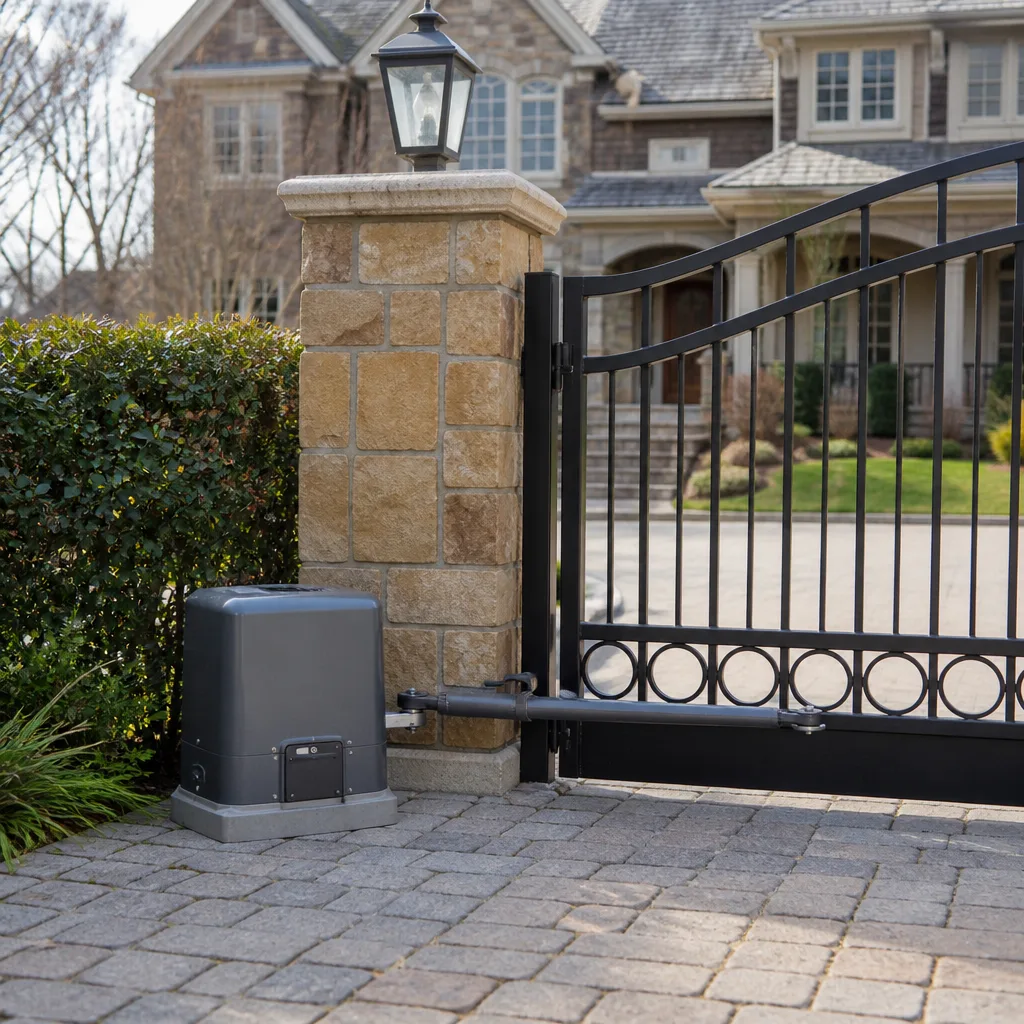 LiftMaster operators
Free on-site gate assessment - hinges, posts, and your LiftMaster or Nice gate operator checked before anything is quoted
The assessment is free and the quote is the invoice.
Get your free estimateGate Repair Permits, Codes & Inspections in CA: What You Need to Know
A simple gate operator swap-out can trigger a permit requirement in California if the new unit draws more amperage than the original. That’s not a contractor’s opinion or a city inspector being difficult. It’s written into the state’s electrical code, and the liability for skipping it lands on the homeowner’s property record, not on whoever did the work. We see this confusion regularly in Valencia, where a mix of 1980s-era homes, newer master-planned communities, and commercial access systems all coexist under different permitting expectations. This guide explains the repair-versus-replacement threshold, UL 325 compliance, ADA requirements for automated gates, HOA conflicts, and what actually happens when an inspection fails. For more detail on getting your gate working again, see our Gate Repair services.
Styles & brands we work with
- Wrought iron
- Wood & steel frame
- Farm & ranch
- Sliding driveway gates
- LiftMaster operators
Quick Answer
A gate repair permit is generally only required in California when the work involves replacing components that alter the system’s electrical load or structural footprint, while most component-level repairs (motors, boards, sensors) are classified as maintenance and are exempt from permitting. The key test is whether the repair changes the gate’s original design, amperage draw, or physical dimensions. In most of Los Angeles County and the Santa Clarita Valley, swapping a failed motor of the same amperage is a repair; upgrading to a larger or different type of operator is a replacement and will likely require a permit.
Table of Contents
- When Does a Gate Repair Need a Permit in California?
- UL 325 Compliance: The Rule That Governs Every Motorized Gate
- ADA Requirements for Commercial and Multi-Unit Gates
- How HOA Covenants Interact With Municipal Code in Valencia
- What a Failed Inspection Actually Costs and How to Avoid One
- Electrical Permit Considerations for Automated Gates
- Common Mistakes to Avoid
- When to Call a Professional
- Frequently Asked Questions
- The Bottom Line
When Does a Gate Repair Need a Permit in California?
California leaves most gate and fencing regulations to local jurisdictions, but building departments across the state follow the same general principle: repairs that restore a gate to its original condition do not need a permit; replacements or modifications that change the gate’s design, scale, or electrical demand do. The Los Angeles County Building Code, which governs unincorporated LA County and informs municipal codes across the Santa Clarita Valley, draws that line at the point where work changes the original construction, load-carrying capacity, or any component regulated by the electrical code.
Here’s a practical way to assess which side your project falls on:
- Same-part replacement: A failed circuit board, motor of identical amperage, sensor, keypad, or mechanical hinge replaced with a like-for-like part. This is maintenance, not an alteration. No permit required.
- Upgraded operator: Replacing a Mighty Mule operator that draws 3 amps with a LiftMaster or DoorKing unit that draws 7 amps changes the electrical load. That is an alteration under the National Electrical Code, and most California building departments require a permit.
- Structural changes: Widening the gate opening, adding a second leaf, converting a swing gate to a slide gate, or replacing wood with steel changes dimensions and anchorage. Permit required.
- New power runs: Running new conduit, trenching, or installing a dedicated circuit for a gate operator is electrical work. Permit required.
In Valencia specifically, the City of Santa Clarita handles building permits under the California Building Standards Code (Title 24). Their residential gate permitting threshold is materially the same as LA County’s. Where we see homeowners get into trouble is not with obviously large projects but with the small ones they assume are invisible: an operator swap at the amperage threshold, a new power drop for a previously manual gate, or a gate relocated to accommodate a wider driveway.
UL 325 Compliance: The Rule That Governs Every Motorized Gate
Every motorized gate operator installed or maintained in California must comply with UL 325, the safety standard for automated gate operators that took full effect nationwide in 2016. This is not a suggestion. It’s the standard that determines whether an automated gate system is legal to operate, and it applies to residential gates just as much as commercial access systems.
UL 325 outlines four requirements every automated gate system must meet:
- Entrapment protection: The gate must have two independent means of detecting a person or obstruction – typically a primary device (like a current-sensing motor or optical sensor) and a secondary device (like an external entrapment sensor or reversing edge).
- Warning signage: All automated gates require two warning signs placed on the gate itself, visible from both sides, specifying the entrapment risk.
- Control location restrictions: User controls like keypads and push buttons must be positioned so that a person cannot touch the gate while operating it, and must be at a specified distance from the moving gate leaf.
- Auto-reverse functionality: The operator must be capable of detecting an obstruction and reversing the gate’s direction at any point in the travel cycle.
Here’s what most homeowners don’t know: UL 325 compliance is a condition on which insurers pay claims. If a motorized gate without compliant entrapment protection injures a child, a delivery driver, or a neighbor, the homeowner’s insurer can decline the liability claim on the grounds that the owner operated a non-compliant automatic gate. We’ve seen cases in Valencia neighborhoods where a decade-old operator with no photo-eye sensors and no warning signage became the weak point in an otherwise strong insurance position. For help identifying problems early, read our Gate Repair Warning Signs: A Valencia Homeowner’s Reference Guide.
This is also where brand knowledge matters. Each manufacturer implements UL 325 differently: DoorKing operators include a monitored external entrapment sensor loop in most commercial units; LiftMaster includes internal current sensing plus a secondary external device on residential models; Mighty Mule units rely on a combination of current detection and optional external photo eyes. A technician who knows how all nine major brands implement the standard can tell you whether an existing installation is compliant or needs retrofitting. A general handyman typically cannot.
ADA Requirements for Commercial and Multi-Unit Gates
The Americans with Disabilities Act (ADA) applies to automated gates whenever the gate controls access to a public accommodation, a commercial facility, or the shared amenities of a multi-unit residential property like an apartment building, condominium complex, or HOA. Single-family homes in California are exempt from ADA gate requirements, but HOAs, multi-tenant commercial properties, and mixed-use developments are not.
The critical ADA requirements for automated gates are specific and measurable:
- Clear opening width: Any gate on an ADA-accessible path must provide a minimum clear opening of 32 inches when open to 90 degrees. For pedestrian gates at a vehicular entrance, the pedestrian gate must be separate and meet this width.
- Opening force: Interior hinged gates and doors on accessible routes cannot require more than 5 pounds of force to operate. For automated gates, this means the operator’s manual release must allow operation within this force range.
- Closing speed: Gates and doors on accessible routes must close from 90 degrees to 12 degrees in no less than 5 seconds. Automated gates must be set to close slowly enough that a person using a mobility device can clear the opening.
- Control height: Keypads, card readers, and call buttons must be mounted between 15 and 48 inches above ground, with accessible approach clearance for a wheelchair user.
California adds a layer here. The California Building Code (Title 24) incorporates ADA requirements and extends some provisions to multi-family housing even when federal ADA would not apply. A gate repair on an HOA property in Valencia that changes operator speed, relocates controls, or replaces a wide gate with a narrower one can create a compliance gap that wasn’t there before the repair.
For property managers, Gate Repair in Tarzana carries the same lesson we apply to Valencia clients: document every change to an automated gate on an accessible path. If the original operator was compliant and the replacement is not, the liability transferred from the gate to the person who specified the replacement.
How HOA Covenants Interact With Municipal Code in Valencia
Valencia’s newer communities – Westridge, Northbridge, Tesoro del Valle, Bridgeport, and many others within the Santa Clarita Valley master plan – are governed by HOA architectural guidelines in addition to city code. Many homeowners assume HOA rules and municipal requirements overlap. They often don’t, and they address different concerns entirely.
Municipal code governs safety, ingress and egress, and structural integrity. It exists to protect occupants and the public. HOA covenants govern appearance, uniformity, and community standards. They exist to protect property values and visual consistency. When they conflict, the question is which authority wins – and the answer is that both must be satisfied, because they are enforced by different mechanisms.
A practical example from Valencia: A homeowner in River Village decides to replace a dated wrought-iron swing gate with a horizontal slide gate for a wider driveway. City code requires a permit for the structural alteration and a compliant electrical run for the new operator. HOA guidelines may restrict the fence-to-gate height ratio, require a specific metal finish, or prohibit slide gates entirely on that street frontage. The city doesn’t care about the finish. The HOA doesn’t care about the amperage. The homeowner is responsible for satisfying both.
And here’s the frequent pain point: failing either one can block the other’s approval. A well-intentioned homeowner gets HOA approval for a gate replacement, moves ahead, and then discovers the city won’t sign off because the new operator exceeds the existing circuit’s capacity. Or the reverse: the city permit is issued and the work is inspected, but the HOA architectural committee rejects the gate because it doesn’t match the approved paint color. The lesson: treat HOA review and city permitting as two parallel processes that both need to finish before work starts.
Our experience with Valencia HOA properties is that the architectural review process is often slower than the city’s permit counter. If you’re planning a gate replacement in an HOA community, start with the HOA. Get the architectural approval in writing first. Then pull the city permit. This sequence avoids skipping the city requirement entirely – which we have seen happen more than once, and it’s always discovered at resale or during an HOA audit.
What a Failed Inspection Actually Costs and How to Avoid One
A failed inspection on a gate automation project isn’t a disaster, but it multiplies the project timeline. In the City of Santa Clarita, a failed inspection means a correction notice, a re-inspection fee, and a rescheduled inspection window. The typical cycle from failure to correction to re-inspection runs one to two weeks – and that assumes the contractor fixes the issue on the first try.
The most common reasons gate automation inspections fail, in our experience across Valencia and the Santa Clarita Valley:
- Missing or incorrect warning signage: UL 325 requires two warning signs, one on each side of the gate. Inspectors check this first. It’s the cheapest part of the job and the most frequently missed.
- Entrapment protection not demonstrated: The inspector will test the gate’s reversal function. If the operator’s current sensing is misadjusted or the external sensing device isn’t connected, the gate won’t reverse on obstruction and the inspection fails.
- Electrical grounding or bonding issues: Gate operators require proper equipment grounding and bonding. Older installations often lack a separate ground conductor or use undersized wire for the operator’s full-load amperage.
- Permit classification errors: Pulling a permit for “gate repair” when the project is actually a gate replacement or new electrical run. The inspector shows up, sees work that doesn’t match the permit description, and issues a stop-work order.
- Missing or illegible permit documents at the site: The permit card must be posted and visible. This is a simple fix, but it still costs a failed visit.
The total cost burden of a failed inspection: the re-inspection fee (typically $100-$200 in Santa Clarita), the contractor’s time for the correction and the return visit, and one to two weeks of project delay. On a gate serving a commercial property or an HOA entrance, that delay is operational disruption. On a residential gate, it’s a longer window where the gate may be in a non-operational state.
For gate installation projects in Tarzana or Valencia, the disarming move is to ask your contractor, before the project starts, to walk you through the inspection checklist. If they can’t articulate what the inspector will check on a UL 325-compliant automated gate, they haven’t passed many of these inspections.
Electrical Permit Considerations for Automated Gates
Any automated gate requires an electrical supply: either line voltage (120V) running to the operator, or, in the case of solar-powered systems like some Ghost Controls and Mighty Mule units, a low-voltage solar array with battery storage. The permitting implications differ sharply between these two paths.
Line-voltage (120V) systems: New electrical work – running a new circuit from the main panel to the gate location, trenching conduit, or installing a dedicated GFCI-protected outlet – requires an electrical permit. This is non-negotiable under the California Electrical Code. The work also requires a licensed electrical contractor or a general contractor working under a licensed electrician. Many door and gate companies don’t hold the required electrical license and will either farm the electrical portion out or, worse, perform it unlicensed.
Low-voltage and solar systems: Solar-powered operators that charge a 12V or 24V battery bank typically don’t require an electrical permit because they don’t connect to the building’s electrical system. However, they’re still subject to UL 325 entrapment protection requirements and, if on a commercial or HOA property, the full ADA and safety-signage requirements.
The amperage question lands here too. Suppose a homeowner replaces an old Elite residential swing operator rated at 3 amps with a new LiftMaster LA400 rated at 5 amps. The new operator still runs on the existing 120V circuit, but the circuit and its breaker need to be evaluated for the increased load. If the original circuit was a shared 15-amp branch, the addition of a larger operator may exceed the circuit’s capacity when combined with other loads. This is the exact scenario that turns a “simple repair” into a permit-and-inspection event.
In Valencia, we also contend with weather that electric gate systems feel directly: intense summer heat, dust during Santa Ana wind events, and the occasional freeze in the higher foothill communities. Heat degrades capacitors and control boards; dust accelerates wear on limit switches and photo-eye lenses. These aren’t permit issues, but they affect how a gate system performs when it comes time for inspection. A system that passes UL 325 entrapment testing on a cool morning may not perform the same way at 2:00 PM in August. We’ve learned to test gate reversal behavior across conditions because inspectors in Santa Clarita will often come during the heat of the day.
Common Mistakes to Avoid
- Assuming any gate motor swap is maintenance: The amperage test is the dividing line, and it’s invisible to most homeowners. If the new operator draws more current than the old one, it’s an alteration, and skipping the permit creates a property-record liability.
- Treating HOA approval as though it satisfies city code: An HOA sign-off does nothing to satisfy the building department. The two are independent, and both gates – the city’s and the HOA’s – must be cleared.
- Replacing a gate operator without adding UL 325 entrapment protection: An older gate may have no reversing edges or photo eyes. Replacing the operator creates an opportunity to bring the entire system into compliance, but some installers will simply bolt on the new operator and walk away. The gate is now non-compliant, and the owner is liable.
- Underestimating inspection lead times in Santa Clarita: Building permit timelines in the City of Santa Clarita vary, but plan check for electrical work can take two to four weeks during busy construction seasons. Budget for this before scheduling the work.
- Hiring a contractor who can’t articulate UL 325: If they can’t explain the standard, the entrapment protection requirements, and the four control-location rules in plain English, they haven’t passed enough inspections on automated gates to be trusted with one.
- Skipping the permit on a gate relocation: Moving a gate, even a few feet, changes the driveway’s ingress/egress geometry. The city’s public works and building departments both care about this, and unpermitted relocations are the single most common discovery issue we see at point of sale in Valencia.
When to Call a Professional
There are gate projects you can handle without a permit or a contractor: replacing a keypad, swapping a photo-eye sensor, re-lubricating hinges, adjusting the auto-close timer. For step-by-step help with common issues, see Gate Repair Troubleshooting: Common Problems and How to Fix Them. And there are gate projects where the risk of doing it yourself outweighs any savings. When the project involves a line-voltage electrical connection, a structural change to the gate opening, an operator swap that changes the amperage profile, or the installation of a new automated system on a commercial or HOA property, call a team that knows which permits apply and how to pass the inspection the first time. Gate Repair Valencia offers free estimates in Valencia – call (844) 655-9821.
Frequently Asked Questions
You may need a permit if the replacement operator draws more amperage than the original or if new electrical work is required. A like-for-like operator swap on an existing circuit is typically classified as maintenance and does not require a permit, but an upgrade that changes the electrical load or adds new circuitry is an alteration that most California building departments, including the City of Santa Clarita, require permits for. Call (844) 655-9821 and we can tell you which side of the line your specific project falls on.
UL 325 is the safety standard governing entrapment protection, warning signage, control placement, and auto-reverse functionality for all motorized gate operators, including residential models. If your gate is automated, UL 325 applies, regardless of whether the property is a single-family home or a commercial facility.
Gate-related permits in the City of Santa Clarita are generally in the $150 to $500 range depending on whether electrical plan check is required and the scope of the project, plus separate inspection fees. Re-inspection after a failed check adds $100 to $200 per visit. Call (844) 655-9821 for a specific assessment of your project’s permit path.
No. HOA architectural guidelines govern appearance and uniformity; city code governs safety, structure, and electrical compliance. A gate project in a Valencia HOA community must satisfy both authorities independently, and obtaining one approval provides no protection from enforcement by the other.
No, single-family residences are not subject to ADA gate requirements in California. ADA applies to commercial properties, public accommodations, and shared amenities of multi-unit residential properties like apartment buildings and HOAs, where gates on accessible paths must meet specific opening widths, closing speeds, and control heights.
We handle the full project, from the initial assessment through the final inspection, including navigating the City of Santa Clarita’s permit process for gate alterations, replacements, and new installations in Valencia and the surrounding Santa Clarita Valley. Our team works across nine major gate brands, including DoorKing, Elite, Mighty Mule, and LiftMaster, so the permit specified matches the system installed. For electric gate repair in Tarzana or Valencia, one call covers the diagnosis, the permitting, and the fix.
The Bottom Line
Gate permits in California are triggered by a repair-versus-replacement threshold most people never see until the project is done. The dividing line is whether the work changes the gate’s electrical load, structural footprint, or placement, and both the City of Santa Clarita and the state’s electrical and safety codes treat that line seriously. UL 325 applies to every motorized gate regardless of size or property type, and insurers pay attention. ADA compliance is a commercial and HOA reality that property managers cannot defer. HOA rules and city code run in parallel, not in sequence. And in Valencia, the contractors who pass inspections are the ones who know the difference between the brands they service. Our type of gate repair is diagnosis-first, not part-swapping. Gate Repair Valencia provides gate repair, electric gate repair, and gate installation across the Santa Clarita Valley. Repair or replace – we’ll tell you honestly which one makes sense.
Written by the team at Gate Repair Valencia, serving Valencia since 2013. Browse more guides & resources on gate repair and maintenance.
See the difference
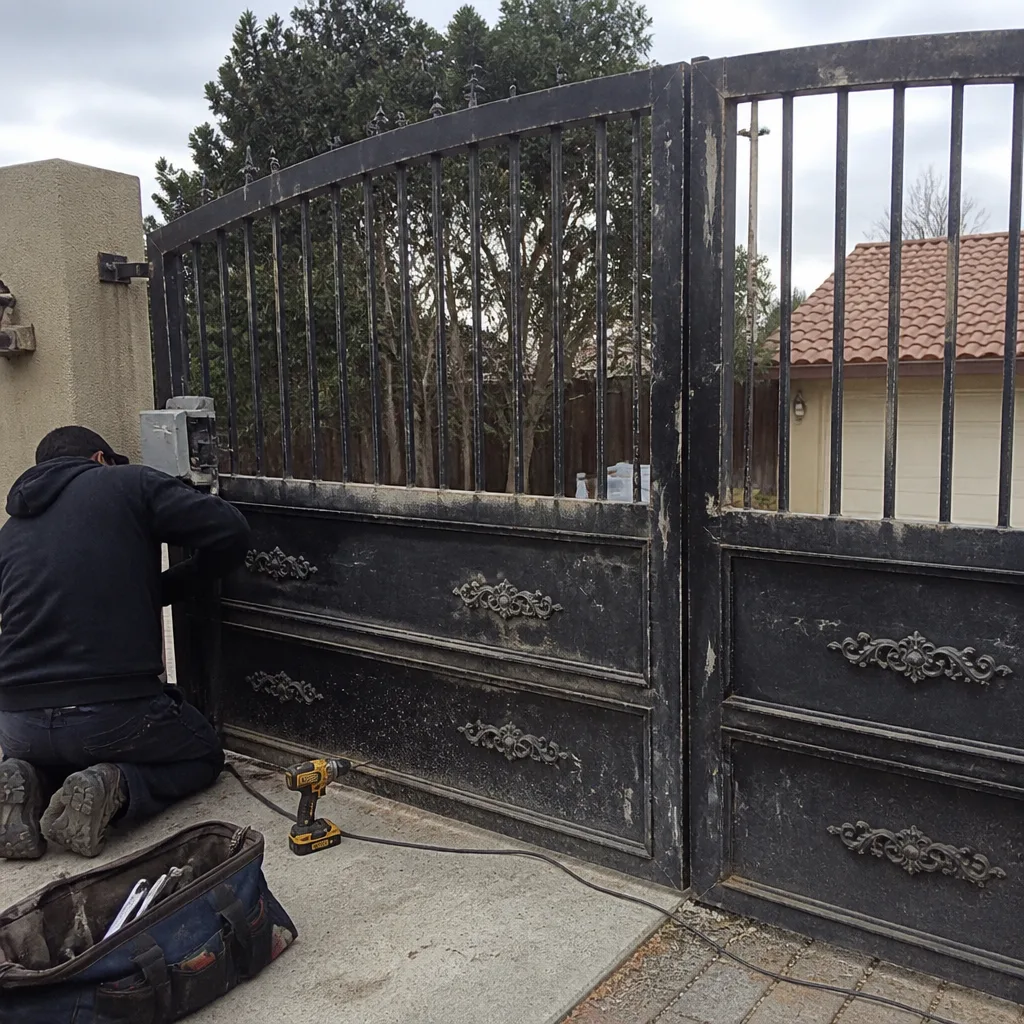 Before
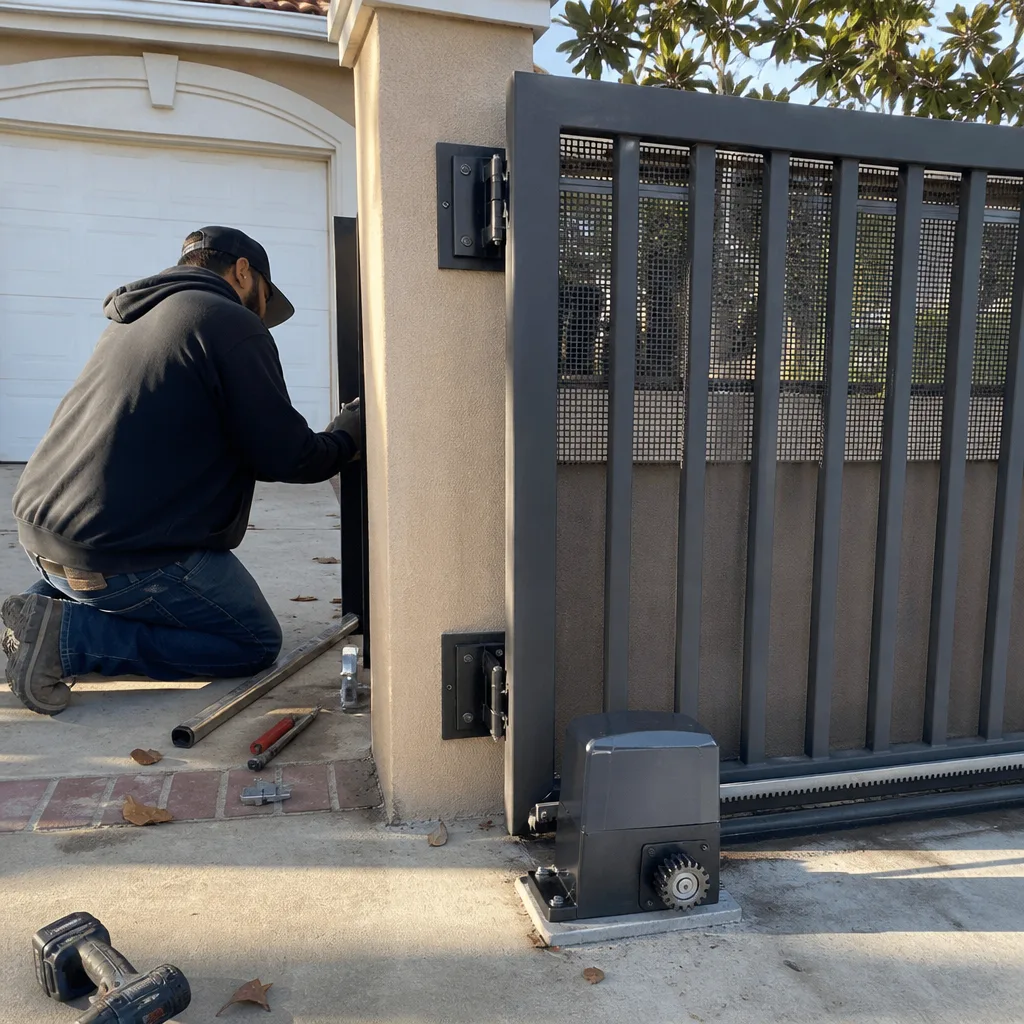 After
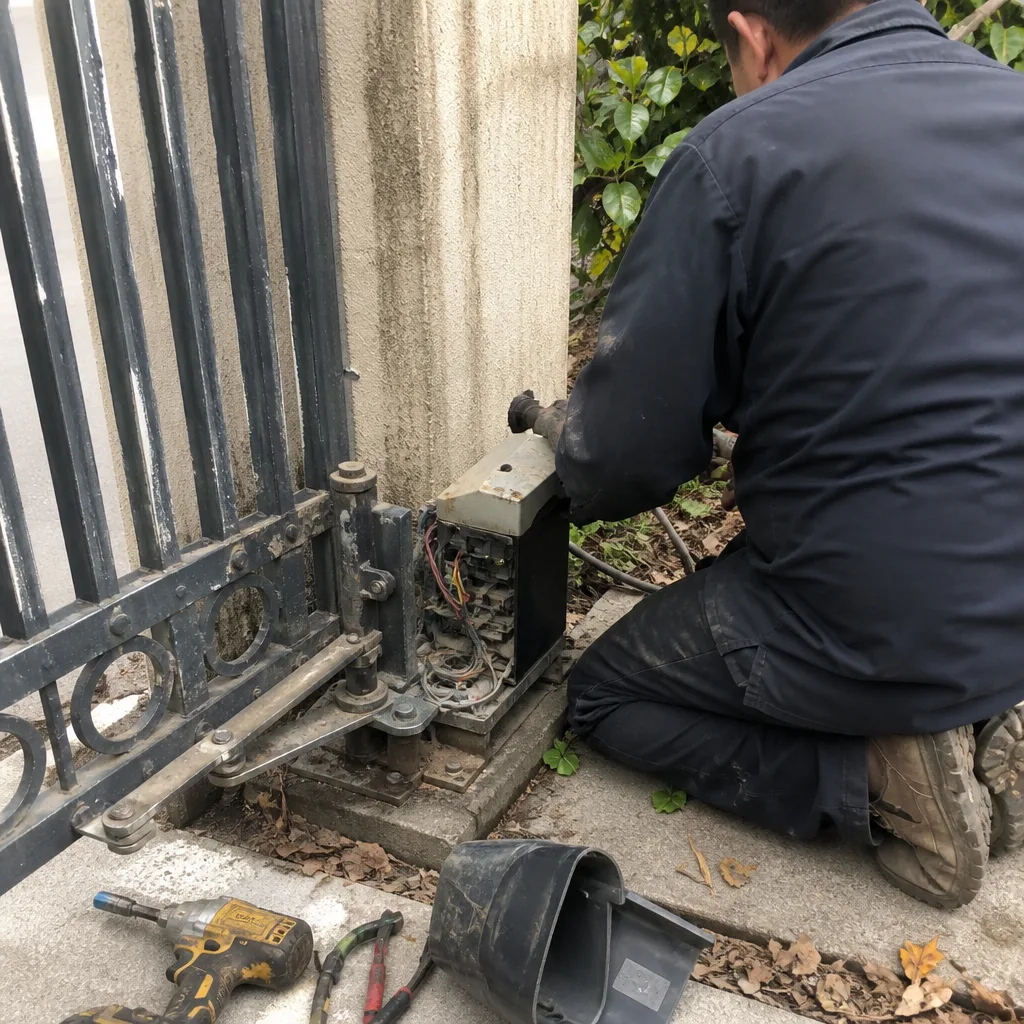 Before
 After
 Before
 After